In this week’s newsletter, we take an attention audit with writer and artist Cody Cook-Parrott, embrace the ample pleasures of gardens with Flamingo Estate’s Richard Christiansen, and more.
Good morning!
Olivia here. At last, I’ve arrived on the other side of a daunting apartment move that in recent weeks has thrown off my daily rhythms and scattered my attention in myriad directions. Amid this temporary disarray, I’ve turned to The Practice of Attention, the latest book by artist, writer, and teacher Cody Cook-Parrott—the interview subject of our latest “Media Diet,” below—whose words have offered a grounding antidote to unhelpful spiraling, perfectionism, and overwhelm. By drawing on their own experience of countering social media and technology addiction, Cook-Parrott offers non-prescriptive paths to reclaim our sense of purpose, time, and generosity of spirit toward ourselves and others.
Early in the book, they recall the formative family trips of their youth, when they’d drive two hours north of their home, in Grand Rapids, Michigan, and downsize their world to a few pleasurable basics: an open fire, fresh corn, radio on. “My dedication to unwinding my distracted nature is rooted in returning to the level of curiosity and reverence I had as a child in that campground,” they write, “sitting under a tree in the forest a few hours from my childhood home, unable to put a book down.”
It’s this elemental, anchored state of being—unencumbered by self-criticism, compulsive scrolling, or the itchy fear of missing out—that Cook-Parrott seeks to rediscover decades later. Many of us have our own versions of those early trees-in-the-campground moments that elicit a similar sense of wholeness and aliveness. In one of my own recurring mental snapshots, I see myself perched atop a swing-set slide in my childhood backyard in Floral Park, Queens, a stack of library books at my side; billowing clouds drift overhead, snippets of the Mets game echo in the near distance, and I have absolutely nowhere to be but lost in my imagination for hours at a time.
What I most appreciate about Cook-Parrott’s perspective is their honesty and experimentation. They acknowledge up front that there’s no instant, overnight fix to retraining our brains in a fragmented culture. Yet there’s a slow-building power in the repeated act of noticing, with greater awareness and minimal judgment, when we find ourselves falling back into a cycle of shallowly satisfying, albeit insidiously addictive habits, and making a different choice. For some, that might look like embracing a new ritual, such as waking up or winding down an hour or two earlier and building in unstructured space to breathe, walk, read offline, or journal; for others, it may be taking inventory of what we’re avoiding and finally facing it head on, discomfort and all. Whatever approach any of us pursues, it’s about letting a sense of self-inquiry, willingness to make mistakes, and trust in the process lead the way out of dread and toward connection and clarity. As Cook-Parrott writes, “In a world that profits and benefits from our distraction, it is a radical act to keep creativity at the forefront of our lives.”
Recently, as I sat on the fire escape of my old apartment to take in that verdant view one last time, I watched as a neighborhood cat did the same on the roof opposite. After stretching out in the sun and tending to their needs for a few minutes, they calmly strolled away to see what else the day had in store. Whenever I slow my pace, even briefly, and recenter my attention, the subsequent renewal of energy and deepened capacity to show up for my loved ones and local communities, the work I feel called to create, and the world at large reminds me that it’s always time well spent. Often, it’s helpful to channel one’s feline instincts.
—Olivia
“If you’re perceiving the world with a dull mind, it’s a dull world. One of the ways you de-dullify it is to describe it in better sentences.”
From Season 13: Listen to Ep. 151 with novelist and short-story writer George Saunders at timesensitive.fm or wherever you get your podcasts. Time Sensitive returns with Season 14 on Wed., Sept. 16.
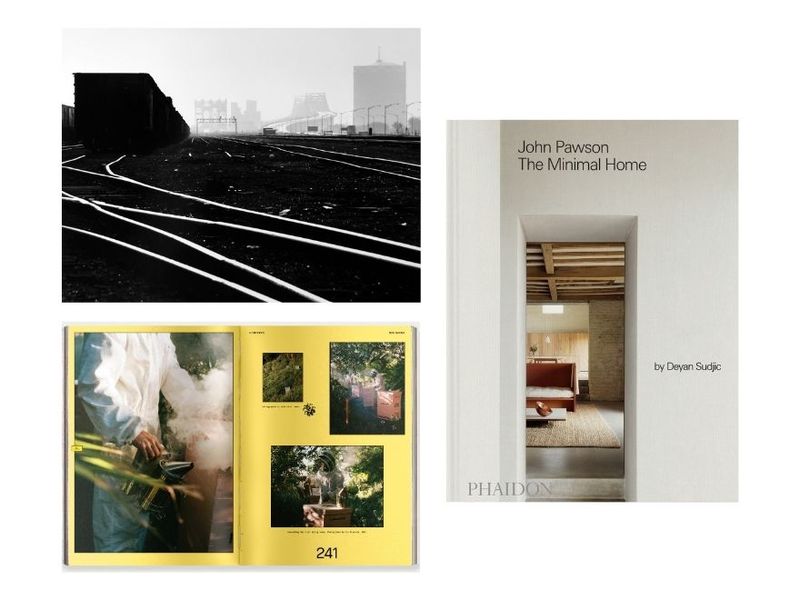
“If Emmett Till Lived: Freedom on American Ground” at the Museum of Contemporary Photography
If Emmett Till had survived, he would be 85 years old today. On view from Sept. 10 through Dec. 19 at the Museum of Contemporary Photography at Columbia College Chicago, the exhibition “If Emmett Till Lived: Freedom on American Ground” prods the public to feel that fact, to imagine the facets and fullness of the life Till could have experienced had he been given the chance. Co-curated by author and scholar Dr. Sarah Elizabeth Lewis (the guest on Ep. 117 of Time Sensitive) and Reverend Wheeler Parker Jr., Till’s 87-year-old cousin, and organized with dozens of collaborators—including Chelsea Clinton, Wynton Marsalis (Ep. 55), and Hank Willis Thomas (Ep. 83)—the show brings together images by more than 70 photographers, with works such as a David Plowden picture of the railroad lines that would have taken Till from Mississippi back home to Chicago; a photograph by Phil Borges capturing the intimacies of fatherhood; and Dawoud Bey’s image of Barack Obama as president. A photo of the remains of Bryant’s Grocery and Meat Market in Money, Mississippi—where Till was accused of offending a white woman—bears the credit Lance Omar Thurman, another cousin of Till’s. “[Till’s] life is the epitome of the question we still grapple with today: Who has a right to the ground, to claim the right to stand?” Lewis says. This exuberant exhibition honors his life in all of its humanity—not just as an emblem, not just through remembrance, but by bearing witness to all that could have been. —Emily Jiang
John Pawson: The Minimal Home by Deyan Sudjic
The British architect and designer John Pawson (Ep. 130) is no stranger to the ingenuity born from communal living. As the youngest of five siblings, his childhood spent in a 200-year-old family house in Yorkshire, followed by a stretch at boarding school and tiny-apartment living in Tokyo during a brief period in his twenties, offered lasting lessons in making the most of a space. Curator and critic Deyan Sudjic’s new book, The Minimal Home (Phaidon), out Sept. 24, chronicles Pawson’s formative design philosophy, which has long recognized the potential of changing light, subtle shifts in atmosphere, and multiple uses of a domestic interior over time, whether a single day or a decade, depending on who’s inhabiting it. “Designing a home for somebody is not a one-sided transaction,” Sudjic writes in the introduction, which leads into sections—including “Cooking,” “Bathing,” “Working,” and “Sleeping”—that mirror a full 24-hour life cycle. Having taken on commissions for artists, writers, fashion designers, musicians, and others throughout his enduring career, Pawson intimately understands the premise that people, through their daily rituals, imbue any given room with its fullest presence. —Olivia Aylmer
Pleasure Principles by Richard Christiansen
Pleasure-seeking is a year-round, nonnegotiable pursuit for Richard Christiansen (Ep. 124), founder of the brand Flamingo Estate. Drawing on his experiences as an avid gardener, traveler, and entrepreneur, Christiansen’s new book, Pleasure Principles: An Almanac From the Garden (Chronicle Books), out Sept. 15, serves as a seasonal guide to embracing nature’s offerings in all their “wild and precious” beauty, in a nod to the epigraph by poet Mary Oliver. It’s a love letter to the Los Angeles estate Christiansen calls home, and the abundant flora and fauna that reside alongside him, as well as to his collaborators, such as artist John Regan, whose 28 original lush oil paintings of the flower-filled grounds are interspersed throughout. As Christiansen shared on Time Sensitive in 2024, part of the impetus to start his own sensorial-forward company was to “wake [himself] up again” and “to stop sleepwalking through life.” From recipes for jasmine pavlova, three-step citrus sorbets, and a nourishing, umami-forward “dreaming broth” made for sipping in the evening hours, to a detailed directory of butterflies (which would very likely have impressed noted lepidopterist Vladimir Nabokov), this book calls to be read on the grass, somewhere green and fragrant. —O.A.
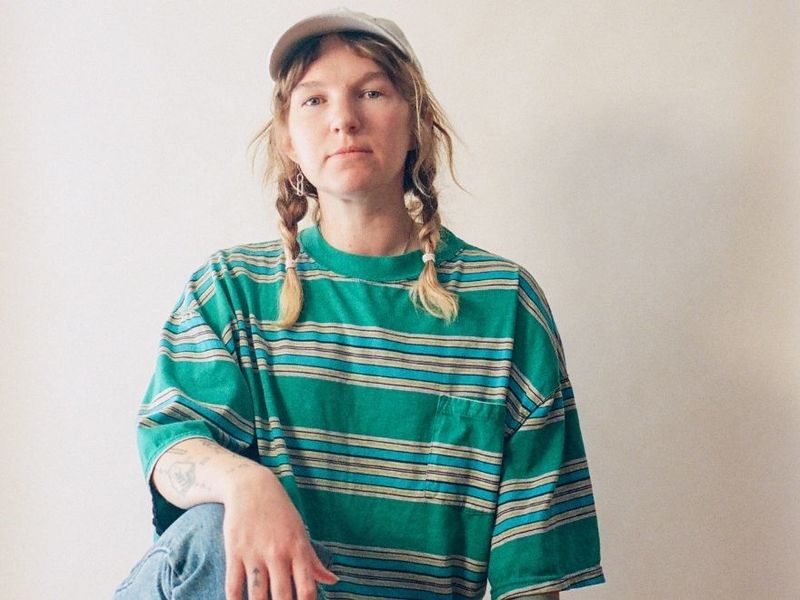
Michigan-based artist, writer, and teacher Cody Cook-Parrott’s work is powered by an inner pilot light that glows with a rebellious flicker. For their latest book, The Practice of Attention (St. Martin’s Essentials/Sounds True), Cook-Parrott intended to write about cultivating a more mindful approach to social media. Instead, they ended up permanently deleting their accounts—including an Instagram following of more than 80,000—and using the pages of the book to explore the reclamation of attention as an almost renegade act. “I realized I can’t use this responsibly, and deleting it might affect my career … and I might have to just accept that.”
Here, Cook-Parrott—whose practice includes quilting, movement, and writing a newsletter on art-making and rural living—discusses finding an intuitive flow to their days, tapping in to time’s elasticity, and referencing their trusted guide to what’s happening in Northern Michigan.
How do you start your mornings?
I have no phone in the bedroom at night, so I wake up to my alarm clock. I start [boiling] water and then I feed June, my dog. Then I feed August and Phoebe, my cats. Then I make my tea, a creamy Earl Grey with frothed oat milk and honey.
I usually open my computer to a Notion document where I plan my year, seasons, months, and days. I go through my to-do list for that day, and then I categorize my spending in YNAB and do my QuickBooks. I always know where my money is going. It helps me not accumulate more debt.
Then I usually do some sort of writing. I either flip to my morning pages or, if I’m working on a long-form book, I’ll use those sharper morning-brain hours to write. I’ve spent this morning fiddling around making a little website for this long-term dream I’ve had of [opening] a roadside quilt-and-book shop.
In your book, you write about swimming as a movement practice and water as a place of submersion. Is there a body of water that is most meaningful to you?
Lake Michigan. I’m fifteen minutes from the beach and it really is like a freshwater ocean. It’s so expansive and crisp and clear. Bohemian Beach, specifically, is my favorite. I will jump in at all times of year. I also have to name this little river bend in Chesterfield, Massachusetts. It’s like a little swimming hole down the road from my dear friends. There’s something about a river where you don’t touch the same water more than once and how it just keeps flowing. We’ll all go swimming there after a long day of dancing. I often talk about swimming as a baptismal activity. I feel like I start all over, from the beginning.
Through which of the five senses do you predominantly experience the world?
Sight. The other day, a bug flew in my eye and my vision got kind of fuzzy and I had this tender moment of [thinking about] those who are hard of sight or disabled in some way around vision. It would really affect me. My favorite way to show people Lake Michigan is this very specific hike where you’re basically on a cliff overlooking the entire lake. It looks kind of like a quilt. You have these different layers and the view is just crazy. I cry pretty much every time I see it.
Where do you get your news?
Mostly from Democracy Now! with Amy Goodman and Juan González. I try to listen Monday through Friday. My values and politics really align with it. Sometimes I’ll do Up First from NPR. I read Al-Jazeera, and then my girlfriend is on social media, so sometimes she tells me news… She’s my news source.
Do you subscribe to any newsletters?
Fariha Róisín [How to Cure a Ghost] and Joanna Fusco [Unsupervised] both have Substacks that are really beautiful. Fariha’s is rooted in history, culture, and literature. It has helped me align with my own leftist political values, and it inspires me to go deeper. It’s basically the opposite of an infographic on Instagram. Joanna’s is so raw and from the heart. Ann Friedman’s newsletter is definitely one I feel like I modeled my own newsletter after. Hers is really punchy. It’s easy to take in, and it always has nice colors.
What is the last thing that truly held your attention?
I taught a quilt retreat this past weekend at Green Door Folk School, right here in Cedar, where I live. Seeing my students focus on the material and the composition and the improvising held my attention. I love when they ask me questions. Teaching holds my attention in this really strong way.
What podcasts do you listen to?
My absolute favorite podcast is Off the Grid with Amelia Hruby. She left social media four or five years ago. It’s a lot about marketing and running a business either without social media or with a little social media. I’ve also been listening to the podcast Best Laid Plans by Sarah Hart-Unger. It’s different from my world and what I usually listen to. It’s about planning, and I’ve been getting really into nested goals and weekly tasks.
How about publications?
I love reading Northern Express, which is our free newspaper and weekly cultural guide to what’s going on in Northern Michigan. I recently wrote a letter to the editor because they did a “20 Weirdest, Coolest People in the County” story, and it was basically just all white, cis, straight people. I was like, “You guys…”
What books have you read recently?
Big Time by Laura Vanderkam, which is also in this planning and time management world I’ve been in. One of the book’s recommendations is to track your time in a spreadsheet by half-hour increments. I’m in my third week of doing it and you can only write “on your phone” enough times until you’re like, “That sucks.” The takeaway for me was that it’s so easy to say, “I don’t have enough time for that.” But do you actually not have enough time? Or is it that you don’t have enough energy? Or enough space? What’s the real thing?
Do you have any guilty pleasures?
I love to play Animal Crossing, and I’m addicted to pop music. I love to blast Harry Styles and Justin Bieber. I love bad music, and I feel no apology for it.
This interview was conducted by Brooke Mazurek. It has been condensed and edited.
Our handpicked guide to culture across the internet.
On Sept. 26, at The Glass House in New Canaan, Connecticut, architect Liz Diller (the guest on Ep. 9 of Time Sensitive) will join our very own Spencer Bailey for a conversation tracing the interdisciplinary arc of her prolific practice, Diller Scofidio + Renfro. [The Glass House]
Designer and entrepreneur Tina Roth Eisenberg (Ep. 82), founder and C.E.O. of Creative Mornings, has been named the recipient of MacDowell’s second-annual Hillcrest Arts Impact Award for her work fostering community for creatives. [Instagram]
Photographer, artist, and architect Hiroshi Sugimoto (Ep. 114) guest-edited Aperture’s latest issue, themed “Stop Time,” bringing together various artists and writers—Lucy Ives, Zoë Lescaze, and Regina Marler among them—to contemplate the miracle and mystery of photography. [Aperture]
Author and poet Claudia Rankine (Ep. 60) joins the Fiction/Non/Fiction podcast for an illuminating discussion centered on her new book, Triage (recently reviewed by our contributor Chanice Hughes-Greenberg), and how visual imagery weaves through her work. [Literary Hub]
Music critic and historian Ted Gioia laments the loss of free time beyond the reach of devices and media overload, writing in his newsletter, “If we could open up our leisure to more non-corporatized activity, even for just a few hours per week, it would be healing.” [Substack]