In this week’s newsletter, we speak with writer, editor, and civic design worker Rachel Meade Smith about her upcoming anthology examining the modern-day job hunt; consider the 20th-century potter Kawai Kanjirō’s contributions to Japan’s folk art movement; and more.
Good morning!
Olivia and Emily here. Spencer’s just settling back in New York after a three-week stretch in Japan (more on his recent travels to Tokyo, Karuizawa, Hakuba, Kanazawa, Kyoto, and Nagoya in an upcoming newsletter), so we’re stepping in.
Excitingly, this week marks a momentous, revitalizing moment for our Time Sensitive podcast. Not only does it greet the arrival of our 13th season—with Ep. 147, featuring the force-of-nature dancer and choreographer Lucinda Childs, whose early works from the 1960s and ’70s will be performed in the Guggenheim rotunda this weekend—it also sees the launch of our overhauled timesensitive.fm website. Thanks to the thoughtful design and development of our Paris-based colleague Rosen Tomov, we now have a fully searchable and reorganized archive at your fingertips, organized by season and built for discovering and revisiting past episodes.
One frequent pleasure of producing this show is the opportunity to hear and learn from a wide range of creative voices who have considered their personal, perpetually shifting experience of time over several decades. Lately, we’re thinking in particular of the Pittsburgh-based artist Thaddeus Mosley, the guest on Ep. 111, who sadly died last week at the age of 99. His almost 70 years of carving striking, awe-inspiring sculptures out of wood garnered long-overdue recognition in his nineties, and his long-view approach to making art speaks deeply to all of us here at The Slowdown. As he told Spencer in 2024, “I’ve always strived to do something that’s not only interesting today, but will be interesting in a hundred tomorrows.”
The importance of handcrafted artistry has especially been on my (Emily’s) mind lately as I’ve begun learning the foundations of basketweaving through a four-week course at the Textile Arts Center (TAC), in Brooklyn’s Gowanus neighborhood. As a longtime knitter and someone who enjoys working with my hands—whether it be fixing fences, potting plants, milking cows, or plaiting hair—I have an endless appetite for learning new skills that allow me to fashion my own wares and think through my body rather than just my mind. I find there’s something sacred about repeating the movements, patterns, and rituals of those who came before me and honed their practices across cultures and millennia.
In the past couple years, before starting basketweaving—an endeavor that I’m sure was inspired in part, whether consciously or subconsciously, by our Time Sensitive Ep. 66 and Anabelle Cole’s recent Studio Visit with Deborah Needleman—I’ve taken a class in loom weaving, also at TAC, as well as a darning workshop via Repair Shop, a research and learning studio run by Sam Bennett and this week’s Media Diet subject, Rachel Meade Smith. Something that has struck me about basketry in particular, though, is that it’s one of the very few trades left that still has no mechanical replacement; every basket you encounter was made by someone and carries with it their imprint and the hours they spent creating it.
This aspect of handcrafted objects, I feel, is what will always set them apart from the mass-made and manufactured—and what, at their best, will make them, in Mosley’s words, “interesting in a hundred tomorrows.” Each of our 147 intentionally selected Time Sensitive guests to date practices a craft in their own way, whether it be acting, architecture, music, pottery, poetry, or photography. Because of the great rigor and care they take, we believe their work will stand the test of time.
With that, we hope you enjoy our 13th season.
—Olivia and Emily
“My job is to put it out there and to project. It’s not for an empty room. It is meant for the people there. And I know that they all react differently—and they should. Why should they react in the same way? How would we know?”
Listen to Ep. 147 with Lucinda Childs at timesensitive.fm or wherever you get your podcasts
“Kawai Kanjirō: House to House” at Japan Society
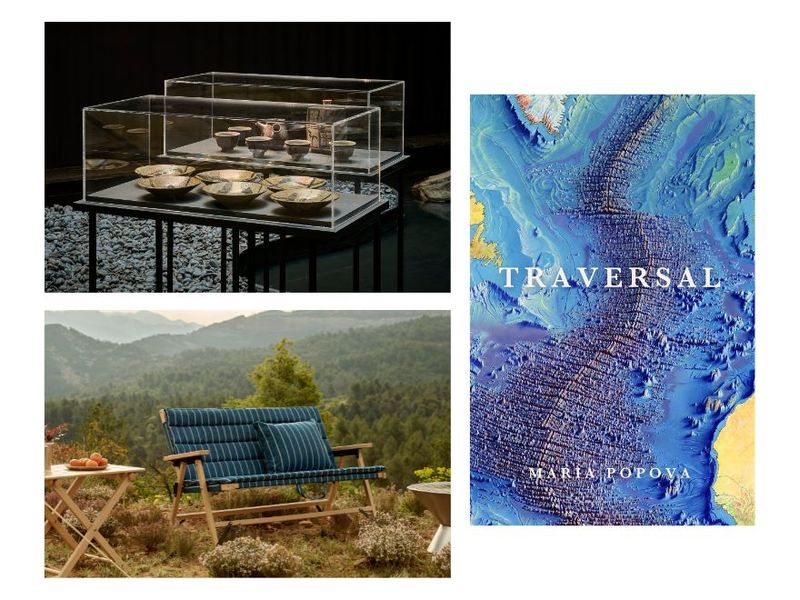
Before it became the globally recognized treasure it is today, traditional Japanese craft was once at risk of decline due to the rapid industrialization of the late 19th and early 20th centuries. The mingei, or “art of the people,” movement, established in the mid-1920s by potters Kawai Kanjirō and Hamada Shōji and philosopher-designer Yanagi Sōetsu, fought to preserve these traditions, championing handmade, functional, egoless objects crafted by anonymous artisans rather than fine artworks whose value lay in their makers’ reputations. On view through May 10 at New York City’s Japan Society (housed inside its Junzo Yoshimura–designed Japan House headquarters on East 47th Street), and co-curated by the gallery’s senior director Dr. Michele Bambling and Kawai’s granddaughter Sagi Tamae, “Kawai Kanjirō: House to House” celebrates Kawai’s contributions to the movement, tracing his creative development from his intricate early ceramic works, to his poetry and calligraphy, to his playful wood-carved sculptures and masks. Channeling the warmth and aesthetics of Kawai Kanjirō House—the residence, studio, and kiln he designed for himself in Kyoto, now a commemorative museum—the exhibition embodies its title’s suggestion of transposition: Kawai Kanjirō House to Japan House, Kyoto to New York City, traditions and wisdom of the past carried into the present and future. —Emily Jiang
Traversal by Maria Popova
What makes for a meaningful life? This ageless, elemental question is the driving force behind Traversal (Farrar, Straus and Giroux), the latest book by Bulgarian-American writer Maria Popova, who has been running the meaning-seeking newsletter The Marginalian (formerly Brain Pickings) since 2006. Through 49 essays with titles like “Space Takes the Time It Takes” and “By the Seam of Chance and Choice,” Popova examines the instruments and methods—from scientific theories and telescopes to postulates and poetry—we as humans use to contend with the absurdity of being alive. Figures including Frederick Douglass, Mary Shelley, and Walt Whitman appear at various turns, as do landmark historical events such as the first global scientific collaboration; the Irish potato famine; and NASA’s Kepler mission, which searched for habitable worlds beyond the solar system. Popova’s conclusion? “Over and over,” she writes, “we discover that it is all one question, that there might just be a single answer: love… each of us a festival of particles and probabilities, a living question, a perishable miracle composed of chemistry and culture, of passion and chance.” —E.J.
Jasper Morrison and HAY’s Outdoor Market Collection at MoMA Design Store
For Outdoor Market, a new collection by Danish design brand HAY in collaboration with British designer Jasper Morrison, launched last week at the MoMA Design Store in SoHo, Morrison turned to classic camping gear for cues, creating more than 30 objects that deftly balance form and functionality. A portable stainless-steel firepit, foldable beech-framed sofas and chairs, and even a tent-like canopy make it possible for a cozy home-cooked dinner to accompany one into the great outdoors. Brooms crafted from grass and bamboo, meanwhile, harmonize with the colors and textures of their natural surroundings. Striped textiles used throughout—which come in variations of red, black, blue, and cream—recall traditional Basque patterns, discovered by Morrison in a vintage fabric he found at a flea market. Perfectly perched at the intersection of pragmatism, craftsmanship, and thoughtful design, this family of objects encourages a carefree approach to outdoor living, whatever form that may take, whether an impromptu camping trip, a picnic by a lake, or a backyard barbecue. —E.J.
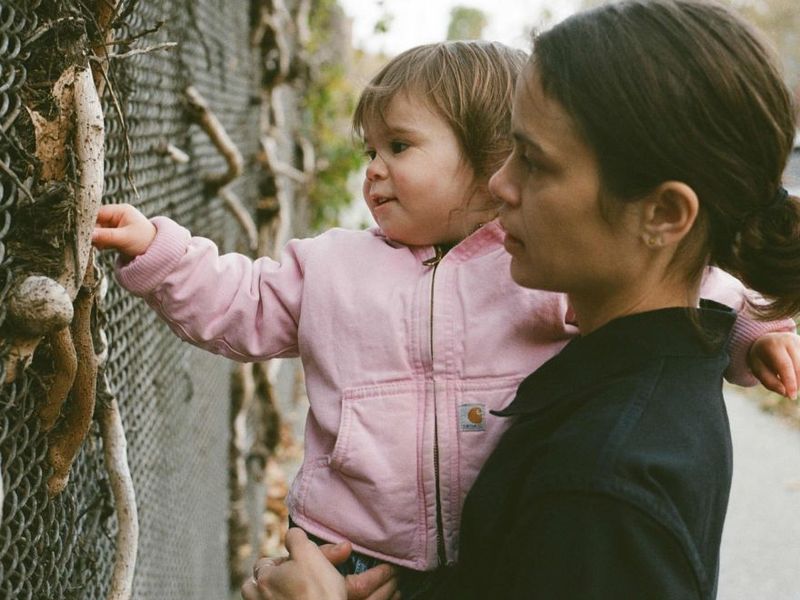
What are we really doing when we’re searching for work? This is the question writer, editor, researcher, and civic design worker Rachel Meade Smith has kept coming back to throughout the past decade of running Words of Mouth, a weekly, donation-based newsletter that culls, distills, and disseminates job postings and creative opportunities across design, the arts, education, information, and the built environment. To mark WoM’s 10-year anniversary, Smith’s upcoming anthology, Search Work: A Collective Inquiry into the Job Hunt (OR Books), out May 6, digs into this question in all of its interpretations and complexities. A tapestry of personal essays, archival job ads, labor research, and even a playscript, the book brings together the perspectives and experiences of more than 50 contributors to pull out the common threads of—and rays of light to be found within—what can often be a lonely, quietly agonizing experience.
Here, Smith reflects on the art of job-posting curation, her proclivity for Soviet literature and British crime shows, and why she frequently spends time with Susan Mitchell’s essay “Notes Towards a History of Scaffolding.”
How did your Words of Mouth newsletter come into being?
I started the newsletter in 2016 while working a job I hated, which was supposed to be my dream job. I was always an in-betweener; there was no job board where I could always find a few things to apply for. I had to get good at sniffing things out in the corners of the Internet. I knew a lot of people like me—interested in a lot of things, didn’t know exactly what they were yet, just wanted to be exposed to interesting options. So I created that space. It’s evolved in small ways over the years. I started posting classifieds for a fee, which helps me support the project. I’ve also homed in on the principles that guide it, which has informed the curation. I post a lot fewer jobs in branding, for example, than when I started. But mostly, I still aim to send people good jobs every week, expand their ideas of what’s possible, give them a bit of hope.
What prompted you to examine the modern job hunt landscape in anthology form?
The book is the ultimate evolution of the newsletter. I’ve always resisted people’s encouragement to “leverage my audience” by sending them more content. I wanted to stay true to what I knew people wanted, which is good leads, no filler. But I saw the ten-year anniversary on the horizon and felt an urge to create an artifact that would both celebrate and document the community that had grown around the newsletter, which at this point is more than 70,000 people from around the world. Despite that huge number, I’ve always run it by myself, which can get lonely. It also doesn’t feel aligned with how I think of the project, which is increasingly as a community, not just a one-way information distribution service. So I figured this was a perfect opportunity for a collaborative book that brought together many voices to speak to their own experiences.
What have you learned about how the process of searching for and finding work shapes our lives, whether materially, socially, or psychologically?
I’ve always seen the job hunt as an untapped area of sociological inquiry. It’s mostly talked about on LinkedIn or news articles decrying the abysmal state of the labor market, but there’s so much about the human experience that gets lost in those contexts. Specifically, I wanted to excavate what job-seeking can teach us about identity, hope, shame, and desire. I’m more certain than ever that job-hunting is one of the most consequential activities a person will engage in over their life. It changes how we see ourselves, forces us to reckon with the lies we tell ourselves and others. And it’s recurring: For most people, it won’t stop until we retire or die. Looking back on past searches can be an incredible vector for measuring change, in oneself, one’s industry, the world.
So how do you start your mornings?
Petra, my almost 2-year old, wakes me up around 6:30 by squawking into our baby surveillance system. Then my husband and I chase her around for a couple hours and try to get her to ingest any amount of nutrients before she goes to daycare at 9. After drop-off, I come home and spend ten minutes fixing the house so I can go on living without feeling too bad about myself. I sit down at my desk and try to scratch out some plans for the day before opening my email, or, if I’m worried about spinning off into remote-work-induced depression, I’ll go work at my local coffee shop, Long Shadow, where I benefit immensely from human interaction.
Do you subscribe to any newsletters?
I like Hamilton Nolan’s How Things Work, which is full of incisive and sometimes quite funny takes on how the very rich and very powerful are destroying the rest of us. I will also plug Pan, Pain, Pao! recently launched by my twin sister, Lexie, who’s a baker, writer, and student of cultural history. It’s ostensibly about bread, but she’ll teach you real quick how expansive a topic that actually is. I also like Sonia Feldman’s Poem of the Week, which is just what it sounds like, and beautifully curated.
Any favorite podcasts?
I listen to a lot of history podcasts: The Rest Is History, The Rest is Classified, Past Present Future, Not Just the Tudors. I’ll admit they’re hosted almost exclusively by Brits, and I almost exclusively listen to them while lying in bed. Recently I’ve been reining it in a bit—most of history is so incredibly violent; the old violence is too much on top of all the new violence. For something less scary, I’ll listen to The New Yorker’s The Writer’s Voice.
What books are you currently reading?
I’m reading Starting Out in the Thirties by Alfred Kazin. A couple years ago, 23 and Me told me his daughter is my second cousin once removed, so I feel a literal kinship to him. In this memoir, he talks about starting out as a Jewish magazine writer living in 1930s Brownsville with his traumatized family, who I think might be my family, too? It’s got a lot of namedropping of all the editors and writers that he was hanging out with while trying to make it; this would usually bore me to bits, but his descriptions of people gathering and moving around the city makes me dizzy with longing for a place I both live in and feel I’ve never visited.
I’m also reading, slowly, because history is devastating, Motherland: A Feminist History of Modern Russia, from Revolution to Autocracy by Julia Ioffe. Whenever I read about Soviet history, I am gobsmacked by what its women managed to live through.
Where do you turn for inspiration?
My day job requires me to use language that is very precise and legible. So when I turn to work on a personal project, I like to jump-start my system. Lately, I’ve been re-reading Barry Lopez. He writes these lyrical meditations on the natural world that read like myths. I also visit with Susan Mitchell’s poetic essay “Notes Towards a History of Scaffolding” (published in John D’Agata’s The Next American Essay). It’s incredibly free and unconcerned with understanding or expectation. I struggle and strive to be this way.
Do you have any guilty pleasures?
Of course. Crime dramas from the U.K. Shetland, Vera, Dept. Q, Line of Duty—anything with a crew of snarky yet earnest British detectives set in a gray, drippy city.
This interview was conducted by Emily Jiang. It has been condensed and edited.
Our handpicked guide to culture across the internet.
The new exhibition “Knots” showcases collages by writer and critic Lucy Sante (the guest on Ep. 108 of Time Sensitive), who sees her printed pieces as “tightly held knots of ambiguity, like the best poems.” [Arts and Letters]
On his Substack, music historian and critic Ted Gioia considers what gets lost when “fast culture” and obsessive, sped-up consumption habits prevail. [The Honest Broker]
A new three-part Substack series by journalist Colleen Hamilton explores who profits from pervasive hopelessness and how to refocus energy toward transforming—through small, sustained, tangible steps—the world for the better. [The Sun Will Rise]
In a recent installment of his “Open Questions” column, writer and editor Joshua Rothman breaks down the modern conception of “taste,” arguing that the dogged pursuit of so-called “good taste” might actually preclude people from attaining it. [The New Yorker]
AH!MERICA, a posthumous, pocket-sized book by Beat writer and poet Allen Ginsberg, presents his lectures on British poet and painter William Blake, urging readers toward poetry as an antidote to despair. [Isolarii]