In this week’s newsletter, we talk art and attention with cultural critic Lynne Tillman, discover the wisdom of clouds in a Sanford Biggers exhibition, and more.
Good morning!
Olivia here. I’ve been thinking about something the writer and critic Lynne Tillman (the subject of our latest “Interview With,” below) shared when we spoke the other week. Each morning, after she brews her pot of tea and sends a few emails, she tries to “apply” herself to something, whether that’s getting a few lines down for a newly commissioned piece or novel-in-progress or—if she’s not yet finding her rhythm—jumping back in to one of three half-finished books on her nightstand. And when she feels a sense of distraction or mental malaise creeping in? She’s not above giving herself a “kick in the ass.” The point of her tending to the task at hand does not lie in perfect completion, even as deadlines perpetually loom. Rather, it’s about the daily practice of giving herself over to something of interest and tuning in to the particular ebb and flow of her thoughts on a given topic—the latest Paul Thomas Anderson film, say, or Gertrude Stein’s linguistic experiments.
In Paying Attention, her new essay collection from David Zwirner Books, Tillman’s sharply perceptive approach reveals the kind of roving eye that’s honed only through spending meaningful time with working artists, something she’s done since taking studio art classes while a Hunter College English major. The opposite of pretentious, she takes pride in her work’s no-frills accessibility. The prospect of more people paying closer attention to whatever forms of culture they enjoy—and making their own sense of it—thrills her.
As for how her own ways of seeing developed? Tillman dedicates the book to the late British conceptual artist Susan Hiller (1940–2019), who made her “feel that I would be the writer I wanted to be.” Hiller, known for her pioneering explorations of paranormal activity across audio, video, and photographic installations, “looked at things differently.” Tillman recalls a memory of standing beside Hiller at London’s Victoria and Albert Museum, watching her marvel at the contents of various jewelry-filled drawers. “She would look at it in a certain way, with such absorption that was important to me,” Tillman says. Even now, decades after their first meeting on the Lower East Side, when she was 16, she continues to learn from, and carry forward, her friend’s vivid sight lines.
Our latest Time Sensitive guest, the Tennessee-born and -raised singer-songwriter Valerie June, shares a similar devotion to deep looking, and to the daily work of showing up with openness to whatever her day will bring, even as turbulent times persist. June practices a fortifying, joyful resistance. “Especially in the dark times,” she tells Spencer, “that’s when I’m really in the lab. I’m working on it heavily every day and trying to call people into my sphere who keep me uplifted.”
Tomorrow, like today, I’ll do as Tillman does: open my eyes, pour myself a coffee, and try, imperfectly, to apply myself.
—Olivia

“We can’t just wake up and expect to be joyful. No, not when we live in this dark world. Like an instrument must be tuned before you start playing the song, we have to tune ourselves everyday.”
Listen to Ep. 152 with Valerie June at timesensitive.fm or wherever you get your podcasts
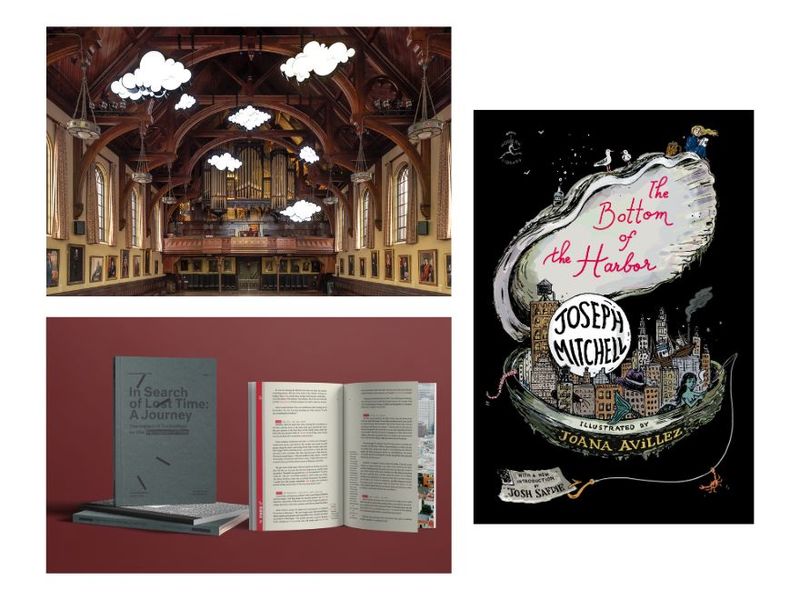
“Sanford Biggers: Drift” at the Parrish Art Museum
A series of arresting, quasi-cartoon-like clouds are currently suspended from the arched ceiling of the Parrish Art Museum in Watermill, New York. Titled “Unsui (Cloud Forest)” (2025)—after a Japanese word that likens the drifting nature of clouds to the Zen Buddhist philosophy of moving through the world without attachment—the installation forms a central part of the exhibition “Sanford Biggers: Drift,” opening tomorrow, May 17, and on view through Sept. 13. Engaging the symbol of the cloud as its central axis, the show traces Biggers’s multidisciplinary work through these nebulous, shape-shifting forms. “As we look into the clouds, we often see very different things from one person to the next,” Biggers (who was the guest on Ep. 99 of Time Sensitive) says. “I think that is similar to the way people perceive America. The ideals and values might be different … sometimes clearly visible, sometimes a little hazy or hard to find—but always worth looking for and striving for.” His quilted works, featuring abstract spray-painted cumulus cloud forms, from his ongoing “Codex” series, will also be on view. Spread across the floor of an adjacent gallery, meanwhile, a new site-specific sand installation opens up its precise geometric design—inspired by prayer rugs and Japanese Buddhist mandalas—to inevitable drifts and shifts, much like those in the sky above. —Emily Jiang
The Bottom of the Harbor by Joseph Mitchell
At last, illustrator Joana Avillez drew a pearl from the oyster that is The Bottom of the Harbor (Modern Library): a spirited new edition of eagle-eyed chronicler Joseph Mitchell’s mid-century character studies from the vantage point of New York City’s waterlogged underbelly. In these essays, originally published in The New Yorker, Mitchell casts a democratic gaze on the waterfront, unearthing buried treasure in the depths of the people who once inhabited it. Fittingly, Avillez’s own childhood unfolded in the city’s Fulton Fish Market. In her “Illustrator’s Note,” she recalls the feeling of “falling through an infinity mirror” when she first read Mitchell’s essay “Up in the Old Hotel.” Here, her fanciful black-and-white line drawings dance between his words. Nodding to the titular essay, Avillez compares the process of bringing this book (introduced by filmmaker Josh Safdie, another of Mitchell’s kindred spirits) back to life as “natural, organic; like a mussel growing barnacles and seaweed and spitting sand out from time to time.” For her own field research, she visited Stonington, Connecticut, where the captain kept his ship in “Dragger Captain”; took a boat to New Jersey’s Palisades rocks, as depicted in “The Rivermen”; and made a pilgrimage to “Mr. Hunter’s Grave” at the Staten Island cemetery. “Each mini adventure,” she says, “made New York feel vast, unhurried, seasprayed.” —Dalya Benor
In Search of Lost Time by Benedikt Fischer and Fanny Ducommun
How is it that we live in an era of so much abundance—of technology, information, and tools that promise to help us live our lives more efficiently—and yet seem to face a perpetual scarcity of time? This is the propelling question behind In Search of Lost Time: A Journey (Mashka) by ethnographic researcher Benedikt Fischer and graphic designer Fanny Ducommun. Born out of a thesis project that began 11 years ago, the book pairs rigorous research with captivating imagery and graphics, journeying into two respective “time cultures”: Silicon Valley and Taungoo, in rural Myanmar. One locale is rich and the other scarce in modern technologies, the authors observe, but what becomes clear is that this metric appears to have an inverse relationship with what they call “time richness.” Take Kyo Ma, for example, a 37-year-old Burmese farmer. He lives in a village without electricity; has no bank account, only cash; and his electronic possessions amount to a flashlight, a small TV, and a mobile phone he doesn’t know how to use. But his perspective on his community’s outlook says it all: “Even though counting the time does not seem to matter,” he says, “taking the time feels to be of great importance here.” —E.J.
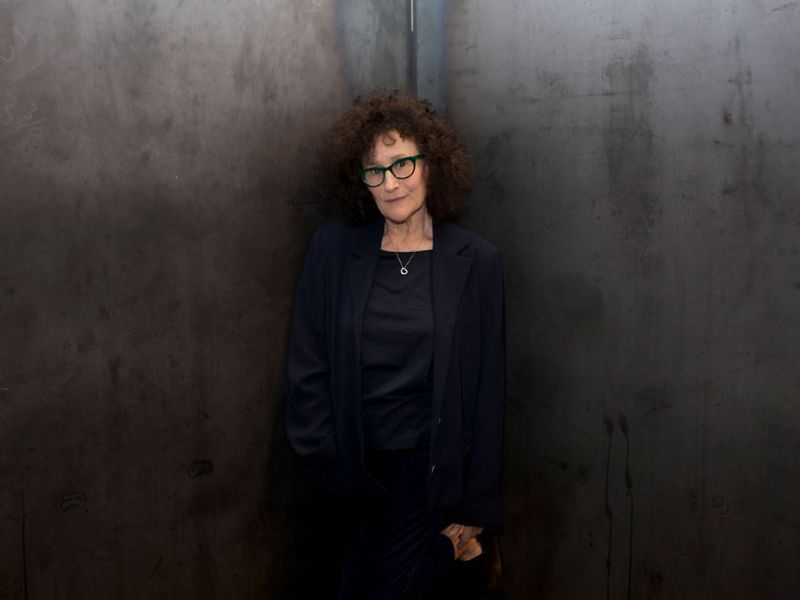
Not unlike a great road movie, novelist, short-story writer, and cultural critic Lynne Tillman picks readers up and moves them elsewhere in her transportive first essay collection, Paying Attention: Essays on Art and Culture (David Zwirner Books). Tillman’s omnivorous tastes traverse and mine subjects ranging from the late Lebanese-American painter and poet Etel Adnan, to an elegiac digital slideshow by photographer and activist Nan Goldin, to her recollections of visiting the New Museum in its early years. She revels in the malleability of her feelings, acknowledging that all of this—especially her strong first impressions—is subject to change. In “Introduction to Closer,” for example, she recounts returning, 35 years later, to reread “the same words, sentences, structure, the same chapters in the same order” of Dennis Cooper’s provocative 1989 debut novel, but “the whole has been thrown up into the air and come down as something else.” The critic’s long-term assignment, as Tillman sees it, is not to remain stuck in place, but rather to embrace any unexpected detours and sudden swerves of thinking that emerge over time.
Here, she talks about staying engaged, writing in ways that resonate beyond any one moment, and the value of not knowing in order to learn something new.
When putting together a collection this expansive, what role does restraint play? How do you determine what gets left out?
I was helped by the book’s editor, Elizabeth Schambelan, and Beth Gordon, the editor at David Zwirner Books. It was very hard to choose. I have left out a few things. I wanted Beth and Elizabeth to point out to me, as readers and as critics themselves, what they thought would be essential. There’s a way in which you have an ongoing relationship with your writing, and it doesn’t choose favorites. [Laughs] I didn’t want it to be in a chronological or particularly thematic order. Beth came up with using the first sentence—when it began with an A, then B. It’s random in a certain sense, except if you consider the alphabet not random.
That lack of a linear order allows readers to dip in and out, to be surprised.
I was talking to my sister Iris yesterday, and she was saying that it’s not the kind of book, at least for her, that you read straight through. You pick it up, you read a couple or more, then you put it down, and you might go back to it. When I read short stories or essays by somebody, I find that I have absorbed enough. After I read two or three, I want to wait until I read the others, whether it’s Chekhov or Amy Hempel.
How do you think about ephemerality and impermanence when writing about a work of art in its particular moment in time?
So many people had no idea that I wrote essays, because they would go into art magazines or art catalogs or artist books. I wanted to make them less occasional. The condition of books is usually temporary. That’s what’s meant by the “contemporary.” Books go in and out of season, so to speak. That temporality is included in what you write, whether it’s direct or not. Certainly in the works that I present here, they did have to do with the moment. My goal in writing is to make it feel or be bigger than the moment, if I can. In other words: something whose ideas might be generative beyond eight hundred, fifteen hundred, or even three thousand words.
With our attention being pulled in so many different directions, how do you decide where to focus yours and what subjects you want to go deeper into?
Many of these essays—and I’m so fortunate—come from artists themselves, from art galleries, museums, magazines. If they give me an idea I can deal with and I’m interested in, that’s really a pleasure. I like getting ideas from other people that I can absorb and think about. I wouldn’t know as much about Dana Schutz or Warhol or Steve Locke if I didn’t write about their work. You have to be engaged, and you have to show interest. That interest has to be in the piece. This is not a disinterested person writing. I look for things—ideas in the art—that I find and think about. I write allowing myself to be dubious and not in judgment in a sort of brutal way. I often think, “Who am I to judge?”
A friend and I were discussing how it feels like many of our peers seem to wait to be told what to think. There’s this anxiety to express the “right” opinion. There’s often this avoidance of sitting quietly in the uncertainty of one’s own mind and making space for whatever’s coming up. How do you make sense of what you’re looking at and what you think, beyond public discourse?
For a long time in the twentieth century, art historians and art critics made decisions about what was good in modernism and what was not. The idea that the critic determines the work has sort of collapsed. Duchamp said it’s always the public, the audience, that makes the work. Being told things is not interesting. Why wouldn’t you want to have an experience with something? I don’t usually think generationally but, unless you’re willing to engage, you’re not going to have an idea about something. If you’re waiting for Mommy or Daddy to tell you what it is, it’s boring. You have a brain, and you have to feed it. People have to let themselves not know in order to learn anything.
What’s gotten lost is the relationship between reading and writing. You look at other painters, other photographers, see plays and movies, you have some sense of how people are making things. There are traditions in language and changes, and all of that is extraordinary. Gen Z is using the word slay rather than kill, right? Slay was used many years ago, before kill: “That slays me.” Then it becomes “That kills me.” Now it’s back to slay. I think that’s fascinating! Why do these changes occur?
How do you deal with the gap between your first impression of something new versus ideas that form after deeper, slower reflection?
I always doubt my feelings, not so much my thoughts. For instance, Paul Thomas Anderson’s film Phantom Thread, I thought that was one of the most brilliant things when it came out. I still do, and I wrote about it. I didn’t have any doubt that this was, for me, an exceptional film. With his latest film, One Battle After Another, I have to watch it again. I found it extremely interesting, and I thought the acting was amazing. I liked Leo[nardo DiCaprio] in it. I thought he played that wacky character beautifully. The young woman [Chase Infiniti], [who plays] his daughter, I thought was great. But I have to see that again. I want to understand it better. It’s a film that requires looking at it more than once.
In another of your essays, on Japanese conceptual artist On Kawara, you note how his work was dedicated “to an aesthetics of dailiness.” How do you approach this daily question of making your time matter? Do you have any rituals that make you feel more grounded, engaged, and open to the world?
I wake late. I go to sleep late, and I go to sleep too late, which is not good, because actually having more of a morning is a good thing. My ritual is making myself a big pot of tea. When I lived in London, that’s when I learned to drink tea. I usually do emails, which I shouldn’t. Then I try to apply myself to something—to write. If I can’t do that, then I read. Right now I’m reading three different books: Caryl Phillips’s novel Another Man in the Street, which is fascinating; Andrew Durbin’s The Wonderful World That Almost Was, on Paul Thek and Peter Hujar; and Lena Dunham’s Famesick. I go from one to the other, get more reading done or think differently. I try as much as I can to give myself a kick in the ass.
[Laughs] Gentle yet effective. A little push.
If the assignment’s due two months from now, I’ll try to get something started. I never want to do something at the last minute. I did that in college, and it was horrible. Then I watch the news. David [Hofstra, my husband, a jazz bassist] and I make dinner, unless he has a gig or unless I’m going out. Then I give myself to television and get embroiled in a series.
By the way, do you see the painting? [Gestures to the wall] That’s by Dana Schutz. When I finished that essay on “Boatman” and sent it to her, she liked it so much—I say that in all humility—her assistant called and said, “Dana wants to send you a work.” I was just thrilled. I expected something little—and this comes. This is a gouache she made before making the painting. The boatman theme is there. When I wake up, the first thing I look toward is the painting, and there’s a little man in white, and I say, “I’m the little man.” [Laughter]
You’re looking at him, and he’s… maybe looking at you? We don’t know.
That’s right. There I am.
This interview was conducted by Olivia Aylmer. It has been condensed and edited.
Our handpicked guide to culture across the internet.
Co-curated by Hans Ulrich Obrist (the guest on Ep. 146 of Time Sensitive), the Holy See Pavilion at the Venice Biennale invites visitors on a contemplative listening journey through a sonic landscape composed by artists including Brian Eno, FKA Twigs, Dev Hynes, and Patti Smith. [Designboom]
In his new 10-week essay series, “Reflect, Refract, Resonate,” Cool Hunting co-founder Josh Rubin shares his framework for staying steady and seeing more clearly while navigating uncertain terrain. [Substack]
Architecture critic Paul Goldberger (Ep. 119) plays devil’s advocate to the harsh public response garnered by the gargantuan new Foster + Partners–designed J.P. Morgan Chase Tower at 270 Park Avenue, arguing that, while its gauche façade is “guilty of a certain amount of structural exhibitionism,” it is a refreshing departure from the “brittleness [of] a whole cityscape of glass.” [The New York Review of Architecture]
Writer George Saunders (Ep. 151) pays tribute to the late Michael Silverblatt, host of the podcast Bookworm, who died in February, remembering him as “the best and deepest interviewer I’ve ever encountered.” [Substack]
Critic Justin Chang reflects on Silent Friend by Hungarian director Ildikó Enyedi, a meditative film set across three time periods with a magnificent ginkgo tree at its center. [The New Yorker]