In this week’s newsletter, The River Cafe’s Ruthie Rogers dishes about food as a revealing conversation starter, we preview a Barber Osgerby retrospective in Milan, and more.
Good morning!
Olivia here. This past weekend, I spent a transportive afternoon at New York’s Cooper Hewitt, Smithsonian Design Museum, floating away to the otherworldly, effervescent sounds of Los Angeles–based composers Kaitlyn Aurelia Smith and Emile Mosseri’s collaborative album, I Could Be Your Dog / I Could Be Your Moon (2022). This meditative moment was made possible thanks to the multidisciplinary artist and audiophile Devon Turnbull, the guest on our latest episode of Time Sensitive, whose hi-fi audio systems you may have encountered at Public Records in Brooklyn, the lobby of the Ace Hotel New York, or in a Supreme store. From now through July 19, Turnbull’s large-scale installation, “HiFi Pursuit Listening Room Dream No. 3,” is open to the public as part of the museum’s “Art of Noise” exhibition, with listening sessions held on Tuesdays, Thursdays, and Saturdays, each one programmed with a mix of guest operators and carefully crafted playlists that skew under-the-radar, avant-garde, and classical.
Behind a heavy, nearly soundproof wood door, I took my seat in the elegant Carnegie Library, which was packed with several dozen people gathered to experience this immersive custom Ojas system with their own ears. Every so often, a member of his team would delicately remove dust from the record and turn it to the other side, building hushed anticipation in the temporary silence. Then, from the massive speakers, crisp, lush, nuanced sounds—synthesizer, piano, chimes, intricately layered vocals, and various electronics—would emerge, with each layer given ample room to land and breathe. As some of us closed our eyes and others stared softly into the middle distance, it felt as though we were present for a live show—albeit one made all the more memorable by the presence of Smith herself, sitting off to the side and revisiting her work alongside us.
My hours in the listening room, with its undercurrent of childlike wonder, surprise, and playfulness, resurfaced a dormant music memory: As a kid in the backseat of my dad’s Saab, driving home from ballet class, he would often tune in to the local New York classical station and ask, “What do you see?” His attempts to get my early imaginative gears turning worked, as fantastical shapes and meandering storylines arose, scored by the likes of Tchaikovsky, Chopin, and Bach.
It’s increasingly rare to sit alongside strangers for an extended stretch, focused solely on surrendering to shared sensorial pleasure and with minimal interference from the outside world, save for the occasional mistaking of real birds trilling in Central Park for recorded samples of birdsong. For Turnbull, who has spent the past two-plus decades honing his self-taught, D.I.Y. approach to creating hi-fi audio systems, a devotion to making space for deep listening is his raison d’être. As he tells Spencer of his priorities as a sound artist, “The listening is the work, not the making really. The making is the process, but the listening is the important part.”
Smith, who was in attendance at Saturday’s session, built on this idea of what it means to listen together in an era of frayed focus and social isolation: “Shared attention,” she told those gathered, “is a form of connection that is really special and is not a common thing we’re doing every day.” This spring and summer, I highly encourage you to head uptown and experience some new sounds, in all their captivating beauty, for yourself.
—Olivia

“People sometimes will be like, ‘This is the best sound system in the world!’ I’m just like, ‘No, no, no, no, no, that’s not what this is.’ This is my journey as a sound creator.”
Listen to Ep. 149 with Devon Turnbull at timesensitive.fm or wherever you get your podcasts
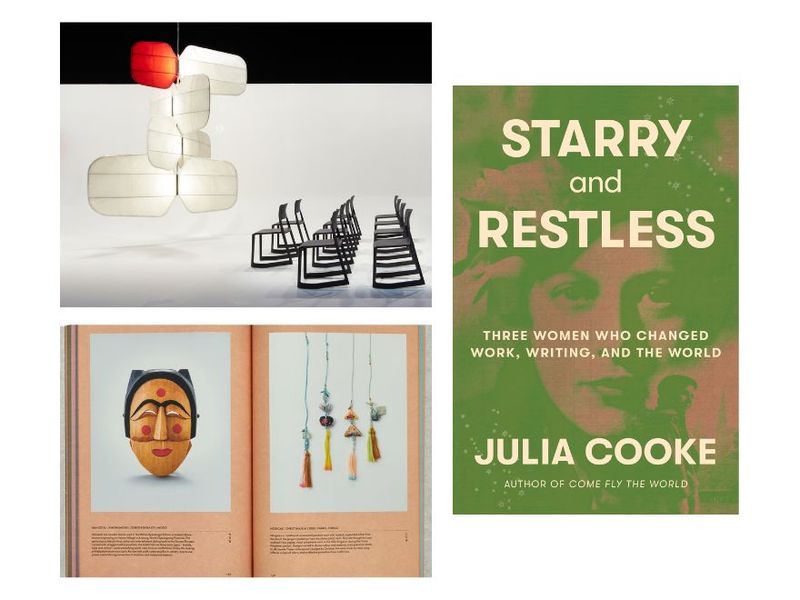
Milan Design Week
With Milan Design Week around the corner, one exhibition in particular has risen to the top of our must-see list: “Alphabet,” the first-ever retrospective dedicated to London-based design studio Barber Osgerby, on view from April 18 through Sept. 6 at the Triennale di Milano (which also has a Lella and Massimo Vignelli show up at the same time). Unfolding from the mid-1990s to 2022, the show consists of a series of plinths displaying objects that embody the studio’s stylistic evolution, including the London 2012 Olympic torch and the Tab lamp (2011) for Italian lighting company Flos. What emerges is a crystalline image of the fine-tuned design language of the studio, established by Edward Barber and Jay Osgerby (the latter the guest on Ep. 142 of Time Sensitive) in 1996, and its unwavering commitment to material intelligence and craftsmanship. Also on our radar for the week: “Metamorphosis in Motion,” a site-specific installation inside Palazzo Litta by architect Lina Ghotmeh (Ep. 129) in the form of a magenta-hued labyrinth; a brutalist bathhouse concept organized by Flamingo Estate’s “pleasure-obsessed” Richard Christiansen (Ep. 124) and Kohler; and an installation by architect and industrial designer Patricia Urquiola at the Franco Albini–designed residence Villa Pestarini, which will reinterpret domestic space through the lens of Albini’s functional, airy oeuvre. —Emily Jiang
Starry and Restless: Three Women Who Changed Work, Writing, and the World by Julia Cooke
St. Louis, Missouri–born Martha Gellhorn stowed away in the bathroom of a Red Cross hospital boat in order to report from Omaha Beach on D-Day. From Japanese-occupied Shanghai, Emily “Mickey” Hahn, also from St. Louis, chronicled the wartime life of a Chinese family for The New Yorker. British journalist Rebecca West visited Yugoslavia on the brink of World War II to write her masterpiece Black Lamb and Grey Falcon. In her new book, Starry and Restless: Three Women Who Changed Work, Writing, and the World (Farrar, Straus & Giroux), Julia Cooke traces these intrepid correspondents’ circuitous—and, at times, intersecting—paths throughout the 1930s, ’40s, and ’50s, from Gellhorn’s front-lines coverage of the Spanish Civil War, to Hahn’s solo travels to Congo under Belgian colonial rule, to West’s dispatch from the 1946 Nuremberg trials—revealing how, as Cooke writes, these reporters courageously “peered into corners and pulled up rugs” at a time when nothing was handed to them. The fiery, uncompromising spirit of all three reporters reshaped long-form journalism as we know it. At risk of losing these trailblazing writers’ contributions to history, Starry and Restless revives their stories in all of their color and complexity. —E.J.
Jeong: The Spirit of Korean Craft and Design by Hyo Jung Lee
The Korean concept of jeong connotes a deep, unspoken emotional bond that develops between people, animals, or even objects over time. In her new book Jeong: The Spirit of Korean Craft and Design (Phaidon), London-based Korean graphic designer Hyo Jung Lee brings this cultural philosophy to the fore, exploring how the connection between maker, material, and user has shaped the country’s craftsmanship over the past 3,000-plus years. The book collapses any hierarchy between anonymous craft objects and renowned works, placing a flask-shaped ceramic bottle decorated with peonies from the Leeum Museum of Art and a mother-of-pearl sewing box from the Onyang Folk Museum side by side with everyday items like traditional brooms, or bitjaru; grooved wood washboards, or ppallaepan; and even a plastic flyswatter, or parichae. Contemporary pieces featured include Dahye Jeong’s delicate receptacles woven from horsehair and Dong Jun Kim’s spherical “Moon Jar” (2017). Finished with Korean-inspired stitched binding, Jeong’s captivating imagery is interwoven with essays by Seoul-based designer Teo Yang, British curator Beth McKillop, and Arumjigi Foundation director J Kathryn Hong. —E.J.
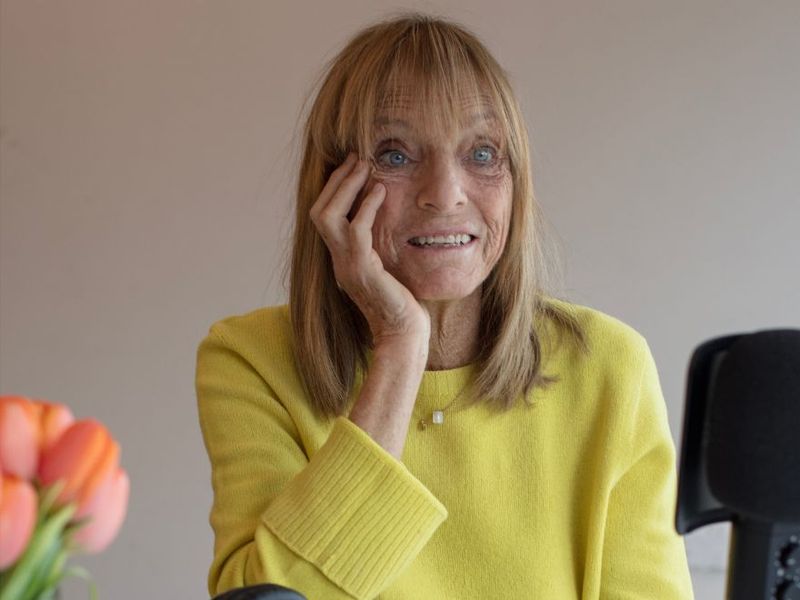
At a dinner party held at chef Ruthie Rogers’s home in 2003, actor Ian McKellen read poetry; performed Shakespeare sonnets; and dramatically recited a recipe for ribollita, a Tuscan soup, from the staircase overlooking the living room. As Rogers writes in her new book, Table 4 at The River Cafe (Gallery Books), this final act—a delightful surprise to everyone, including her—“confirmed my belief that a recipe, properly written, is part science and part poetry.” When the pandemic hit, almost two decades later, Rogers, the chef-owner of London’s acclaimed River Cafe (and the guest on Ep. 85 of Time Sensitive), channeled this belief into a podcast, Ruthie’s Table 4, which began as a simple archive of recipe recitations by friends of the restaurant, but soon expanded into intimate conversations around food and the profound memories it elicits. Since then, Rogers has hosted more than 200 guests on the show, including David Beckham; Paul McCartney; Martha Stewart; and, most recently, Jamie Oliver.
Out last month, Table 4 at The River Cafe presents a collection of interview excerpts that together affirm food as an undeniable force—one with the power to stir up profound emotions, break through language barriers, and forge unlikely friendships. Here, Rogers discusses food as an endlessly rich topic of conversation, her penchant for political podcasts, and her reverence for her friend Salman Rushdie.
Why do you think food is such a naturally compelling topic of conversation?
For everyone, the way food has influenced their life reveals stories that we might not hear otherwise. Food has been, for me, a very connecting way of talking to people. It brings up early experiences: Did your mother cook? Did your father cook? Did they give you exciting food to try, or did you have the same thing every Monday and every Tuesday, another dish? Did you go to restaurants? Once you were on your own, did you cook? All this, it tells the story. For the last five years, I’ve been listening to something like two hundred seventy-two people tell their stories through food.
What are some of your favorite anecdotes from the podcast that made it into the book?
Paul McCartney talked about his early years, how when his mother was very ill and dying, she taught him a recipe for baking mashed potatoes—and he and his father, that’s what they shared [after she died]. Almost every night they would eat these potatoes. The fact that she taught them just meant so much in his memories of her. Also him deciding to become a vegetarian, seeing the sheep in the meadows, and with Linda [McCartney] saying, “We’re never gonna eat meat again.” How two people who were rock-and-roll stars made vegetarianism kind of sexy.
Also, Tom Hollander, who came in with his grandmother’s cookbook, and then his mother added to it, and then he added to it. We went through the cookbook. It’s interesting how many people came in with cookbooks that their parents had made for them when they were about to go to university and leave home as a way of saying goodbye. You’re out in the world, but you still have family. Being a grandmother myself, I’m always bowled over by the role of the grandmother in food, how very often for people from immigrant countries, the grandmother brings the food with her. That means a lot.
So how do you start your mornings?
I have an espresso. Then, it depends on the time I wake up, but I quite often call my friend Caroline Michel, who’s also my agent. We start the day by asking: What did you do last night? What are you going to do today? How are you feeling? What are you thinking? Then the day begins.
Where do you get your news from?
Oh, The New York Times, even though I’ve lived in London for forty-seven years. I also read the English newspapers: The Guardian, The Times [of London]. I really like The Atlantic. I think it’s a brilliant magazine, and Jeffrey Goldberg is a brilliant editor. Then, when I come home at the end of the day, I watch CNN. I go to sleep angry and upset and worried and maybe with some hope. I feel very engaged and involved in the world around me.
Do you subscribe to any newsletters?
I really like Feed Me by Emily Sundberg. I also like The Green Spoon by Alice Waters’s daughter, Fanny Singer. I also like Christine Muhlke’s Xtine.
Any favorite podcasts?
All the political ones. I listen to Pod Save America. They have the same politics I do. They’re informed, and they do it with seriousness and rigor, but they also do it with a very personal projection. I listen to Scott Galloway and Kara Swisher’s podcast, Pivot. I listen to Ezra Klein. I listen to Smartless. I listen to Amy Poehler’s Good Hang. I also like the British ones like The Rest Is History. I like [Anthony] Scaramucci’s Open Book. I love him—he was on my podcast, and I’ve been on his, too.
What are your favorite magazines?
The New Yorker and Vogue. And Air Mail, because Graydon Carter is my best friend.
What books are you currently reading?
I’m reading one of the best books I’ve ever read, which is Salman Rushdie’s Knife. He’s a good friend, and his description of what he went through with the stabbing and the world we’re living in is really telling and beautifully written. I’m also reading Hold Still, Sally Mann’s autobiography. I read it years ago, and I’ve gone back to it because I really liked it. I’ve also been rereading Patti Smith’s Just Kids.
Do you have any guilty pleasures?
Well, what I would answer to that question is: I work so hard that I don’t feel guilty about any pleasure. I don’t think people should feel guilty about pleasure.
I have pleasures of being with my family. I know it sounds corny, but if one of my grandchildren calls me and asks if I’m free for an evening or an afternoon or morning, suddenly my schedule is completely open. The answer to that question is, “Of course I am,” and then I pick up the phone and cancel whatever. That’s a priority in my life.
This interview was conducted by Emily Jiang. It has been condensed and edited.
Our handpicked guide to culture across the internet.
On Tues., April 21, architects and former Time Sensitive guests Michael P. Murphy (Ep. 57) and Billie Tsien (Ep. 45) will join our very own Spencer Bailey for an in-person and virtual live conversation on the complex relationships between memory and the built environment. [The Cooper Union]
Artist Adam Pendleton (the guest on Ep. 110 of Time Sensitive) and fashion designer Gabriela Hearst (Ep. 32) have collaborated on a limited-edition run of 25 hand-painted Nina bags—named in tribute to musician and activist Nina Simone—that merge painting, sculpture, and design. [Sotheby’s]
As Heidegger’s Being and Time magnum opus nears its centenary year, our philosopher-at-large, Simon Critchley (Ep. 42), has launched a Critchley on Heidegger newsletter, with his first post declaring, simply enough, “The thesis of the book is: Being is time! That’s it.” [Substack]
In a recent interview, author Jhumpa Lahiri (Ep. 69) shares how her novels are often jump-started by confronting something that’s “haunting” her. [Harper’s Bazaar]
British writer and cultural critic Olivia Laing (Ep. 138) contemplates what gardens mean in a permacrisis and how tending to the earth, far from enabling escapism, reorients us toward reality. [The Financial Times]