Neptune Papers’s Daytona Williams, Brunello Cucinelli, The New Japan, and more.
Good morning!
Olivia here. Recently, as I was at the tip-top of the Coney Island Cyclone, just before a primal-scream plunge, a thought arrived: A memorable conversation is not unlike a great thrill ride. An opening question, when met with a surprising response, might veer in a completely unexpected direction; level off for a reflective stretch; twist, turn, and ascend to exhilarating new heights, with a brief pause to take in the view; and leave both interviewer and subject back where they started, a bit breathless, sitting in amazement at where they went together.
As I look back on our just-wrapped 13th season of Time Sensitive, I’m struck by how many of the conversations Cycloned. I’m thinking, for instance, of the searching exchange that unfolded between Spencer and the 91-year-old Sheila Hicks (Ep. 153) while sitting inside the Nebraska-born artist’s courtyard in Paris. It may very well be the most transportive “site-specific” recording we’ve done yet. With spring birdsong and Saint-Germain-des-Prés bustle in the air, Hicks described how textiles, weaving, and threads, all central to her life, “just sort of crept in,” without her premeditatively planning it. An ethereal dialogue befitting of its serene setting, the interview admittedly starts off a bit bumpy—but that’s also what makes it so memorable. From beginning to end, Hicks keeps Spencer on his toes. Their conversation, a roller-coaster ride all its own, is full of loops, swoops, and spirals.
Or consider Ep. 154 with Maria Popova, of The Marginalian, who considers the mysteries inherent to being a human alive in time, observing how aspects of self shape-shift and evolve, in subtle and seismic ways alike. “What makes you and your childhood self the same person despite a lifetime of physiological, psychological, social, cultural change? Who is that?” Popova asks with a laugh, then pauses. “No, it’s a genuine question. Do you know? I don’t know.” Me neither. But what a pleasure it was to hear the gears of Maria’s endlessly inquisitive mind in motion. She was joined this season by fellow guests including novelist, essayist, and short-story writer George Saunders (Ep. 151), who—on-point here—shares his writer-as-roller-coaster-designer approach to perpetually making readers’ jaws drop; singer songwriter Valerie June (Ep. 152), who discusses music as a cosmic door to accessing “other worlds”; and Belgian fashion designer Dries Van Noten (Ep. 156), who, from his foundation’s exquisite palazzo in Venice, speaks about finding meaning in daily encounters with beauty.
For Hicks, Popova, Saunders, June, Van Noten, and the other 150-plus extraordinary people across our growing, seven-year-old archive, serendipity often plays a role in how they discover a sense of purpose that gives shape and weight to their days. As Sheila reminds us, “Who are you going to meet this afternoon by chance? Someone’s going to open the door for you to go someplace and see something or do something. And what are the consequences?”
It’s rarely possible, or even desirable, to know precisely what’s around the bend. My ideal approach often calls for accepting that I won’t know, can never fully know, what’s next, and buying a ticket anyway. The Cyclone celebrated its illustrious 99th birthday this year. Time Sensitive marked our seventh. How beautiful it is to imagine the potential of 92 more years of thrilling conversations that invite a certain surrender to the unknown.
—Olivia
“We’re always in a transitional moment where everything is always under construction.”
From Season 13: Listen to Ep. 155 with editor, curator, and PIN–UP founder Felix Burrichter at timesensitive.fm or wherever you get your podcasts
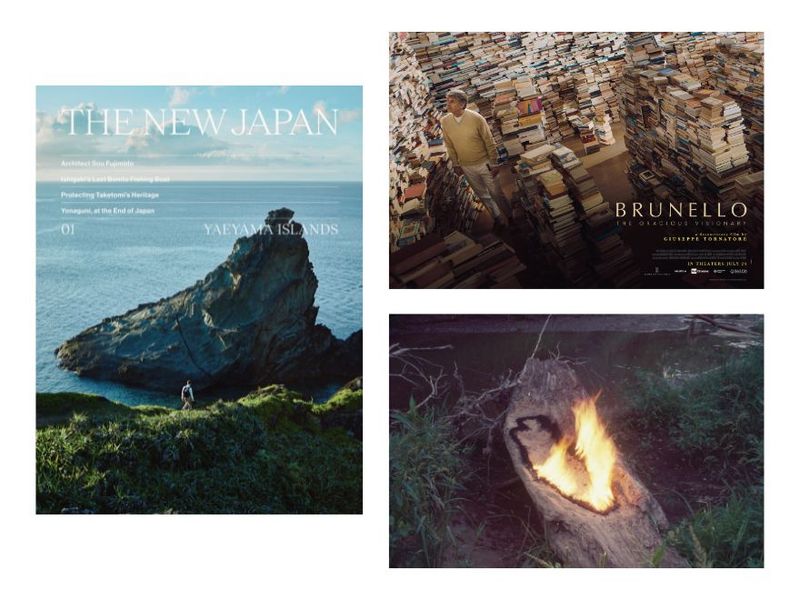
The New Japan
The last bonito fishing boat on the Yaeyama Islands, a studio visit with master weaver and dyer Akiko Ishigaki, and an interview with architect Bjarke Ingels (the guest on Ep. 4 of Time Sensitive) about his first completed project in Japan: These are just a few of the handpicked stories featured in the first two issues of The New Japan. Published by Tokyo-based hospitality company Not a Hotel, edited by fashion and culture writer W. David Marx, and art-directed by designer Ian Bennett, the new Japanese and English bilingual magazine aims to broaden the world’s appreciation for Japanese culture through lesser-known regions that make up the nation’s countryside. The semiannual magazine’s inaugural issue, launched last December, explores the remote Yaeyama Islands that neighbor Taiwan; the second issue, out earlier this month, traverses Setouchi, an area encompassing the Seto Inland Sea and the surrounding coastal areas. Later this summer, it will release an issue about Miyazaki, on the country’s southeastern Kyushu coast, known for its surfing culture, Wagyu beef, and sites of many Shinto legends. A delightful mix of local cultures, dazzling landscapes, and time-honored craft traditions, The New Japan reveals a Japan unfamiliar to even the most seasoned traveler. —Emily Jiang
Brunello: The Gracious Visionary
The poster for director Giuseppe Tornatore’s now-playing documentary about Brunello Cucinelli shows the fashion executive and creative director looking skyward (he has long loved stargazing) in quiet contemplation, wearing one of his signature cashmere pullovers, surrounded on all sides by stacks and stacks of books. It’s a fitting image for this immersive portrait of a designer-philosopher who has proven how to steadily build a long-view business that, much like a floor-to-ceiling library, only accumulates in value, meaning, and well-worn wisdom over time. The film’s cinematic reconstructions—including lively Italian family dinners, a smoky bar from his youth, and a boyhood stroll with his grandfather, whose lessons in card games instilled some of the strategic instincts that would help him find his footing upon launching his namesake brand in the late 1970s—elegantly weave among insights from friends, collaborators, and industry insiders. (Oprah Winfrey, a longtime supporter of his, makes several appearances.) Of his formative meals, Cucinelli recalls, “There was silence, spirituality, intimacy, conversation,” all of which cultivated in him a joy, a humility, and a human-centered ethos that he continues to carry forward. As he told Spencer in an interview for this newsletter last spring, “I’ve always been keen on building for eternity.” —Olivia Aylmer
“Ana Mendieta” at the Tate Modern
“My art is the way I reestablish the bonds that tie me to the universe,” Cuban American artist Ana Mendieta once said. A just-opened retrospective at the Tate Modern in London, on view through Jan. 17, 2027, brings her words and work—and the indelible mark left by both—into sharp focus. Among the more than 120 pieces on view are her renowned Silueta series (1973–80), including a re-creation of her first-ever “earth-body” work, assembled from branches, leaves, soil, moss, and stones, and “Ñañigo Burial” (1976), a Silueta composed of black ritual candles. Beyond the walls of the museum, one of the artist’s tree sculptures, first made in 1982, dwells outside. The retrospective comes more than four decades after Sept. 8, 1985, the day Mendieta fell to her death from the window of her and the late sculptor Carl André’s 34th-floor Greenwich Village apartment. Though the circumstances of her death and its aftermath have been sensationalized and publicly debated—even serving as the subject of the thoughtful, nuanced first season of the podcast Death of an Artist, hosted by curator Helen Molesworth (Ep. 105)—the genius and steadfast spirit of Mendieta’s art refuses to be eclipsed by tragedy. The Tate Modern exhibition makes this truth eminently clear, inviting all who visit a chance to bear witness to it. —E.J.
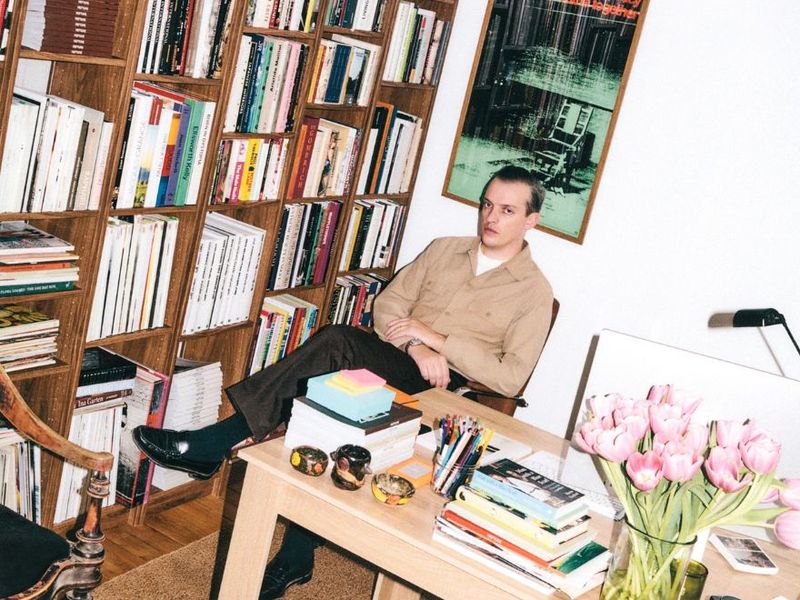
Since its founding five years ago, Paris-based editor Daytona Williams’s beautifully crafted biannual interiors publication, Neptune Papers, has always taken an evergreen approach to capturing people fully alive and present in the personality-filled spaces they call home. So far, its eminently collectable covers have featured the likes of Julianne Moore, architect Bill Sofield’s Maine lighthouse, and Iranian actress and activist Golshifteh Farahani. It also extends its reach into unexpected corners of art, fashion, and design, whether showcasing objects curated by Saint Laurent’s Anthony Vaccarello, playful artist-designed teapots commissioned by Loewe for last year’s Salone del Mobile, or the hidden Lalanne sculptures in a Sotheby’s Paris warehouse. Its recently launched milestone 10th issue, themed “Icons”—featuring 468 pages and six covers, including Lauren Hutton on a New York balcony through the lens of Alexandra Nataf, and the Donald Judd Architecture Studio, photographed by Phoenix Johnson in Marfa—is a testament to Neptune’s abiding appeal.
Here, Williams talks about taking freezing-cold showers (inspired by Victoria Beckham), his current fixation on literary and media-business biographies, and the Sisyphean endeavor of making a magazine to last.
How do you start your mornings?
I am lucky to be woken up every morning by my husband bringing me coffee in bed. I drink it while checking my emails before taking a lukewarm shower, which I then turn to freezing for the last couple of minutes. I read that Victoria Beckham does this, and I’m happy to follow any skin-care advice she’s dishing out.
Tell us a bit about how you put together your new “Icons”-themed edition of Neptune Papers.
The thought process was to approach it with our own definition of the word. The Oxford Dictionary defines icon as “a person or thing that people admire and see as a symbol of a particular idea or way of life.” We chose to look at it as the idea of a person leading life with a singular point of view, whether they’re well known or not, and always keeping that layered mix of subjects that compliment and contextualize the next. My life would be much easier if we just chased people with large online followings or roles in trendy TV shows, but I think that readers are very hungry for that element of surprise and discovery.
What does this milestone mean to you?
I always describe making a magazine, in 2026, as pushing a boulder up a mountain backwards in the rain barefoot, so I am very pleased to have made it to ten issues. I am only now starting to feel like I kind of know what I am doing. It truly makes me happy when I see the magazine out in the world, because it really is just my husband and I toiling away in our office coming up with ideas and crossing our fingers they work out.
What is your research process when looking for and interviewing new subjects for Neptune?
I know right away if a story is a good fit for us and look for subjects that feel both timely and timeless and highlight an individual point of view. I tend to describe the magazine as “uptown meets downtown” and think each story contextualizes another. A traditional country house can be featured next to a contemporary artist’s messy studio. Both add a little something to the other, making the whole thing surprising and layered.
Where do you get your news?
I religiously read the weekend editions of The New York Times, the Financial Times, and Le Monde, but during the week, I keep things light to avoid the overwhelming sense of dread that comes with a full grasp of the current news cycle. I find it hard to stay driven and keep a sense of purpose when I look at the sadness that is currently spilling over across the globe.
Do you subscribe to any newsletters?
I subscribe to too many at this point and frequently ask myself what the Substack transactions are on my bank account. I enjoy all the Puck newsletters, and I always read Feed Me by Emily Sundberg, Habiter by my dear friend Christina Holevas, The Style Files by Dana Thomas, and some Air Mail stories.
What podcasts do you listen to?
I listen to a lot of podcasts when I am at the office that either revolve around the world of magazine publishing in the nineties and two thousands, such as Going Rogue, Print Is Dead, or Blow-Up. Otherwise, I’m listening to conversations with creatives on podcasts such as The Cutting Room Floor, What’s Contemporary Now, or Fashion Neurosis.
Any favorite publications?
I’m a big print consumer and think that a lot of titles have, unfortunately, watered down their content to try speak to the widest audience possible, thus ultimately losing their voices and rendering themselves irrelevant. In the mainstream landscape, I read The New Yorker, The Atlantic, and Vanity Fair. I think that W is currently the best fashion magazine.
What books have you read recently? Are there any you’re excited to pick up?
I love a biography and just finished In All His Glory: The Life and Times of William S. Paley and the Birth of Modern Broadcasting by Sally Bedell Smith. I also recently reread Jung Chang’s Wild Swans: Three Daughters of China and am now starting Laurence Leamer’s Capote’s Women: A True Story of Love, Betrayal, and a Swan Song for an Era.
What’s next for you and Neptune?
My dream project is to open a retail space where we can bring together works by all of the great designers and artisans that I get to meet through putting the magazine together. It’s in the works, so watch this space.
Do you have any guilty pleasures?
Far too many. I love an ice-cold martini, never say no to sharing a dessert, love to binge-watch comedy shows (I’m currently rewatching Hacks, which I think is one of the best shows ever written), can always justify some retail therapy, and love a good bit of gossip. Life is meant to be enjoyed!
This interview was conducted by Dalya Benor. It has been condensed and edited.
Our handpicked guide to culture across the internet.
Artists, musicians, friends, and fans are gathering in Pittsburgh this weekend to celebrate the 100th birthday of the late sculptor Thaddeus Mosley (Ep. 111), commemorating his love for jazz, poetry, and above all, his family. [TGM at 100]
Ahead of today’s “Limitless Time” festival featuring choreographer and dancer Lucinda Childs (Ep. 147) at the Watermill Center—the arts incubator founded by the late theater director Robert Wilson (Ep. 96)—writer, journalist, and dance critic Brian Seibert ponders its future without him. [The New York Times]
Architect and designer John Pawson (the guest on Ep. 130 of Time Sensitive) speaks with writer and editor Karen McCartney about his dedication to necessity and simplicity in his designs. [This Much I Know]
Twentysomething Atlantic staff writer Rose Horowitch, in a cover story titled “The End of Reading Is Here,” examines how an accelerating literacy crisis, shifting reading habits, and overreliance on A.I. will impact human consciousness, communication, and understanding. [The Atlantic]
Meanwhile, in response to Horowitch’s piece, David Wallace-Wells (Ep. 56) contributes a zoomed-out, intergenerational perspective on the heightened literacy-crisis discourse, finding several data-driven reasons to stay optimistic, including the fact that book sales are at near-record highs. [The New York Times]