In this week’s newsletter, we get a glimpse into editor Dung Ngo’s decades-in-the-making flatware collection, share our Venice Biennale highlights, and more.
Good morning!
I’m back in Brooklyn after 10 days in Vienna and Paris. I went to the former for a four-night stay at the sumptuous Hotel Sacher Wien, which I’ll be writing about in the fourth (2027) volume of The Leading Hotels of the World book series that The Slowdown is overseeing the editorial direction of (the third edition, Explore, comes out on June 24). In Paris, I joined Xtant founder Kavita Parmar for the second talk in the Homo Faber Conversations monthly series at the Fondation Cartier, and later that week visited the studio of the 91-year-old artist Sheila Hicks, to record an upcoming Time Sensitive episode. I’ll share more about our conversation soon, but suffice it to say, it was a winding, twisting, nonlinear journey through time.
Meanwhile, this week’s episode of Time Sensitive, with the novelist, essayist, and short-story writer George Saunders, interestingly (though not so surprisingly) connects to something I just spoke with Hicks about: how perception shapes reality, especially through art and lived experience. Among other things, George and I discuss the relationships between meaning and mortality, attention and presence, and how art—and fiction in particular—helps us see more clearly, feel more deeply, and recognize multiple realities in a world that all too often dulls our awareness. As with Ep. 102 with Min Jin Lee, back in 2023, George reminds us of fiction’s power to enliven our world.
What I didn’t tell George—a lesser-known fact of my background, though it probably becomes clear in our conversation—is that I used to study and write fiction and poetry. He and I geek out about the craft of writing and sentence-making, specifically precision, compression, and respect for the reader. All things I learned from the great English and creative writing professors at the small liberal arts college in central Pennsylvania I attended for undergrad (shout-out to Susan Perabo, Adrienne Su, Carol Ann Johnston, Darrach Dolan, Joshua Kupetz, Victoria Sams, Judy Gill, and Sha’an Chilson!)
The legendary editor Gordon Lish (widely known for his razor-sharp excisions to Raymond Carver’s short stories), who taught a 12-week workshop I attended in the summer of 2009 at New York City’s Center for Fiction, was another teacher central to my journey as a writer and editor. I mention Lish because, as brief as my time with him was, he taught with passion, zeal, and a magnetic, Svengali-like intensity. (Thankfully, before taking the Lish class, I received a very helpful note from the late New Yorker editor Roger Angell, who wrote: “My only advice would be to get the good out of the Lish course (as they say in Maine) while disregarding his excesses.”) The “class,” if I can even call it that, took place weekly, on Monday nights, from 5 to 10 p.m., though it often stretched into the wee hours.
When teaching, Lish followed a very particular, almost ritualized process built around performance, authority, and extreme attention to language. (To more fully understand it, I suggest reading this 2014 New Yorker essay. Even if I don’t necessarily agree with several takes in the piece, it does express his outsize influence and the intense psychological dynamics that I witnessed form between him and his students, myself included.) By the third or fourth gathering, after reading dozens of exemplary texts and stories carefully chosen by Lish, students would come with a sentence to read aloud, to which he would then provide an immediate, visceral, often eviscerating response for all to hear. If he approved of the sentence, he’d then ask you to write a paragraph, and if he approved of that paragraph, only then could you attempt to write a full story. His main game, similar to George’s, was to focus not on the full story, but on each individual sentence, with word-by-word, line-by-line rigor. Plot, character, and conventional structure mattered less than the energy, originality, and surprise to be found at this magnified level. One sharp, seductive sentence should propel into the next and the next and the next.
If I recall correctly, only one student read a full story by the 12th session. His name was Mitchell S. Jackson, and he’s since gone on to publish three books and win a Pulitzer Prize. Many of the students never got beyond that first sentence or paragraph. Some quit the workshop altogether midway through. By the final class, I made it about five or six paragraphs into the story I was attempting, and while I certainly felt like a failure at the time, what I gained continues to inform my work as a writer, editor, and interviewer in surprising ways. I think it’s in large part what made the dialogue between George and me so animated, connective, and open.
—Spencer

“We’ve all had those moments where the mind gets expanded, whether it’s artificially or through the death of a loved one, or a harrowing experience, or a beautiful experience. That tells us that there’s unlimited room in the mind.”
Listen to Ep. 151 with George Saunders at timesensitive.fm or wherever you get your podcasts
The 61st Venice Biennale
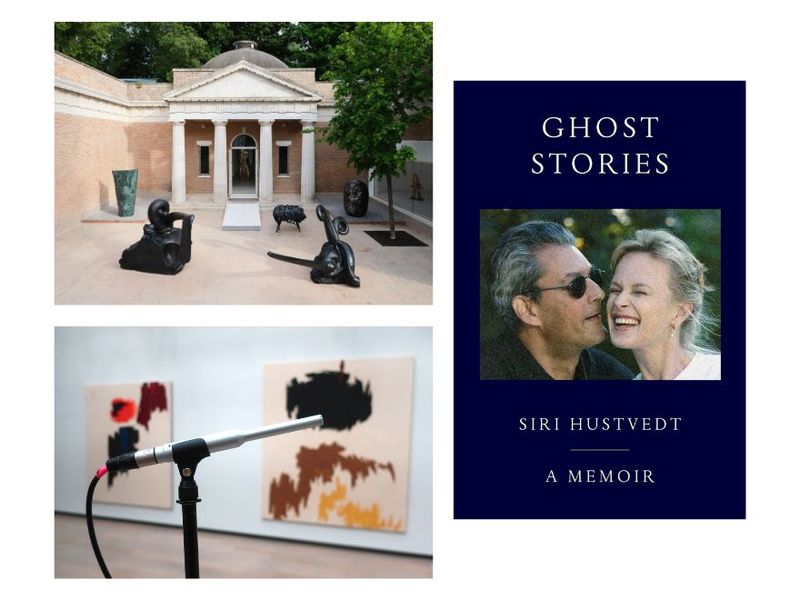
It’s the opening weekend of this year’s Venice Biennale, and all eyes are on Mexico City–based American sculptor Alma Allen, whose unorthodox selection for this year’s U.S. Pavilion has stirred up debate across the art world (and, as expected, has resulted in some scathing, clickbaity reviews). Rather than shy away from the public discord, however, Allen has embraced the tension, if quietly. As he says on Ep. 150 of Time Sensitive, “It’s fascinating having a complicated situation, a little pressure on people.” His solo presentation, the coyly titled “Call Me the Breeze” (after a J.J. Cale song), features nearly 30 of his otherworldly, biomorphic sculptures and, as with the rest of the Biennale, is on view through Nov. 22. Also at the top of our Venice list? India’s first national pavilion in seven years, which spotlights five emerging artists from across the country’s Indigenous tribes. Other Venice must-sees include artist Hugh Hayden’s full-scale tilted chapel permanently installed on the island of San Giacomo and “Islands of Silence,” an assemblage of marble sculptures by Kan Yasuda that form a serene “mineral garden” at the Fondation d’Entreprise Wilmotte. —Emily Jiang
Ghost Stories by Siri Hustvedt
“I climb into a half-filled bathtub and realize I have forgotten to remove my socks.” This line in author Siri Hustvedt’s new memoir, Ghost Stories (Simon & Schuster), quietly encapsulates the disorienting, haunting stupor of grief. Written following the death of her husband, the writer and novelist Paul Auster, in April 2024, the book explores the quiet rituals of mourning; the ways bereavement materializes in the body, whether through insomnia, momentary paralysis, or irregular heartbeats; and how grief distorts space and time in dreamlike ways. “What I didn’t imagine is that, after Paul’s death, time would be deranged beyond recognition,” Hustvedt (the guest on Ep. 54 of Time Sensitive) writes. “I remember it’s the month of May and then forget. The hours skip ahead but minutes often move slowly.” A patchwork of texts—memories, reflections, Hustvedt’s journal entries during the last months of Auster’s life, and Auster’s final pieces of writing, letters to his then-unborn grandson—Ghost Stories is at once an elegy for her partner of 43 years and a to-the-bone reckoning with what it means to lose the love of your life. —E.J.
“Still in Sound” at the Clyfford Still Museum
“You can turn the lights out. The paintings will carry their own fire,” the artist Clyfford Still (1904–1980) wrote in a 1960 letter. His works’ potential to spark a multisensory response underlies the forthcoming exhibition “Still in Sound” at the Clyfford Still Museum in Denver, Colorado, opening May 16. Far from static experiences, Still envisioned full-body interactions for viewers of his abstract expressionist paintings, made possible by their large-scale luminosity. For this show, several contemporary artists who traverse sonic territory take up this prompt, composing original pieces in response to his works. Participating artists include Peru-born, New York–based Maria Chávez, a mentee of pioneering electronic composer Pauline Oliveros, whose practice, spanning improvised performance, marble sculpture, and visual art, explores the generative possibilities of happenstance, and Matana Roberts, an alto saxophonist and composer who excavates American music’s transcendental traditions. Building on this interactive premise, a custom-programmed installation by Denver-based artist Phillip David Stearns will take audio data from instruments, such as a steel hardpan and frame drum, and generate corresponding visuals informed by Still’s pastel drawings. —Olivia Aylmer
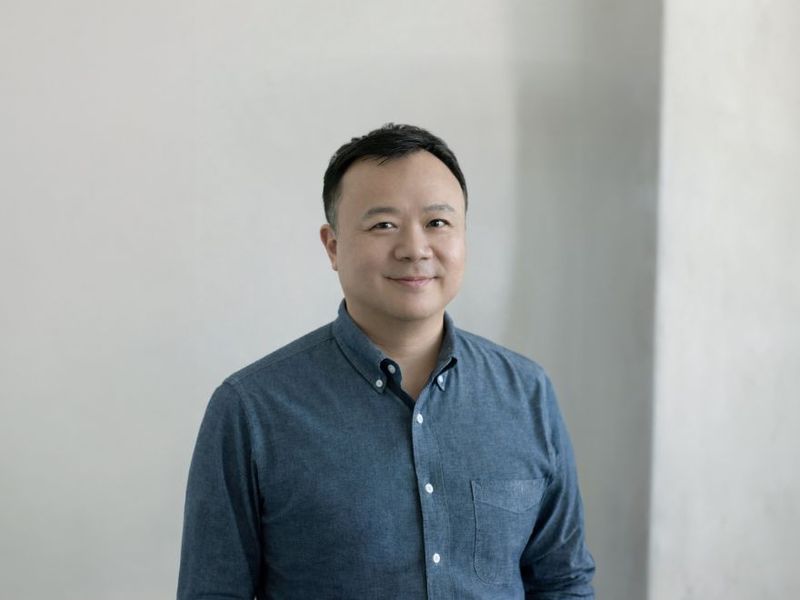
For Dung Ngo, founder and editor-in-chief of the travel and design magazine August, sitting down to eat is no simple feat. For starters, selecting which utensils to use involves choosing from his more than 800 modernist flatware sets. Ngo’s collection, amassed over two decades and featuring designs by the likes of Zaha Hadid, Isamu Noguchi, Gio Ponti, and Heinrich Vogeler, forms the basis of “Knife Fork Spoon: Everyday Tools, Extraordinary Design,” an exhibition at the Denver Art Museum opening May 17. In conjunction, an accompanying 600-page book, the delightful Knife Fork Spoon: Modernist Cutlery 1900–2025, out this summer, draws on Ngo’s discerning research. For 3 Days of Design in Copenhagen this June, he has commissioned 11 new 3D-printed designs for a presentation titled “Knife, Fork, Spoon 3.0” at the gallery Den Frie Udstilling.
Here, Ngo shares his must-read design newsletters, how his architecture training sparked his deep appreciation for cutlery, and his penchant for Korean cooking shows.
How do you start your mornings?
I’ve never been a morning person. I always try to sleep in as much as possible. In the last year and a half, while working in earnest on the cutlery book and exhibition, my schedule has shifted. I’ve been sheltering at home to work, going to bed early, and waking up around 5:30 a.m.
I hate getting up in the dark, so I usually stay in bed and listen to podcasts. This morning, it was The Week in Art from The Art Newspaper, which I really enjoy. By 6 a.m., The New York Times posts their headlines, and I listen to The Daily. Then I make myself a big pot of black tea and start my day.
Where do you get your news?
It’s between The New York Times and The Wall Street Journal apps. People find it funny that I listen to The Wall Street Journal, but I find their coverage more straightforward and neutral than The New York Times—not so much the information, but the no-nonsense language.
Do you subscribe to any newsletters?
Jill Singer, one of the founders of Sight Unseen, started one called Counter Space that I like. Kelsey Keith, formerly editor-in-chief of Dwell, who’s now at MillerKnoll, has a Substack called Ground Condition. Then there’s Snake by Sami Reiss, which I enjoy for its strong point of view.
What podcasts do you listen to?
I love history-related podcasts. Everything from Ridiculous History, where each episode focuses on a fairly unusual incident in history that they cover in a fun way, to In Our Time, from the BBC, which covers everything from ancient Greek culture to astrophysics. There’s one called Dan Loves to Chat, where he talks about very specific New York culture. He has this one with actor and writer Brenda Cullerton on it. She’s hilarious, super old-school New York. Another podcast I started recently is Tim and Kev’s Big Design Adventure. They go around Australia or the U.K. and visit homes and design factories and so forth.
What are your favorite publications?
I sort of go through all of them, from Architectural Digest to Cabana, but for me, that consumption is more work-related. There isn’t really a new design magazine that I love. Things are getting more and more niche and more and more personal. Everyone can do it—the information, the content, the distribution, and the printing doesn’t belong to the select powerful few anymore.
What books have you read recently?
I’ve been spending a lot of time with exhibition catalogs, which is such an interesting format. One catalog that I’ve been going back to is Eventually Everything Connects: Mid-Century Modern Design in the U.S. It’s about how Cranbrook was at the epicenter of modernism in America, especially post-war. It’s so great to encounter names you’ve never heard of, and to see how they’re all connected.
Last year, I visited M+, the museum in Hong Kong designed by Herzog & de Meuron, with the design collection put together by my friend Aric Chen, the museum's founding architecture and design curator. It was amazing to see designers—not just the Japanese, who dominated a big part of the twentieth century, but also Korean and Chinese designers. What was missing was the diaspora of Asian designers in America, and to a lesser extent, in Europe. It was great to see names like Ray Komai given their limelight. Another one that I have been going through is the Ruth Asawa MoMA exhibition catalog, and I currently have the one for the Isamu Noguchi exhibition “I Am Not a Designer” that just opened at the High Museum in Atlanta on order.
How and why did you become interested in flatware, specifically Modernist design?
I was trained as an architect. I’ve learned to look closely at materiality, how it’s produced, and the detailing of an object. Our design culture has an ongoing fixation with chairs. Every time you go to Milan, there are at least a hundred chairs introduced each year. The chair is such a flexible format. I always thought that cutlery was something that was super interesting. There is such a fundamental difference between seeing something in a case in the museum versus actually having it in your hand—to touch it, to feel it, to hold it if it’s a fork or a spoon.
When I turned 30, I realized that I still had the flatware set from Target that I bought when I graduated from college. I thought maybe I should get something to match my furniture and my interest. I found a set at a vintage store marked Rosenthal. I went to the library to find out who designed it. It was by Tapio Wirkkala, the great Finnish designer, from the early sixties. I needed to find it to see how it really felt in the hand. I started buying stuff on eBay and building a little collection. There wasn’t any book on the subject matter.
Do you have any guilty pleasures?
I’ve been watching a lot of Korean cooking shows. There’s one that I love called K-Foodie Meets J-Foodie. It’s a Korean pop singer paired with a Japanese actor. They go around Japan and Korea and take each other to their favorite restaurants and discover different dishes. It’s “food porn,” but you get to see these different cultures, how they dine, how they treat different ingredients, and the physicality of eating together. There’s another Korean show called Chef & My Fridge. They feature a K-pop star and bring their entire fridge into the studio, and these chefs compete to make meals based on what’s available in that fridge in fifteen minutes. It’s super fun and super funny.
This interview was conducted by Dalya Benor. It has been condensed and edited.
Our handpicked guide to culture across the internet.
Ecologist Suzanne Simard (a guest on our former At a Distance podcast) discusses her new book, When the Forest Breathes, and her decades-long Mother Tree Project, which explores how elder trees, carbon stocks, and plant networks help forests survive. [Emergence Magazine]
Solange converses with artist Theaster Gates (Ep. 143 of our Time Sensitive podcast) for her reverently crafted Saint Heron archive, recalling her prescient hope that what she built 13 years ago to share work on her own terms could “grow into the sea of creating better, more careful conversations.” (PIN-UP)
On-the-rise filmmaker Sophy Romvari discusses the making of her semi-autobiographical drama, Blue Heron, a sharp evocation of grief, memory, and the mysteries of processing our past lives over long stretches, emphasizing in a recent interview how its more precise “self-interrogation of the past… partly came from working on the script for a significant amount of time.” [Screen Slate]
Artist Camille Henrot (Ep. 140) talks from her Manhattan studio and a Paris foundry about temporal constraints, the increasing toxicity of the internet’s visual excess, and why making her sculptures in a state of fluid motion “creates this feeling of energy or aliveness.” [Art21]
Poet, essayist, and cultural critic Hanif Abdurraqib considers the cost-benefit of embracing so-called “inconveniences”—small- and large-scale alike—that make us more engaged, alive, and in tune with one another. [The New Yorker]