In this week’s newsletter, we speak about movement as a conduit for slowness with Serge Laurent, Van Cleef & Arpels’s director of dance and cultural programs; stand in awe of Isamu Noguchi’s bold visions for New York; and more.
Good morning!
Olivia here. On a recent frigid Sunday, I found myself sipping a Ruby Slipper cocktail in the back room of the disco ball–lit Parkside Lounge, a Lower East Side dive whose corner building dates back to 1908, for a lively reading as part of a series hosted there by the writer Ann Stephenson, who describes it as a “rock-and-roll show for writers.” (Mark your calendars for Wayne Koestenbaum on March 22.) The bar’s imbued with a patina of well-earned character, ghost sightings included, that’s increasingly rare in a city with too many local treasures replaced by nondescript V.C.-funded coffee shops and soulless salad chains. The reader that afternoon was Gabrielle Hamilton, owner of the now closed East Village jewel box of a restaurant Prune, a “touchstone” of Ann’s personal New York orbit since its 1999 opening, whose devotees once packed into its 30-odd seats for Triscuits with canned sardines, Dijon mustard, and cornichons: a signature snack dreamed up by a chef who, as she wrote in her poignant April 2020 New York Times essay on its sudden shuttering, was “driven by the sensory, the human, the poetic and the profane—not by money or a thirst to expand.”
As a longtime New Yorker with a dozen-plus prior addresses myself, the dialogue between Ann and Gabrielle got me thinking about my own perpetually shifting relationship to this kinetic city, whose pinball-quick pace and propensity to change overnight without warning requires all of us who live here to find our steadfast anchors and return, whenever possible, to old haunts that feel like home. While each self-portrait of New York shimmers with shades and textures all its own, mine, as formed over 15 or so years, looks something like this: matinees in the communal dark at Film Forum; late-night hangs at the deceivingly small Big Bar on East 7th; browsing Three Lives & Company’s staff recommendations and bringing a book to Christopher Park, across from Stonewall; St. Mark’s Church-in-the-Bowery, where the Poetry Project’s invigorating annual New Year’s Day marathon of poetry and performance stretches into the early hours; marveling at Gage & Tollner’s towering Baked Alaska; and, as an undergrad, emerging into the early-winter dark from the New York Public Library for the Performing Arts, ostensibly working on a paper, while inevitably getting blissfully lost in the archives, watching dance works from before I was born. Ask me to conjure this portrait a month from now; the memories that rise to the surface might change. Yet each of these singular spaces—whether I seek them out for culture, a celebration, solace, or a solo visit to Long Island Bar for a medium-rare burger with pickles, cheese, and “fancy sauce,” plus a bowl of fries—makes me glad to be a lifelong regular in the making.
Another reason I can’t quit New York? Its decades of dance history and embrace of experimental, risk-taking artists of all kinds. I came away from the below “Interview With” conversation with Serge Laurent, Van Cleef & Arpels’s director of dance and cultural programs, feeling nothing short of buoyant as we discussed VCA’s Dance Reflections Festival, on now through March 21. This year’s lineup includes “Early Works,” a collection of pieces by the inimitable postmodern dancer and choreographer Lucinda Childs performed by her 1973-founded company, at the Guggenheim. Lucky for us, Lucinda will be the first guest of our Time Sensitive podcast’s 13th season, premiering March 11. I can’t wait for you to listen to her talk with Spencer about honing her craft and deliberately staying true to her distinct style over the years. She’s my favorite kind of New Yorker.
—Olivia
“There is no ‘normal’ time. All these things are very subjective. Even the idea of speed and the idea of slowness are very subjective.”
From the archives: Listen to Ep. 140 with artist Camille Henrot, recorded in our New York City studio on September 9, 2025, at timesensitive.fm or wherever you get your podcasts.
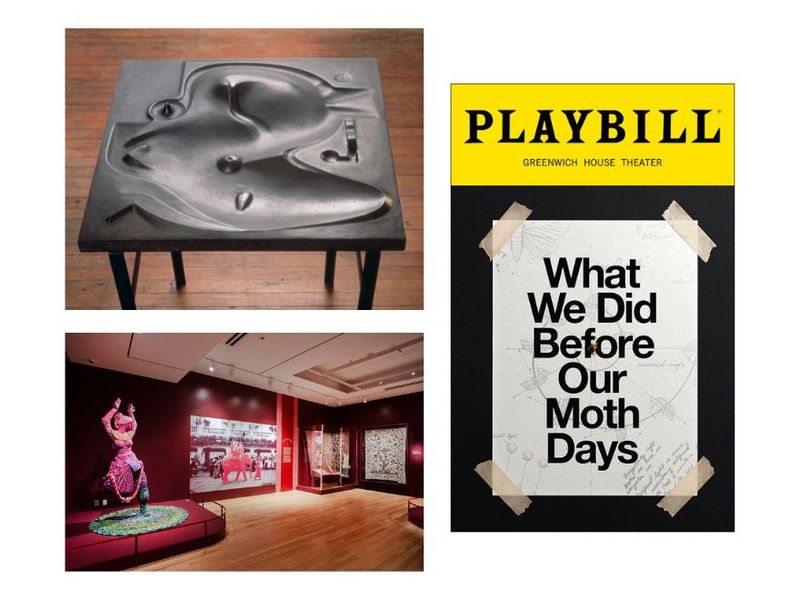
“Noguchi’s New York” at The Noguchi Museum
A set of swings dramatically suspended from staggered heights, slides in the shapes of spirals and right angles, and a “Contoured Playground” made entirely of rounded topographical modulations: Though few of these “playscape” concepts by artist and designer Isamu Noguchi ever came to fruition, they were palpably alive in his mind. In the newly opened exhibition “Noguchi’s New York,” on view at the Noguchi Museum in Long Island City, Queens, through Sept. 13, unrealized works are given just as much, if not more, of a spotlight as the ones he realized. What emerges is essentially a landscape of his mind—his ardent conviction in the possibilities of play, instinctive defiance of norms, and deep devotion to the city he called home—rather than merely a survey of his successes. Completed works like “Sunken Garden” (1961–64) at Chase Manhattan Bank Plaza, which features stones transplanted from Japan’s Uji River, elucidate the ways in which Noguchi tangibly shaped New York, while models and blueprints for never-built playgrounds, gardens, and public plazas highlight his untapped visions. The resulting panorama speaks to the artist’s “restless energy,” as curator Kate Wiener calls it, and his drive to resist notions of “what should be” and, instead, probe the depths of “what could be.” As the show’s title suggests, it really is Noguchi’s New York. We’re all just living in it. —Emily Jiang
What We Did Before Our Moth Days at Greenwich House Theater
Playwright and character actor Wallace Shawn, 82, and avant-garde theater director and actor André Gregory, 91, could not have predicted the enduring creative partnership that would emerge after being introduced, more than 50 years ago, by their friend, journalist and critic Renata Adler. The kindred spirits went on to co-write and star in the cult classic, Louis Malle–directed film My Dinner With André (1981), which depicts a roving, out-of-time conversation between two estranged friends and counts the playwright Annie Baker as an admirer. In their intimate new play, What We Did Before Our Moth Days, in previews now at Greenwich House Theater and running through April 26, they explore the cost of selective sharing and familial secrets. As comedian John Early, one of the play’s four actors, recently pitched it to Seth Meyers, “It’s like you’re a fly on the wall in someone’s therapy session.” At their core Venn diagram overlap, Shawn and Gregory are empathetic, humorously astute, philosophical, and patient observers of human nature. With Moth Days, their mutual interest in how each other’s brains work—and in showing the often absurdly wide gaps between how people wish to be perceived versus how their day-to-day realities look, feel, and unfold behind closed doors—continues. —Olivia Aylmer
“The New York Sari” at The New York Historical
A structurally simple garment—six to nine yards of fabric wrapped around the body without a single stitch, zipper, or button—the contemporary sari is the culmination of a rich, complex history of textile production, global trade routes, and local craft traditions tracing back millennia. Curated by Salonee Bhaman, Ph.D., a historian and curatorial scholar at the museum’s Center for Women’s History, and Anna Danziger Halperin, Ph.D., the center’s director, and on view through April 26 at The New York Historical, “The New York Sari” charts the garment’s path from the South Asian subcontinent to New York City and how, once seen as a marker of difference here, it has over time become woven into the city’s cultural fabric. Among the pieces on view are a silver robe of cascading tissue organza worn by Shahana Hanif, the first South Asian woman to be elected to the New York City council; ephemera chronicling the South Asian Lesbian and Gay Association’s involvement in ’90s-era activism; and artist Shradha Kochhar’s arresting cocoon-like form that reclaims Kala, a strain of cotton indigenous to India that was disfavored by 19th-century British officials during colonial rule. Far from one-note, the exhibition presents a symphony of voices, stories, images, and influences showcasing the sari in all of its multiplicities—as a piece of clothing that at once embodies origin and diaspora, tradition and subversion, ancient history and unyielding fights toward progress. —E.J.
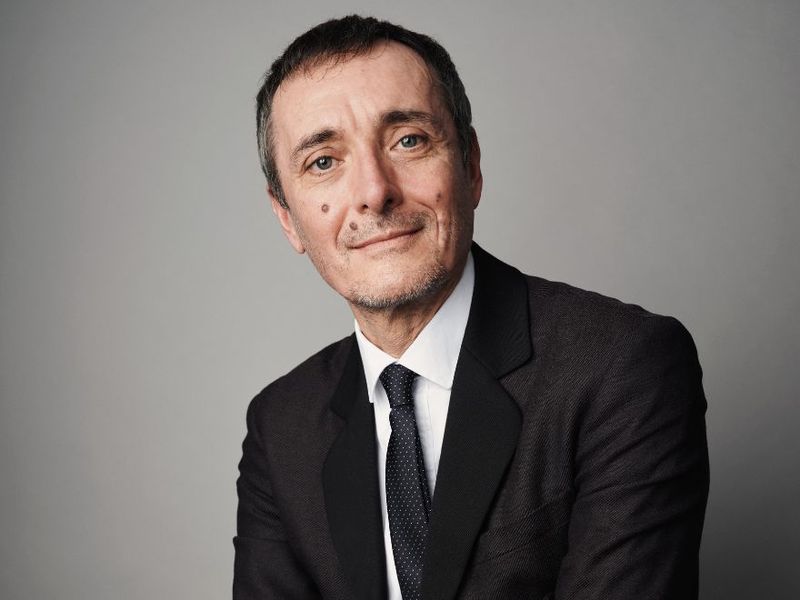
Dance often acts as a living, breathing time capsule, containing within its steps embodied knowledge—informed by a sense of place, history, memory, and technique—passed down through generations. As the director of dance and cultural programs for Van Cleef & Arpels, a role he’s held since 2019, Serge Laurent cares deeply about bringing new audiences to experience this form with an open mind and removing any preconceived barriers to entry. Through VCA’s Dance Reflections festival, a global initiative launched in 2020 that has especially helped to enliven and revitalize New York City’s dance landscape, Laurent has programmed a particularly vibrant, five-week lineup of more than 20 performances across multiple venues, plus public workshops held at the Joyce Theater’s New York Center for Creativity & Dance. Running now through March 21, the festival’s seventh edition features leading contemporary dance companies, experimental works, and legendary postmodern choreographers, including Merce Cunningham’s 1999 movement-meets-technology piece, “Biped,” on a double bill with Greek choreographer Christos Papadopoulos’s U.S. premiere of “Mycelium,” both performed by the Lyon Opera Ballet, and “Romeo & Juliet Suite” by Benjamin Millepied with the L.A. Dance Project, a site-specific take on the classic Prokofiev ballet that merges dance with theater and film.
Here, Laurent shares how his art history background, including prior roles at Fondation Cartier and the Centre Pompidou in Paris, sparked his ongoing interest in the body as a site of creative expression; the dynamic relationship between live performance, speed, and slowness; and why he believes that dance belongs to everybody.
What were some of the guiding principles for this year’s Dance Reflections festival that led you to spotlight these particular choreographers and works?
First of all, when you present dance in New York, you have to think about the past, what’s happened before. This city welcomed so many essential choreographers. I’m thinking about Merce Cunningham, of course, and Trisha Brown, as well as many others. When I started to get involved with dance, I realized that contemporary dance got such a heritage from the postmodern period, and all these choreographers opened so many possibilities by their approach to the art of movement. So, no more rules, working in public spaces, working in museums, getting back to the stage. The plural, transdisciplinary approach of this generation—it’s the reason why they were connected so much to visual arts. My background is visual art, so I feel a strong connection with New York, especially because, as an art historian, I need—if I want to approach a contemporary option—to refer to what’s happened in the past.
Sometimes we forget that contemporary art is just a result of a full history. It’s not something coming from above; it’s a continuation. Take this anecdote: When [Vaslav] Nijinsky, in 1912, created “The Rite of Spring,” sure, everybody was wondering about that. If you look at all eras of art history, there were always artists inventing, pushing the borders, even if sometimes, in their time, they were misunderstood. What I want to express through the festival is that it’s not only a lineup of artists, it’s a platform to explain the mystery of creation.
How would you describe the festival to someone who thinks that dance may not be for them, or who has maybe had less exposure to contemporary dance?
I understand perfectly that for a general audience—we’re talking about dance, but we could talk simply about contemporary art—people can think it’s not for them, and I think it’s really a shame. My job is to make a mediation between artists and audiences. What I want to do is to invite people on a journey to discover things that probably, for some of them, they have never seen before. Why do I use the term journey? Because it’s like traveling. When you travel, you travel to a different culture. You experience things. Sometimes you appreciate them. Sometimes you don’t like it. For me, a festival, it’s like making a trip to a new territory.
Dance, for me, is an art form that belongs to everybody. Our bodies are in motion, are made to move. I always say to people, if you don’t know anything about dance, about contemporary art, don’t try to understand. It’s normal if you don’t understand. When you travel to, I don’t know, an Indonesian temple, and you see sculptures and forms, you don’t necessarily know the iconography of it, but you feel something. With dance, just open your mind, receive things, and question yourself about what you are experiencing. It’s not my goal to teach you. My wish is to offer you a very personal experience.
Van Cleef & Arpels has such a strong relationship with dance, dating back to the nineteen-twenties. What is it about the Maison’s century-long relationship to dance that moved you to come on board?
I started my career as a visual art curator, and after, I moved to performing arts, and one step at a time, progressively, I’ve focused into dance. What do I like about dance? It can be an art form in itself: pure movement, no stage, no music, no lights, just the art of movement. At the same time, it can bring together all the other disciplines. I think that’s fascinating. I studied art history for a very long time. If you look at art history, the body is at the center of most of the creation; humanity is at the center. This art form, using the body as a medium, it’s something that fascinates me.
I was working at the Pompidou, and I was approached by the CEO of Van Cleef & Arpels. I didn’t know anything about the luxury world or jewelry. But I’m fascinated by creation, and when, for the first time, I started to approach their creations, I was really impressed, because I don’t see them as objects to purchase, but just as artworks. I said, we have something in common, absolutely. For me, Dance Reflections is a new chapter in the story of the Maison with dance. To keep on writing a story excites me a lot.
Notably, this year’s festival includes a performance, “Early Works,” by the Lucinda Childs Dance Company. Lucinda was a longtime collaborator of the late stage director and playwright Robert Wilson [the guest on Ep. 96 of Time Sensitive]. Do you see this festival as a way to further Bob’s legacy and to honor his memory within the world of performance?
I was totally fond of his work. He invented a language, and I’m so respectful of that. Even the way his actors move pays so much attention to the body. Again, dance can be so many different forms. Even stillness can be dance. Even slowness can be dance. With Bob Wilson, when you see the characters on stage, they are dancers.
We’re supporting the Watermill Center [founded by Wilson in 1992], and we want to support the activations of Bob Wilson’s repertoire. But not only the repertoire—the spirit of it. Watermill is not only a place to do a gala every year; it’s also a concept, a vision of the world. The idea is to bring together artists from all over the world, in residency, to have all these people sharing, communicating together. It’s really a beautiful vision of the world. When I’m thinking about the mess we’re in now, these kinds of utopias have to be supported.
I love what you said about how even slowness and stillness can be dance. How do you see the value of live performance as a means for people to engage more deeply with whatever is unfolding on stage?
It’s essential to connect with these two notions. In my job, I have to go fast to organize something. It’s also essential to slow down. When people attend a performance, their brains are active. Hopefully, it’s a time when they are not producing something, a way to connect with the rest of the world, with nature. We say in French, “vacancy.” It’s not a holiday, just vacant.
We have to be very careful with social media. It’s addictive. Your brain is made to have a start and end. You have to be strong to escape. You lose your time; you don’t feed yourself. You don’t remember anything. But when you contemplate the sky, a painting, an art form, you feed yourself. Sometimes, after a performance, people debate right away. Most of the time, I leave the theater to be on my own. It’s a second step for me, that moment.
This interview was conducted by Olivia Aylmer. It has been condensed and edited.
Our handpicked guide to culture across the internet.
Our philosopher-at-large, Simon Critchley, reviews Peter Ormerod’s David Bowie and the Search for Life, Death, and God (Bloomsbury Continuum), highlighting Bowie’s prescient sense of the internet’s “menace.” [The Guardian]
Next year, 40 years after founding Jazz at Lincoln Center, impresario and trumpeter Wynton Marsalis (the guest on Ep. 55 of Time Sensitive) will step down from his role as managing and artistic director. [The New York Times]
Faye Toogood (the guest on Ep. 126 of Time Sensitive) and her sister, Erica, announced that, after 12 years in business, they’re shuttering their Toogood clothing label—which they’ve called “a radical experiment in gender-neutral dressing”—and going forward will pursue their respective design philosophies through other channels. [Instagram]
Writer Annie Armstrong runs a vibe check on the Greenwich Village evening club People’s and dishes on a legal spat between LVMH CEO Bernard Arnault and his personal chef in Caper, the new food- and restaurant -focused media company co-founded by two Puck alums and helmed by former Vanity Fair deputy editor Dana Brown. [Caper]
Poet and essayist Ocean Vuong discusses his debut photo exhibition, “Sống,” on view through May 10 at the Center for Photography at Woodstock, citing photography’s “nakedness” as important to his writing practice. [Another]