In this week’s newsletter, we hear from our contributing editor Emily Jiang about how silence, songwriting, and philosophy shape her media rotation; stop by an exhibition of candleholders in Point Reyes Station, California; and more.
Good morning!
One of the great joys of running your own business over many years is watching your team morph and grow, and I mean this in myriad ways: personal and professional, literal and metaphorical, spiritual and intellectual. Our contributing editor Emily Jiang exemplifies this. She arrived at The Slowdown in 2021 fresh out of the Columbia Publishing Course and, before that, Pomona College in Claremont, California, where she’d received a B.A. in philosophy, politics, and economics, and had been the founding editor-in-chief of the college’s Tabula Rasa philosophy journal. Emily started here as an assistant editor, moved up to associate editor, and then on to senior editor over a period of just three and a half years—the kind of rapid evolution that a small, entrepreneurial enterprise like ours is ideal for fostering.
During this time, Emily was pivotal in keeping our Time Sensitive podcast and this newsletter humming, and worked on everything from the book series we’re creating with The Leading Hotels of the World—yesterday, we announced the third and latest edition, Explore, which comes out this summer—and our April 2023 “Take It or Leave It” exhibition with Paola Navone, in Milan. Last year, after a six-month hiatus in California, she returned to New York and rejoined The Slowdown as a contributing editor; now she’s running this newsletter. To kick off 2026, I wanted to shine a light on Emily and her thoughtful, considered perspective on storytelling and media through our “Media Diet” column, below.
Consider this edition of the newsletter a moment of Emily and team appreciation. What we do at The Slowdown is handcrafted and human-led, and it’s the people behind it—Emily; Ramon Broza, our head of production and operations; Olivia Aylmer, our senior editor; Cynthia Rosenfeld, our editor-at-large; Johnny Simon, our sound engineer; Adriana Gelves, our head of partnerships; Erika Owen, our marketing and audience development advisor; Rosen Tomov, our digital designer; Mimi Hannon, our copy editor; and dozens of freelancers around the world, including our other contributing editor, Dalya Benor—that make it sing. To say the ultimate (though also true) cliché: It takes a village.
Perhaps it’s the hyperspeed, attention-addled times we’re in, but I’ve been feeling more and more the pull of why The Slowdown matters, with a growing awareness of how the kind of slow, mindful, long-view storytelling we create does actually make a difference. We’re not taking an easy, clickbait path, but it’s one that I believe will stand the test of time. This may be why, in recent weeks, we’ve received notes from readers and listeners appreciative of the “genuine reflection and revelation” and “poetry and joy” of our recent “super nourishing and ridiculously interesting” Time Sensitive episode with Theaster Gates.
I feel so lucky to get to do what I do, and with such an incredible team, all of it for an audience—yes, you—that inspires us all to keep going.
—Spencer
“The thing that being a public person doesn’t allow for is nuance or being human. That’s what I’ve built my entire career on, is being an imperfect human and making mistakes and being myself.”
From the archives: Listen to Ep. 139 with cook and food writer Alison Roman, recorded in our New York City studio on September 30, 2025, at timesensitive.fm or wherever you get your podcasts.
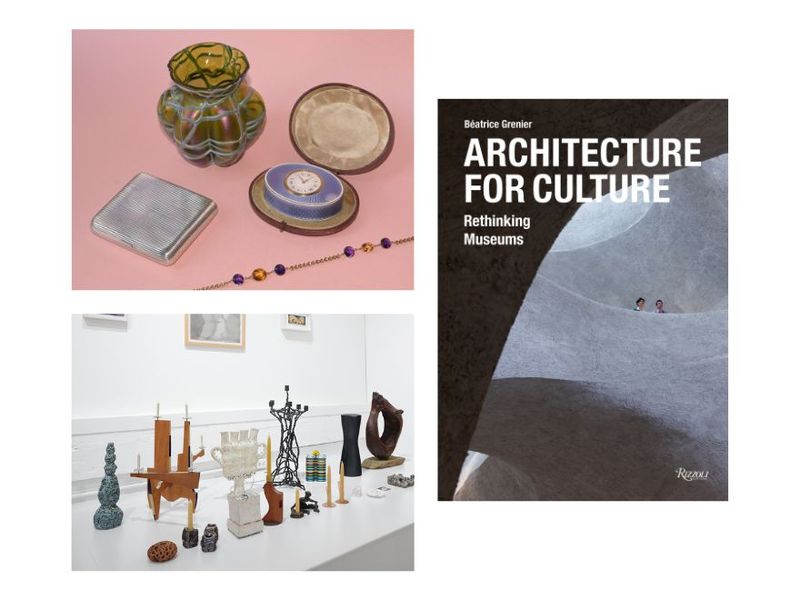
The First Annual YADA Show
From Jan. 23–25, a second-floor salon in the historic George F. Baker Mansion on Manhattan’s Upper East Side will transform into a cabinet of curiosities, furniture, and objets d’art handpicked by eight emerging antiques dealers. The weekend-long event (and already-sold-out opening night celebration) marks the inaugural show of the Young Antique Dealers Association (YADA), a new organization co-founded by antiques consultant Peter Kent Carlisle, co-chair of the under-40 American Young Georgians Lansing Moore Jr., private collections manager Naomi Sosnovsky, and jewelry designer Maxim Schidlovsky that aims to showcase and connect their early-career trade peers and collectors alike. (YADA’s definition of “young” remains open to interpretation; an age limit for membership has yet to be set.) The expertise of this year’s participants stretches from antiquity to the 20th century and across geographies, including the American East Coast, Europe, and East Asia, with a shared emphasis on rarity, research, and character. Whether their wares materialize as an Edwardian-era gold, citrine, and amethyst watch chain necklace; an 18th-century verdure tapestry; or a silver ribbed cigarette case, these decorative-arts enthusiasts take pleasure and purpose in finding homes for enduring, one-of-a-kind pieces with past lives. —Olivia Aylmer
Architecture for Culture: Rethinking Museums
Museums tell the stories of everything around us—legendary artworks, ancient civilizations, design evolutions—but not enough attention and scholarship has been dedicated to museums themselves. With her new book, Architecture for Culture: Rethinking Museums (Rizzoli), curator and writer Béatrice Grenier, director of strategic projects at the Fondation Cartier in Paris, addresses this gap, zeroing in on several paradigm-shifting examples. Spurred by her visit to the China National Archives of Publication and Culture, a hybrid library-museum in Hangzhou, Grenier considers the many forms and functions museums can take. In the chapter on landscape, she highlights Japanese architect Junya Ishigami’s kilometer-long Zaishui Art Museum in Rizhao, China, which houses no traditional artifacts; instead, the surrounding nature is the focal point. Other featured works further challenge fixed notions of what a museum can be, from Central Park, which Grenier says is “as deliberately designed as a skyscraper,” to “City,” Michael Heizer’s sculpture in the Nevada desert that uses earth as its material. At once intellectual and playful in its interpretations, Architecture for Culture does not propose a single solution, but rather underscores the continued relevance of museums in our digital age and clues us into their infinite possibilities. —Emily Jiang
“100 Candleholders” at Blunk Space
JB Blunk’s 1981 exhibition “100 Plates Plus” saw the sculptor toy with common conceptions of this primordial piece of crockery, one of his most prolific forms. Drawing from this idea, Blunk Space’s “100” series—which began in 2023, with “100 Hooks”—debuts its second iteration, “100 Candleholders,” on view now through March 28. Curated by Mariah Nelson, Blunk’s daughter and director of both the gallery and the Blunk Estate, the exhibition features more than 100 artists from around the world who were prompted to create a candleholder from any material inspired by Blunk, his work, or Blunk House, his family home. The result is an eye-popping mélange of objects so drastically disparate in color, shape, and style that many are hardly recognizable as candleholders whatsoever. Artist Jamil Hellu’s sculpture features two kissing plaster masks—one painted a metallic aquamarine, the other flamingo pink—with a candle passing diagonally through the faces’ “lips.” A work by ceramicist Zoe Dering appears to cradle a taper in a tangle of red spaghetti noodles. Some, as with Julian Watts’s biomorphic forms in oxidized walnut, are subtly elegant, while others are outlandish or comedic. All testify to the endless creativity that can emerge out of constraint. —E.J.

Whether she’s living off the grid in a Norwegian boathouse, taking a solo sabbatical at a silent meditation retreat, or catching up on her favorite philosophy podcast, our contributing editor Emily Jiang values grounding offline experiences and reflective media offerings. In an era of all-too-frequent sensory and information overload, Jiang carves out unhurried time to consume films, books, and conversations that infuse her days with meaning and quiet contemplation. Here, she shares a glimpse into the morning movement routine, bookmarked newsletters about motherhood and artmaking, and Éric Rohmer movies that bring her solace in solitude.
How do you start your mornings?
I always do yoga first thing. It’s the same twenty-minute routine I’ve been doing every day since I was about 12. It’s so ingrained in my every day that I really can’t function without it. It’s a time to check in with my body and situate my mind—to reach a state of calm and receptivity—before the day begins. Then it’s breakfast and a walk around the neighborhood before opening my laptop. Walking is also very important to me; I go on at least five walks a day. They help me to stay present and reset between periods of deep focus.
Where do you get your news from?
I hate to be boring, but it’s mostly The New York Times. No one does on-the-ground, human-to-human reporting quite like they do. It’s my only non-negotiable subscription. I also listen to The Daily. I find [co-host] Michael Barbaro to be a sort of balm for the times—a steady, sincere messenger, no matter how awful the news may be (and, needless to say, there’s been a lot of awful news this past year). I do find keeping up with the twenty-four-hour—or, these days, more like minute-to-minute—news cycle to be quite exhausting, and in many ways unnatural, so, like most people, I’m always trying to find the balance of staying informed while also not overwhelming myself with too much doom and gloom.
Any favorite newsletters?
There are two newsletters I read religiously, both by singer-songwriters I greatly admire. One is Indigo Sparke’s The Mercury Letters. I’ve never really gotten into her music, but I find her to be an incredibly rare and beautiful human being. She recently had a child and writes a lot about the delights and throes of motherhood, as well as womanhood more generally, and how it has reshaped her artistic practice. It’s all very raw and soulful, and I find solace in it, similar to the kind I find in books by Patti Smith and in songs by Joni Mitchell.
Laura Marling’s Patterns in Repeat is the other. Her “Tarot of Songwriting” series, which began in the summer of 2024 and came to an end last month, has been a joy to follow. Each entry, inspired by a particular tarot card, is like a parable of sorts, albeit sometimes a patchwork one, composed of anecdotes and musings about her life or her songwriting practice or motherhood. Her writing is frank and forthright, which I always appreciate.
It’s funny, I’m nowhere close to becoming a mother, but I have always been drawn to writing about motherhood. To me, bringing a child into the world is the most beautiful, mystifying human experience, and I think mothers possess an inimitable wisdom and an extraordinary strength that we should all be paying attention to.
Any favorite podcasts?
My absolute favorite, Overthink, is actually co-hosted by a philosophy professor of mine from college, Ellie Anderson. She and her good friend from grad school, David Peña-Guzmán, both philosophy Ph.D.s, traverse everyday ideas and experiences—from breakups to heteropessimism to disgust—through a philosophical lens. I love that they engage philosophical concepts in a way anyone can understand. Their four-part series on marriage, monogamy, open relationships, and polyamory completely transformed my perspective on relationships, and I recommend it to everyone I know. I also really enjoyed their recent episode on mixed-race identity.
A podcast episode that I think about often is one from Talk Easy with the playwright Annie Baker, whose directorial debut, Janet Planet, was one of my favorite movies of 2024. It’s unlike any other interview I’ve ever listened to, taking a sinuous, at times uncertain path that charts the fallibility of memory, the ephemeral nature of selfhood, and the mortifying gap that can exist between one’s taste and what one creates, among other things. At various points, the episode turns in on itself and interrogates the very concept of an interview, taking impromptu, sometimes palpably awkward twists and turns that are riveting to listen to in real time.
Favorite films?
The films most dear to me are The Green Ray and Four Adventures of Reinette and Mirabelle, both by Éric Rohmer. His films are stylistically simple and naturalistic, yet at the same time manage to tap in to the most complex, intangible, inarticulable human experiences. Jean-Luc Godard’s Pierrot Le Fou is another one I love, especially the “Ma ligne de chance” scene, in the pine grove by the sea. 3 Women, by Robert Altman, with Sissy Spacek and Shelley Duvall, is totally incredible and mind-bending and aesthetically captivating. More recently, I was very moved by Joachim Trier’s Sentimental Value. I think some of the best acting happens in silent moments, and Renate Reinsve, one of the lead actresses, epitomizes that in this film.
What book are you currently reading?
Most recently, Woolgathering, a slim little memoir by Patti Smith that I picked up at Donlon Books in London this past fall. In it, she recounts the most sacred experiences and imagery from her childhood and marvels at what she calls the “clear, unspeakable joy” of her younger self. Sometimes you read a book that feels like it was written just for you, and this was one of those.
Next up, I’m planning to give Chris Kraus’s I Love Dick a go. I’ve been meaning to read it for a long time. I also recently found out that Maggie Nelson wrote a book on the parallels between Sylvia Plath and Taylor Swift [The Slicks], which I probably won’t be able to resist checking out at some point soon.
Any guilty pleasures?
I don’t think pleasure should be burdened by shame or guilt. Whatever gives us joy gives us joy, and we should bask in it! For me, that’s morning cuddles with my cat, Lila; a Terry’s dark chocolate orange; conversations that stretch into the wee hours of the morning, time unaware; a small, perfect object; swimming so far out into the ocean that I can’t hear anyone or anything on the shore.
Our handpicked guide to culture across the internet.
Travel writer Pico Iyer (the guest on Ep. 127 of Time Sensitive) recounts his highly unexpected, once-in-a-lifetime experience of playing Timothée Chalamet’s Ping-Pong adversary in Marty Supreme. [The New York Times]
New York magazine columnist Kathryn Jezer-Morton argues for what she calls “friction-maxxing”—that is, eschewing escapism and embracing inconvenience—in our algorithmic world that increasingly enables people to shut off their critical thinking. [The Cut]
In a recent conversation with Randy Cohen (formerly of The New York Times Magazine’s “The Ethicist” column), curator Paola Antonelli (the guest on Ep. 64 of Time Sensitive) discusses her love of Prince and “small provocations.” [Person Place Thing]
In her new book, Dress, Dreams, and Desire, fashion historian and curator Valerie Steele (the guest on Ep. 15 of Time Sensitive) engages psychoanalytic concepts about the body, sexuality, and the unconscious to interpret the work of legendary designers. [Bloomsbury Publishing]
Tech columnist Christopher Mims contends that, in 2026, we all need to master the art of “critical ignoring”: to be discerning with our media intake in order to sift out all-too-pervasive “A.I. slop” and misinformation. [The Wall Street Journal]