In this week’s newsletter, we speak with editor Jack Mills about his new outer space–focused magazine, philosophize with Thinking Through Social Club, and more.
Good morning!
I’ve long considered interviews to be portals. To be an interviewer or journalist is to have a kind of key into worlds and realms you otherwise likely wouldn’t. An interview can be a rare, special, intimate form of access. For our latest episode of Time Sensitive, I traveled to Paris, where (thanks to an introduction from our friends at Knoll Textiles) I met up with Sheila Hicks in her studio and, for the recording, in the adjacent cobblestoned Cour de Rohan, where the French artist Balthus and the photographer Eugène Atget once lived, and next to where, in 1792, the guillotine was invented and first tested.
This may be the most profound example of interview-as-portal I’ve ever experienced. One can’t not feel time in that historic courtyard. As soon as I walked beyond the gate, under the arch, and into the world of Sheila Hicks, time slowed and shifted. An alchemical intensity of color, light, material, form, texture, and atmosphere took over. It felt as if the ghosts of Balthus and Atget were there with us. By coincidence, it was May Day, so I’d brought Sheila a small planter with lily-of-the-valley, and springtime flowers were in bloom all around.
Recorded entirely outside, this episode exudes the dreamy, entangled environment of Sheila’s courtyard and the busy streets of Paris’s Saint-Germain-des-Prés neighborhood beyond. At one point, there’s a singer in the distance, serenading tourists. Birds chirp and sing throughout; neighbors occasionally stroll by; Sheila’s phone pings several times. She even checks in on a potato-and-egg omelet being prepared for lunchtime. (It was absolutely delicious.) The setting was pitch perfect. You can practically hear the cobblestones talking.
Sheila is someone who has always resisted overly intellectual interpretations of her work, and she challenges the very idea of categorizing what she does as “art” or “craft,” preferring instead to say that it simply just is. Fittingly, our dialogue, not unlike Sheila’s work itself, has a structured yet free-flowing spirit.
I’m hesitant here to describe Sheila with any one title. I’ll just say that the former New York Times critic Roberta Smith has noted the physical intelligence and sculptural authority of her pieces, while the curator and historian Glenn Adamson (the guest on Ep. 50 of Time Sensitive) has written about her as a central figure in redefining craft in the postwar era. The critic Holland Cotter, similarly, has described Sheila as key in expanding the language of sculpture through fiber. All true statements, and yet.
As you’ll hear, Sheila refuses to be pinned down. At age 91, she’s as sharp, curious, and active as ever. She currently has an exhibition of new work on view at the San Francisco Museum of Modern Art through Aug. 9, and a two-person exhibition, “Material Matters: Sheila Hicks & Shi Hui,” at Shanghai’s West Bund Museum through Aug. 2, with a major Milan retrospective, her first in Italy, opening this fall at the Padiglione d’Arte Contemporanea. Last year, Knoll Textiles reissued her 1966 Altiplano collection in an updated palette, and a monograph, Sheila Hicks: A Matter of Scale, is forthcoming.
As I hope becomes clear, Sheila’s work is, at its heart, a search for a universal language. It’s rooted not so much in abstraction, but in lived experience—in moving across continents and stumbling into pivotal moments—through handling, assembling, and observing her materials. Through her combinations of thread, fabric, color, and structure, she merges life, material, and meaning. I hope you enjoy it.
—Spencer
“Be brave enough to walk through the portal when you discover one. Not just feel like, I don’t know where I am, where I’m going, what’ll happen, and should I dare?
Listen to Ep. 153 with Sheila Hicks at timesensitive.fm or wherever you get your podcasts
“Francesco Clemente: In Between” at the Triennale Milano
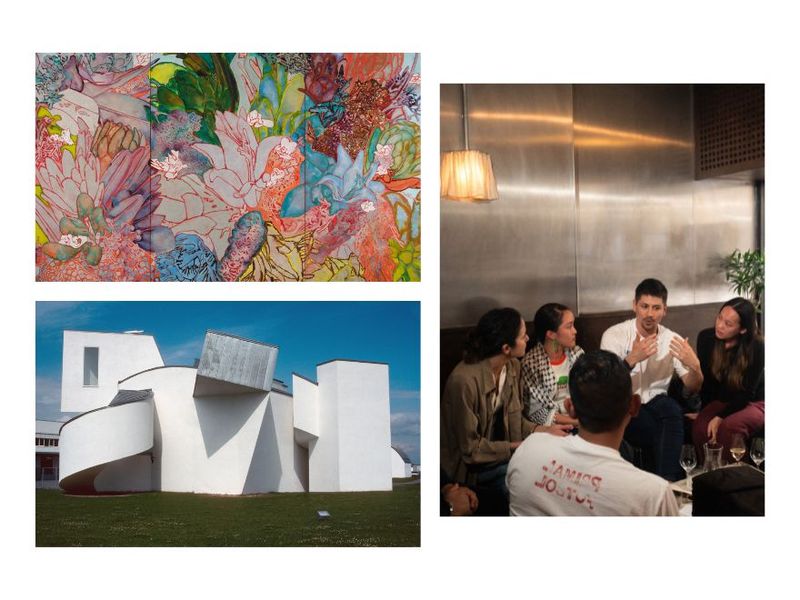
Having lived and worked around the world, including in Naples, India, New York City, and New Mexico, artist Francesco Clemente’s identity and interests aren’t moored to any one locale, but instead exist in the in-between. As he says on Ep. 118 of Time Sensitive (recorded in 2024), “I realized that my home should be a place of absence where I’m not conditioned by my history as an Italian, or my history as an exile in India, or my history about someone who landed in New York… My home should be every moment where I’m neither of these things, where I’m no one, nowhere.” This perspective undergirds “Francesco Clemente: In Between,” the artist’s just-opened retrospective at the Triennale Milano (on view through Sept. 6). Curated by Francesca Pietropaolo with Robert Storr, the exhibition brings together more than 70 works from the late 1970s to the present, moving fluidly from self-portraits, to an artist’s book Clemente created with Beat poet Allen Ginsberg, to the vivacious “Winter Flowers in Spring II” (2025), its title a perfect encapsulation of Clemente’s embrace of contradiction, reminding us that even in winters both literal and metaphorical, beauty can be found as long as we look for it. —Emily Jiang
Thinking Through Social Club
Is home a person, a place, or a feeling? What turns strangers into friends? What is destabilizing male identity today? In coffee shops, wine bars, bookstores, and homes across Brooklyn and Manhattan, members of Thinking Through Social Club have been gathering to pull at the loose threads of these and other topics that shape the contours of everyday life. Founded last fall by political theorist Ece Tekbulut, the salon-style club emerged from a desire to bring philosophy back to its social roots and to, in Tekbulut’s words, “cultivate curiosity as an ever-present disposition toward life.” At an event at the Lower East Side wine bar Colbo Next Door earlier this spring, attendees considered Miles Davis’s role in the “birth of cool”; a few weeks ago, they met at a member’s Bed-Stuy apartment to ponder, fittingly, the concept of home. Tomorrow afternoon at Boyfriend Co-op in Bushwick, they will take up the topic of queerness, exploring it as a daily practice and a conduit for future imagination. The most fruitful part of it all? The curious, caring community that’s emerged. When asked what’s surprised her most about running the club, Tekbulut says, “That other people want to take care of it. It’s not just me trying to hold everything together. Each member treats this as a precious space that needs to be sustained.” —E.J.
“The Century of Gehry” at the Serralves Museum
Those seeking a retrospective of Frank Gehry will not soon find it at the Álvaro Siza–designed Serralves Museum of Contemporary Art in Porto, Portugal. On the contrary, the museum explicitly frames its forthcoming exhibition “The Century of Gehry,” opening June 12, as something altogether more forward-looking and alive with feeling, a celebration of the late Los Angeles–based architect’s willingness to “keep seeing the world anew.” The show—structured in eight intriguingly named chapters, such as “Placing Things Together and Composing the In-Between” and “Reflecting on the Skyline”—puts 19 of Gehry’s projects around the world, from Sydney to Düsseldorf, in conversation. His work with Siza—namely their early-2000s collaboration on plans for the Art Center College of Design, in Pasadena—will receive particular attention. In a May 2002 interview for the journal Mosaic, Siza praised Gehry, citing his L.A. home and the Guggenheim Museum Bilbao in Spain as embodiments of how his buildings interacted with their surrounding landscapes, adding, “What he builds is always part of a whole. Photos don’t often show us this.” All the more reason to appreciate the sketches and models of Gehry’s extraordinary spaces up close. —Olivia Aylmer
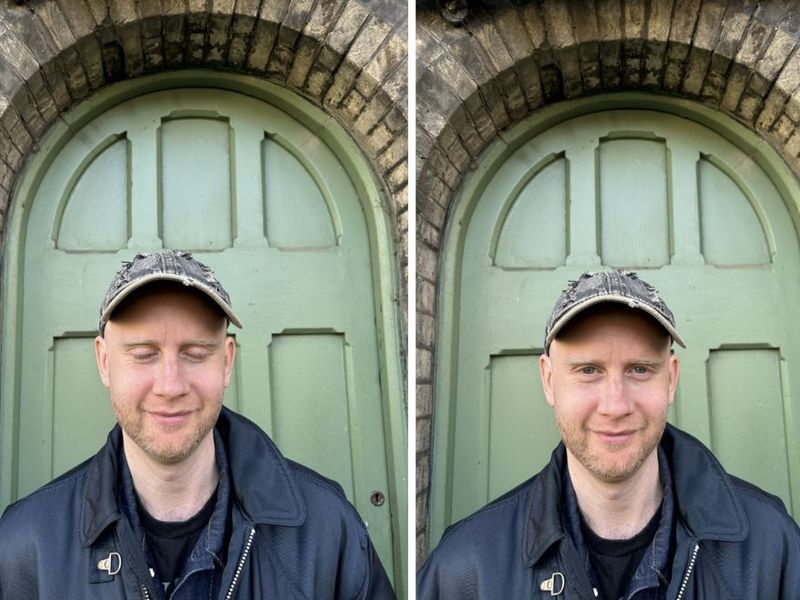
Last month’s NASA Artemis II mission marked the first leg of a new space race—and, along with it, renewed public attention on the vast, unfathomable cosmos we inhabit. Jack Mills, editor of Another Man and former editor of Dazed, is nimbly tapping in to this moment with the new publication Space Junk, which ventures into the culture of space travel through the lens of both “frontier and fiction.” The inaugural issue, “Pilot,” comes out June 17. “Ultimately, the job of a magazine is to have a ‘God’s-eye view’ over the way interests are forming around things, paradigm shifts, and what brings people together,” Mills says. “Not just on a youth culture level, but also in science, and how science can impact culture.”
Here, he discusses his affinity for speculative fiction, how he sees Space Junk as a reaction to the “directionlessness” of magazines today, and why he starts every morning by playing Mario Kart.
Space Junk is a whole new frontier for you, content-wise. Where did the idea for it come from?
I didn’t really see that there was a magazine that was covering space on a non-purely-academic level. There was definitely room for a magazine to talk not just about the act of space travel, but the obsessions around it, and how that manifests in culture—things like meteor hunting. I reached out to Jo [Evendon, Space Junk’s co-founder and visual director] and was like, “Look, we’ve got this big Artemis II launch coming up. It’s the first trip around the moon in fifty years. It’s the furthest humans will go into space in history. There has to be a magazine that’s talking about this, and there just isn’t one.” I texted her on New Year’s Eve, and she was immediately down for it.
Was space an area of personal interest prior, or were you kind of like, let’s just dive in?
I’m more into speculative fiction and spec features. A lot of my interests go toward J.G. Ballard, Susumu Yokota, and people like that who were trying to almost figure out what the future might look like through their art. I’m really interested in that way of looking at art, where it’s almost instructive in some way. There’s the famous thing of H.G. Wells accidentally predicting satellite communications in the early sixties.
Why do you feel like now is the right time for something like Space Junk to exist?
In the scope of magazines, I feel like people need a sense of direction toward something quite focused. Space Junk is great because you can look back on it in twenty years, and it still makes sense. It really does earmark this time of—maybe we’re in a second space race now? There’s something historic to gather around and plant your flag in. Youth culture magazines are now looking at moments that are huge on the internet as apocryphal things when they’re actually maybe not—they’re just fads that come and go within a twenty-four-hour cycle.
How do you start your mornings?
I’ve been playing the [Nintendo] Switch in the mornings because it’s really high octane. I play 200cc on Mario Kart in the morning, and it wakes me up a bit. I scramble around, do some emails, try to eat a healthy breakfast, drink loads of coffee, and then go on a walk.
Where do you get your news?
During Covid, I got really into the BBC, going into all the old Arena docs and stuff like that. I’d just click on the news and refresh it every twenty minutes in a kind of anxiety state. You do get obsessed with the news, and then it becomes this constant thing where you’re refreshing it, hoping something else has happened, almost like you’re watching a film or something.
What are your favorite publications?
My friend Rod Stanley does a really interesting mag called Offal. He used to be editor of Dazed back in the day, in the 2000s, and he’s done hundreds of different projects, but this is a semiautomated, quite dystopian look at the literary scene now. The idea is it’s literary offcuts, so all the stuff that doesn’t really belong in books now. There’s a lot of that, because everything is slightly algorithmic in terms of what actually gets commissioned into a book.
I still love basically everything Richard Turley does—big hero, secretly, of mine. He does Civilization. It’s just still the most exciting new publication. I think he wanted to create a sense of the bubble that was happening around New York just after Covid happened, but use the chaos and the gossip as an excuse to turn text into an object and move that text around on the page as a replacement for imagery, in response to the oversaturation of imagery in the media and on social media. It’s reactive in a way that is similar to Space Junk.
What books have you read recently?
I definitely want to shout-out Charlie Fox. He just sent me the manuscript for his first novel, Drool, which is coming out on Rough Trade Books. He’s kind of this psychedelic, John Waters type. I’ve just read the first five pages, and I feel like I’m on acid or something. From what I can gather so far, it’s about someone who falls in love with a wolf. In some ways, it feels like he’s forming his own language, and the colors are amazing, and it’s all just incredibly visual and visceral.
What are some of your favorite films?
Naked, the Mike Leigh film about this guy who goes on this Homer’s Odyssey through nineties London trying to figure out the way the world is turning before the millennium. It’s all improvised, and David Thewlis basically writes the script on the spot. It’s just this kind of circular thing. Then the music itself is this circular-heart motif that winds its way into your brain. It’s just unbelievable. It hasn’t left my mind. It keeps circling; it’s always in the background.
I also love Breaking the Waves; The Apartment, the Billy Wilder film; Adaptation; and Stalker. And there’s one film I have to mention that I’m obsessed with, that people need to watch: What Happened Was. I definitely see it as a spiritual successor to something like My Dinner with Andre.
Do you have any guilty pleasures?
Probably loads, to be honest. Can’t really mention them, though. [Laughs] My friend and I went to this seven-hour Taylor Swift rave in this old place called the Troxy in London that kind of looks like something you’d see in Vegas. All the seats are glued down, and all the floors are carpeted. It was called “Swiftogeddon.” It was around the time when all of her shows were causing seismic activity around America, like registering as earthquakes. And we went and the whole fucking venue, this Grade II listed building, was just vibrating with all these, like, 17-year-olds. We just went to see that violence. It was fucking brilliant.
This interview was conducted by Emily Jiang. It has been condensed and edited.
Our handpicked guide to culture across the internet.
Carlo Petrini, whose Slow Food organization spurred an international shift toward sustainable, local approaches to what we eat—and helped inspire us here at The Slowdown from a media-making perspective—died last week at the age of 76. [The New York Times]
Travel writer Pico Iyer (the guest on Ep. 127 of Time Sensitive) contemplates Japanese photographer Rinko Kawauchi’s precise approach to image-making, which, “as in a classic haiku, takes the smallest of moments or objects and finds in them a universe.” [Aperture]
Poet Reginald Dwayne Betts (Ep. 58) explains why, after years of “desperately” avoiding guns, which were at the center of nearly every tragedy in his life—including his own conviction and imprisonment—shooting one at a range was “cathartic and strangely bereft of violence.” [The New York Times]
In a recent interview, legendary civil rights activist Dolores Huerta, who turned 96 in April, reflects on her decades of organizing. [Elle]
Barber Osgerby founders Edward Barber and Jay Osgerby (the latter the guest on Ep. 142 of Time Sensitive) discuss their recent decision to close their design studio after more than three decades of collaboration. [Wallpaper]