In this week’s newsletter, we wander perfectly imperfect cities with Paul Goldberger, contemplate notable women’s house museums with Monica Nelson, and more.
Good morning!
There’s something about being in a garden designed by Piet Oudolf that changes the way you look at plants. I’ve experienced this firsthand at New York’s High Line, Chicago’s Lurie Garden, and Chillida-Leku in Spain, each of which has left a lasting impression on me. His plantings are at once carefully composed and seemingly wild, with layers of texture, color, and movement that reveal themselves as you walk through them. They encourage you to slow down, look more closely, and appreciate the beauty of things that might otherwise go unnoticed.
For our latest episode of Time Sensitive, we set up our studio (quite literally!) in the new Oudolf Garden at Planting Fields in Oyster Bay, New York, on Long Island. It was a serene October afternoon, with bees buzzing around us, birdsong, and the occasional plane passing overhead.
At 82, Piet remains deeply engaged with his work, and I was fascinated to hear him describe his approach to garden design as akin to a stage play, a musical score, or even writing. “I write with plants,” he told me. “That’s my signature.” We discussed everything from his childhood near a nature preserve on the Dutch coast and the nursery he established in the early 1980s with his wife, Anja, in Hummelo, the Netherlands, to the unexpected opportunities that led him to create some of the world’s most celebrated public gardens.
What I particularly appreciate about Piet’s approach is his willingness to embrace what he can't control. A garden, after all, is never finished. Perennials grow, compete, spread, fade, and eventually return, often in ways that can never entirely be anticipated. Piet thinks of garden design as a four-dimensional practice, with time as essential to the composition as space. He considers not only how a planting will look in a particular season, but how it might evolve over years and even decades. There’s a certain humility in this way of working: While a garden designer can establish the conditions for something to happen, nature ultimately has its own ideas.
Our conversation got me thinking about how much of life involves this same interplay between intention and uncertainty. We make plans, pursue dreams, and try to shape our surroundings, but so much of what happens remains beyond our control. Piet’s gardens suggest that change isn’t necessarily something to resist, and that beauty can be found as much in decline and decay as in growth and renewal. They also remind us of the value of paying closer attention—to what’s happening around us, to the passing seasons, and to the present moment.
—Spencer

“Gardening is about control and maybe the kind of garden we make is less control and more ‘let go.’ But as long as we let go, we need people with more knowledge, because they know what goes—what we have let go.”
Listen to Ep. 162 with Piet Oudolf at timesensitive.fm or wherever you get your podcasts
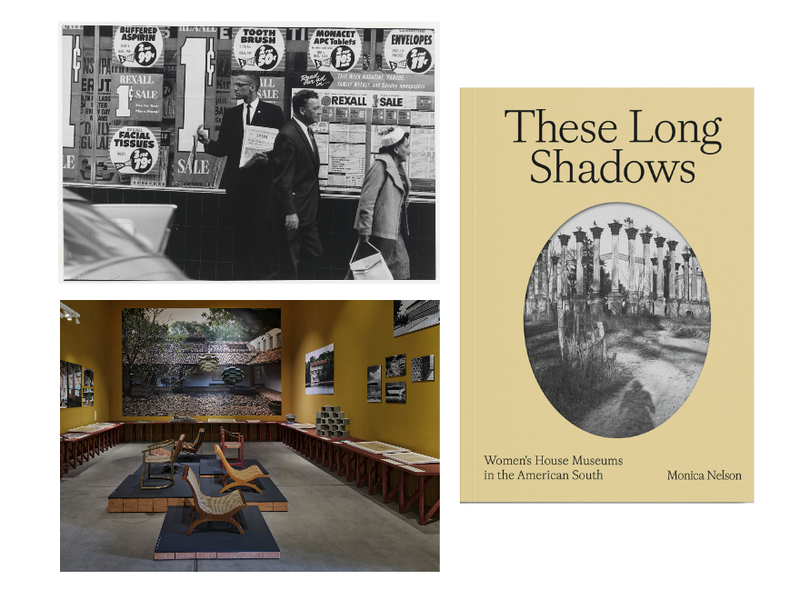
“Photographic Memory” at the National Portrait Gallery
Legendary singer Lena Horne, suspended in midair; Susan Sontag reclining in the presence of Peter Hujar; tennis player Althea Gibson, racquet in hand, surrounded by neighborhood kids for an impromptu tennis match; Malcolm X in Los Angeles, a mere two years before his 1965 assassination in New York City, as seen through the lens of Gordon Parks. Starting today, these singular moments of American history, culture, and mythmaking go on view through Nov. 7, 2027, as part of the exhibition “Photographic Memory” at the Smithsonian’s National Portrait Gallery, marking 50 years since it crucially expanded its remit to include photography. This remarkable collection now comprises nearly half the museum’s holdings, including works by the likes of Diane Arbus, Man Ray, and Yousuf Karsh—not to mention, among many other standout works, Alexander Gardner’s ghostly, sui generis “cracked-plate” portrait of Abraham Lincoln, captured in his Washington, D.C., studio in February 1865, two months before his own assassination shook the country that spring. From early pictures produced through the daguerreotype process to a striking 2018 inkjet portrait of then U.S. National Youth Poet Laureate Amanda Gorman by the interdisciplinary artist Shawn Theodore, the array of larger-than-life figures on view doubles as a visual history of the medium’s evolution. —Olivia Aylmer
These Long Shadows: Women’s House Museums in the American South by Monica Nelson
Restless spirits, longing to be heard and understood on their own terms, hover throughout North Carolina–born, Georgia-raised writer and creative director Monica Nelson’s These Long Shadows (Atelier Éditions). In this vivifying new book, Nelson invites readers into the layered lives and afterlives of 14 American Southern women who, as she writes, “resist synthesis,” and the multipurpose spaces they inhabited for more than 180 years. This project, devotedly researched, emerged from six years spent steeped in dozens of house museums, including those of the author Flannery O’Connor, Girl Scouts founder Juliette Gordon Low, and the “writer-activist-lawyer-feminist-theorist-Episcopal priest” Pauli Murray who, as embodied by Nelson’s hyphens, “refused to commit to linearity.” She started her inquiry in 2019, with Nina Simone’s childhood home in Tryon, North Carolina, which contains not a single tactile artifact within its walls—sharing only glimpses, rather than claiming to know or attempt to tell the singer’s story in full. Through Nelson’s meanderings, informed by solo road trips, she grapples with each museum’s approach to stewarding, narrativizing, and threading often incomplete archival materials, considering how they shape present-day public perception. By attending as thoroughly to the intangibles and insufficient records of these women’s biographies, Nelson underscores history’s inherent unsettledness. “In the present,” she writes, “people are simply doing things, fighting, trying, living.” —O.A.
“Geoffrey Bawa: Architecture for the Senses” at the Vitra Design Museum
In preparing for a lecture in the late 1980s, the Sri Lankan architect Geoffrey Bawa noted to himself: “Labels—do not believe in labels.” His decades of decolonial resistance to shallow encapsulations of his work (think: “tropical”) at the expense of felt, embodied experience inform the enlivening exhibition “Architecture for the Senses,” on view through Feb. 28, 2027, at the Vitra Design Museum in Weil am Rhein, Germany. Designed by architect Lina Ghotmeh (the guest on Ep. 129 of Time Sensitive), in co-production with the contemporary art museum M+ in Hong Kong, and Bawa’s Trust, it marks the first monographic exhibition dedicated to the architect in more than 20 years, emphasizing the continued relevance of his site-specific, ecologically and seasonally attuned approach to building. Despite Bawa’s aversion to archival preservation, including his own attempts to burn his printed matter, the curatorial team makes thoughtful use of what remains, interspersing his documents, drawings, furniture, and collected objects with new photographs by Iwan Baan, alongside films focused on his Lunuganga garden and Kandalama Hotel. Of moving with curiosity through a building’s rooms, Bawa said in an interview in the late ’90s, “That really is what one does; arriving, being drawn in, discovering, being released to the view.” —O.A.
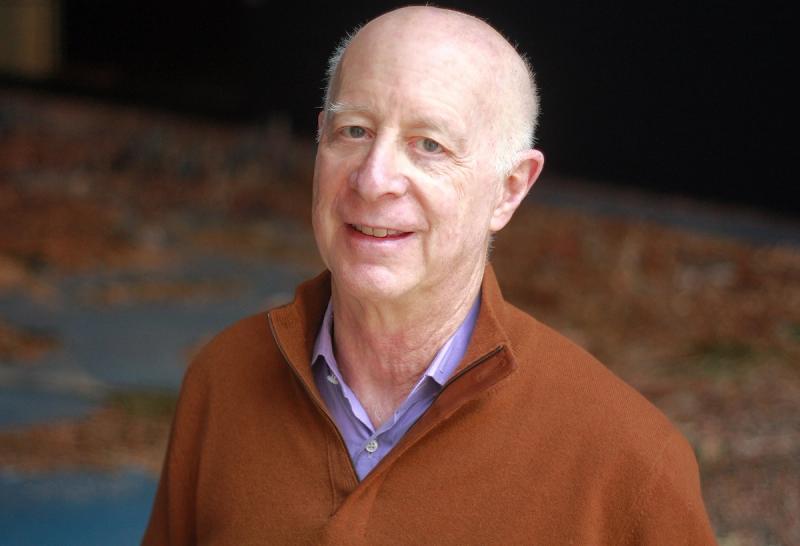
To take a stroll with the roving Pulitzer Prize–winning architecture critic Paul Goldberger (the guest on Ep. 119 of Time Sensitive, recorded inside Philip Johnson’s Glass House in Connecticut in 2024) is to see even the most well-trodden city with fresh eyes. In his invigorating new book, The Imperfect City: Design, Serendipity, and the Real Life of Cities (Knopf), he heightens our awareness to the unplanned, the porous, and the improvisatory, whether observed in Singapore, Chicago, or his long-standing hometown, New York City. These vital unpredictable forces, in his view, coexist alongside and complicate carefully laid plans, shaping our firsthand and shared experiences of urban life. Goldberger is particularly fond of sprawling, kinetic, perpetually elusive cities (London or Los Angeles, say) that prove, as he writes, “difficult to understand, or at least take time to know.”
Here, he talks with The Slowdown about falling in love with familiar streets all over again, why he sees the Manhattan grid as akin to jazz, and the undersung beauty of Naples.
Where did the idea for The Imperfect City begin?
The seed of this book goes all the way back to … almost my whole life of looking at cities and thinking about them, and realizing that nobody’s theory was totally right, and the planning of cities had its limits. Most places that were planned as totalities were pretty horrible and boring, yet, at the same time, just letting it happen was a disaster, almost always.
Every place has emerged out of some combination of, as I say in the title, “design and serendipity.” Sometimes, the serendipity is great; sometimes, it’s actually not so great. Why is that? Why does it play out differently in one place or one time or another? It was realizing nobody had looked at cities that way before. Cities are natural, organic things that always grow and change. They’re not stable. They’re not fixed. They’re never frozen—or, if they are, they’re kind of dead.
What drew you to explore cities through this more personal lens?
Some of it was my own instinctive discomfort with theories that are supposed to answer everything, because they usually are wrong. Another part of it was my editor [John Freeman] at Knopf. He said, “What will make this book work is to make it personal, but not so personal that it’s just a travelogue.” It can’t be just the story of my wandering around. But I’ve always believed that one of the key things about experiencing cities is to be a flâneur, an observer, a wanderer. My editor said, “You’ve got to figure out how to balance that with a little history, some observations, a little political and economic reality, and try to weave all that together into a tapestry.” It was really good advice. I’ve always been more interested in writing for people who aren’t architects, but are interested in it and care about the environment they live in.
It feels as though you’ve invited us readers along for a walk with you, and we’re observing together.
That’s definitely what I wanted it to be, but not only that. There’s one book that was very influential, by a wonderful writer who, sadly, died early in the Covid pandemic, named Michael Sorkin, who wrote a beautiful book called Twenty Minutes in Manhattan, which told the story of the walk from his apartment in Greenwich Village to his studio across town, and he wove through that walk a history of housing and planning in New York and so much wisdom about cities and people. I was so struck by how brilliantly he had conveyed so much information, but within this narrative of his own walk. It was not just everything he saw, but what everything he saw actually meant. It’s intensely readable, and you don’t realize until you’ve gotten deeply into it how much information he’s gotten you to absorb.
Could you expand a bit on your choice of the word “serendipity” in the subtitle?
At one point, I thought of “intention” and “accident,” and I sometimes talk about the book with those two words, because they also represent the dichotomy we’re talking about. Accidents often have negative associations. Even though, yes, there’s such a thing as “happy accidents.” Serendipity seemed more about randomness, and design implies intention. When I talk about design in this book, I’m talking about not only the physical design of architecture and planning, but the systemic design of regulations. Serendipity is what’s not planned, or what emerges out of funny combinations of people and things at different times.
I appreciate that you acknowledge the difficulty of characterizing a city, even one you love and know well, with no stone unturned. What is it about this unknowability that you find so compelling?
Places get boring when you understand them too quickly. Complicated cities teach you more about life, and they continue to surprise you. I think surprise is an important part of engagement with cities. I like almost every city I’ve ever been in, up to a point, but the ones you get really fast… It’s kind of “so what?” after that. Whereas, I love the fact that New York—not only is it so complex, you never get to the bottom of it. Even if you do think you’ve gotten to the bottom of it, a year later, it’s evolved and continues to evolve.
There’s also a wonderful element of mystery to a great city. I’m not suggesting the city is like a work of art. In fact, at one point, I quite literally say the city is not a work of art. But in the sense that a great work of art is always revealing something. You listen to a Beethoven symphony that you’ve heard fifty times, and you still may hear something new. There’s something wonderful and fulfilling and satisfying about that.
You compare cities to jazz with their interplay of order and improvisation. What do you think makes that balance so essential to a city’s character? Are there any particular jazz musicians who, for you, evoke the life of a city?
I love all of the classic jazz: Charlie Parker, Charlie Mingus, Dizzy Gillespie, on and on. Great jazz has a kind of outline or pattern to it, within which there’s a lot of improvisation. In a way, it’s like the Manhattan grid. The grid is, at one moment, the most insistent piece of planning in the world, because it’s so absolute, so rigid. But it’s also the most forgiving and the most flexible, because you can do anything you want on each block. It never specified what gets built. It became this beautiful metaphor for an underlying order, within which all kinds of things can happen.
Jazz doesn’t work if four members of a combo just get out there and play with no regard to each other. What makes great jazz is the way improvisation and collaboration play off against each other with an element of mutual respect. For a city to work, there has to be a respect of everyone for everyone else, which isn’t always present.
In your concluding chapter, you write, “We cannot plan every aspect of cities, nor should we, but neither can we afford just to let things take their course. It is about balance, in the end, as everything is.” As city dwellers, how can we embrace a city’s imperfections while also working together to make it better?
The city is, at its best, a metaphor for how to live. We are all in this together. But at the same time, we’re all individuals. We have different interests, priorities, needs, and we find a way to live together and balance all that. In the city, where we are physically in very close proximity to each other, the whole idea of common space becomes very important; the idea of the common weal, which we have lost the respect for, that I think we used to have. We need it, and we don’t have it quite enough.
I would never make you choose favorites, but I’m curious if there are any unsung cities that come to mind that you think we should take more notice of?
Here’s a fantastic city that I adore, that too many people don’t take seriously as a great city: Naples. Everybody goes to Rome, and Rome is Rome. You can’t not go to Rome. One cannot put Naples ahead of Rome in the larger scheme of things. Having said that, there are some things about Naples that are more interesting. Its physical setting is actually more beautiful than that of Rome, and at the same time it combines greater natural beauty with a much sharper edge to it. There’s something very alive about Naples that I adore.
Perhaps there could be a second volume of this book at some point?
Who knows! Let’s see. If enough people buy the first…
[Laughs]
And India! The cities of India are just staggering. India is so rich and complex and extraordinary.
This interview was conducted by Olivia Aylmer. It has been condensed and edited.
Our handpicked guide to culture across the internet.
Indian-born, Madrid-based fashion designer and social entrepreneur Kavita Parmar joins The Slowdown’s Spencer Bailey for a conversation about craft as a tool for intergenerational, cross-cultural connection. [Homo Faber Conversations]
Critic A.O. Scott pays homage to the late British art critic John Berger, famous for his book and BBC series Ways of Seeing, who throughout his life emphasized the vital art of paying close, active attention, whether to a Renaissance altarpiece or an oil painting. [The New York Times]
In a pensive new profile, artist Rashid Johnson—whose latest exhibition, “A Poem for Deep Thinkers,” just opened at Chicago’s Museum of Contemporary Art—discusses aging, parenting, and reckoning with success. [WBEZ Chicago]
London-based artist and master potter Edmund de Waal (Ep. 98), in conversation with writer and editor Aimee Farrell, catalogues his lifetime of communing with treasured objects and materials. [The Observer]
“Making Space,” an annual symposium exploring notions of home—led by Untapped Journal’s Tiffany Jow, formerly of The Slowdown, and featuring speakers such as artist and designer Simone Bodmer-Turner—recently convened in New York for its second edition. [Instagram]