In this week’s newsletter, we forage for underappreciated plants with floral designer Alex Crowder, glimpse glacial erratics with photographer Mariana Cook, and more.
Good morning!
I’ve been thinking a lot about my recent conversation with the poet, essayist, and Yale Divinity School professor Christian Wiman for this week’s Time Sensitive. It was an intimate, searching exchange that took us into some of life’s biggest and most difficult questions—about faith, suffering, love, mortality, and what it means to be alive.
I’ve known of Christian for nearly two decades, though only tangentially. Early in my journalism career, I wrote a profile of the poet Timothy Donnelly for Poetry magazine, where Christian was then its editor. Although I hadn’t spent much time with his own writing, the idea of having Christian on the podcast had been on my mind ever since reading Casey Cep’s 2023 profile of him in The New Yorker. Immersing myself in his poetry and prose in preparation for our conversation proved to be a life-giving revelation.
What I find especially affecting about Christian and his approach to his writing is his willingness to embrace uncertainty, contradiction, and mystery. Having lived with a rare form of cancer since 2005, he has had to confront suffering and mortality to some of the rawest, most intense degrees imaginable. Yet his outlook is marked by an extraordinary humility, humor, and sense of wonder. His understanding of faith, as I came to appreciate, isn’t so much about having answers as it is about remaining open to what we cannot or may never know.
There’s something deeply moving about hearing someone speak so candidly about the fragility and beauty of being alive. I left our conversation, as is often the case after speaking with a great poet, with a renewed appreciation for poetry’s capacity to illuminate the ineffable—to give language to experiences and feelings that might otherwise remain beyond words.
This spirit of close observation, so central to our work here at The Slowdown, runs through parts of this week’s newsletter. In our latest “Media Diet,” below, the floral designer Alex Crowder, founder of Field Studies Flora, speaks with Olivia about working with the seasons, finding beauty in overlooked plants, and cultivating a more attentive relationship with the natural world. I particularly love her description of the sheer pleasure of standing before a towering stem of hyssop. A similar attentiveness animates the photographer Mariana Cook’s pictures of glacial erratics, featured in this week’s “Three Things.” Through her patient observation of these ancient, displaced boulders, she invites us to consider geological time, impermanence, and the ways beauty and loss are inextricably intertwined—ideas that resonate deeply with Christian’s reflections on the fleeting, mysterious nature of existence.
Taking a brief pause for Thanksgiving this week, I’m reminded of how much there is to be grateful for in the seemingly ordinary moments and encounters that make up our lives, and how much we stand to gain by paying closer attention to them.
—Spencer

“That’s really what’s happening in a poem: You think you’re paying attention, but what’s happening is over here, and the poem happens over here and surprises you.”
Listen to Ep. 163 with Christian Wiman at timesensitive.fm or wherever you get your podcasts
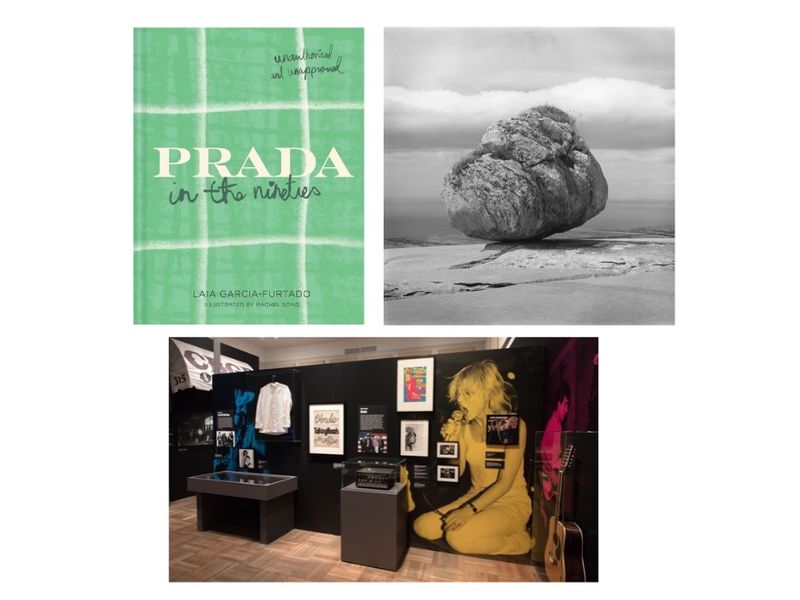
Prada in the Nineties by Laia Garcia-Furtado
Clashing prints; awkward, mid-length librarian skirts; a strident color palette of slime greens and murky browns: Prada’s spring/summer 1996 collection, “Banal Eccentricity,” was “sartorial love at first sight” for writer and Harper’s Bazaar editor Laia Garcia-Furtado, precisely because “I knew it was a little off,” she says. As chronicled in her new book, Prada in the Nineties (Batsford), the way Miuccia Prada—that’s “Mrs. Prada” to her admirers—harnesses eccentricity through her clothing gives women a way to feel exactly like themselves. “A novel concept,” Garcia-Furtado writes, while revisiting each collection from the formative decade. Her thoughtful, witty deep dive into how the fashion house reflected and shaped culture across the 1990s, marks the first in a new series (with Schiaparelli in the Thirties and Versace in the Eighties to come). Accompanied by artist Rachel Song’s grown-up-not-girlish illustrations, and moreish nuggets of fashion history, Garcia-Furtado puts Prada’s ’90s output in conversation with Tom Ford-era Gucci, grunge music, and the first Apple Macintosh computer. “Mrs. Prada’s femininity may be rooted in the classic,” Garcia-Furtado says, “but it’s also made for the real world and not just for fantasies.” —Simran Hans
“Mariana Cook: Out of Place—Out of Time” at KBHG, Basel
When glimpsed through the probing lens of New York–based photographer Mariana Cook, boulders possess as captivating a presence as the people she’s captured in striking black-and-white portraits over the past five decades—whether Maurice Sendak donning his bathrobe in the forest near his home in Ridgefield, Connecticut, or a prescient pre-presidency Barack and Michelle Obama on their sofa in Hyde Park. Cook’s milestone exhibition and monograph, “Out of Place—Out of Time,” on view at KBHG in Basel, Switzerland, through Feb. 14, 2027, with curation and art direction by Beda Achermann, originates out of her prolonged fascination with displaced glacial erratics, stretching back to 2013 and culminating 11 years later on Martha’s Vineyard, a meaningful place in her life since childhood. Along with her far-reaching travels to secluded places where these massive ice-age relics hold court (Chile, California, and Ireland among them), her patient, analog approach embodies the lasting influence of her former mentor, Ansel Adams. Out of these gelatin silver prints, questions of impermanence, solitude, and deep geological time emerge. Through “these wandering rocks,” as she calls them, Cook sees “how beauty and loss are wrapped together in nature’s work.” —Olivia Aylmer
“You Should Be Dancing” at the New York Historical
“New York’s Last Gasp?” a 1975 Newsweek cover read. Years of overspending, a shrinking tax base, and decaying infrastructure had brought the city to the brink of fiscal collapse. Its salvation, it turned out, lay in its youth, whose experimental spirit and rugged self-reliance would establish disco, hip-hop, and punk. Through musical equipment, clothing, posters, and other archival ephemera, “You Should Be Dancing: New York, 1976 and Beyond,” an exhibition now on view at the New York Historical (through April 4, 2027), charts this unlikely cultural renaissance. A dress shirt worn by Patti Smith hangs near black-and-white photographs capturing the scene at CBGB’s, the Bowery club that seeded the rise of punk. A mirror from Studio 54, the legendary venue opened by Ian Schrager (the guest on Ep. 100 of Time Sensitive) and Steve Rubell in 1977, recalls the effervescence of disco; hip-hop’s birth in the Bronx is honored by a turntable owned by revolutionary D.J. Grandmaster Flash. Together, these relics testify to the city’s resilience and to a dictum the Big Apple has proven time and again: that, as the Ramones lyric goes, “New York really has it all.” —Emily Jiang
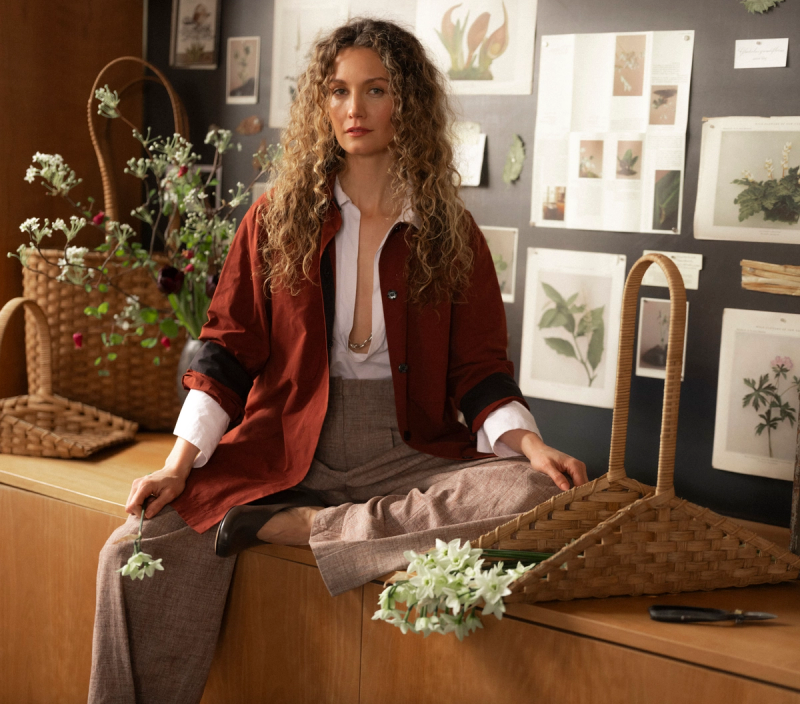
For the floral designer Alex Crowder, even an unassuming blade of grass, a bare branch, or a delicate bud possesses beauty and potential if one looks closely enough. Through her New York–based studio Field Studies Flora, Crowder works with the seasons and prioritizes close-to-home sources. Her daily rhythms and listening habits follow suit, whether through a podcast on how to build a more mutually beneficial relationship to Earth’s ecosystem; a visit to her trusted woman-run, regionally grown cut-flower marketplace; or her tendency to rise with the sun. As she says of her chosen practice, “Florists are really at the forefront of this beautiful reacquaintance with the natural world.”
Here, Crowder talks with The Slowdown about the formative wisdom she finds in Robin Wall Kimmerer’s writing, her in-the-works lecture series with the Battery Conservancy, and the pure pleasure of standing before a towering stem of hyssop.
How do you start your mornings?
I typically get up between 5:30 and 6 and make myself coffee via a pour-over. I really like the ritual and the slowness of being up that early. It’s reminiscent of when it snows and it’s very quiet. I don’t like the feeling of jumping from my bed to the jobsite. I listen to The Daily while I’m drinking my coffee, and sometimes I journal. I used to do that more often, but I’ll get so in my head that it will start to slow me down—I have to be really cognizant. Then I make myself some breakfast and usually head to the flower market.
Which ones?
I go to the Chelsea Flower Market several times a week. I have a foraging team—they just did a delivery this morning—and different farmers.
Right around the corner from my studio is Flower Aggregate [run by Jessica Balnaves]. She’s incredible. It’s the only woman-run wholesaler in the city that I know of, and she sells all regional flowers. Her ingredients are pesticide-free, as well. She’s helping to educate a large portion of the floral industry that wasn’t so visible. There are a lot of young florists [for whom] the flower market may feel too intimidating to jump into, or they can’t afford to be in Manhattan, so they have little studios here in Brooklyn, like I do, and it’s easier to get to her than to the market.
Any favorite podcasts?
I really love On Being with Krista Tippett. It’s not “news” in the traditional sense, but most recently, there was a discussion with Robin Wall Kimmerer and the writer Azita Ardakani Walton. They talked about the Earth’s ecosystem, how we can take part, and how we are in relationship to it. It’s a much longer view than the daily news cycle.
I know Wall Kimmerer’s book Braiding Sweetgrass, from 2013, has been influential to how you approach working alongside nature. When and how did her work make its way into your life?
I found that book, I think, in 2019, and it gave me chills. I walked into the Strand Bookstore, and I didn’t know anything about her, embarrassingly. But the cover looked so beautiful, and I was like, “Oh, this looks interesting.” I cried when I read the first chapter. I was so moved by it. My mother got very sick—she’s now since recovering—but she was in the hospital for a while, and I would stay overnight with her. I had that book with me, and I would read it to her, stories of the resiliency of nature. I needed something hopeful.
I had been working as a floral freelancer, but I didn’t own a business at the time. I knew I wanted to start one, but I wasn't really sure what it was going to look like. I was in this percolating moment. Reading that book saved me in so many ways. Growing up in Missouri, I had a lot of access to land. I had always had this feeling, but she put words to the spirituality of it, too, and the mindfulness that I had been hungry for, but hadn’t found yet. I grew up in an area of the United States where we were not taught much, if anything, about Indigenous cultures and how much we owe them, especially when it comes to the work that I do.
I truly believe that books find us when we’re meant to encounter them. Are there any other writers who are shaping your work and thinking?
I’m currently reading David George Haskell’s book How Flowers Made Our World. He asks, How did the Earth come to be? What’s the relationship between humans and flowers?
Rebecca Solnit is another one of my favorites. Orwell’s Roses does a really beautiful job talking about flowers in numerous ways, and then also dips into the floral trade a bit. There’s a whole chapter where she goes with a friend down to Ecuador, and they see the growing operation. Solnit’s writing takes all these long-form ideas that maybe feel very disparate from each other, and then pulls them into one. Floristry is so connected to time and being present, because we’re working with perishable materials. They last a few days to maybe a week—some of them only a day—so there is this inherent understanding of time already in the practice. I take so much delight in zooming out and seeing it on such a wider scale, too.
In your practice, you often prioritize unwanted, overlooked, and undervalued plant species. What are a few that you think warrant greater attention and appreciation? I loved this essay you wrote about grass, for instance…
I love grass. I have a tattoo of it on my back, actually. I think we don’t see it as much as we should.
Another one of my favorites is pokeweed, which is now coming into the flower market more and more, and I’m seeing more florists use it. That is such an abundant, crazy plant. I’m also a sucker for red clover. The leaf gets really patinaed. It’s quite long. It’s a really important plant for pollinators. So is dead nettle. Today, I went uptown for a meeting, and I took the longest, most circuitous route I could possibly take through multiple parks to get to subways, because I wanted to see what’s growing in the parks and off the sidewalks to inspire me. I walked by a whole stand of asters that have now turned from that little white daisy or little purple daisy. Now it’s in seed form, and it's turned into all these little fuzzy heads—a complete costume change. So many people were walking by it without looking, and I was just standing there, ogling it. That art of noticing can, I think, transform any everyday or overlooked plant into something really exquisite.
Any new initiatives or projects you’re excited about?
Before I started my own studio, I freelanced for all these different florists, and I used it as an education. I learned so much about what I wanted to replicate. I also learned a lot about what I didn’t want to replicate, and saw firsthand how much there’s a lack of transparency. When you go to the flower market, you never even see the packaging that it came in with, and you don’t really know anything about the farm. It’s not like there’s any write-ups or info cards. Who’s growing these flowers? Under what conditions are they growing them, and where are they coming from?
I’m really taken with the farm-to-table movement in the culinary world. I think we’re about fifteen years behind them, so I look to them a lot to figure out how we affect change. There’s huge labor problems. Particularly in the Global South, they’re not allowed to unionize on these plantations, they work crazy hours, especially around Valentine’s Day. There’s all this chemical use and water diversion from local communities.
This moment in time in floristry is so important. Florists are really at the forefront of this beautiful reacquaintance with the natural world. We’re not going to stop shopping at the market. We’re not going to divest from these flower growers all over the world. I don’t think that would be the answer, anyway. There are massive communities that are dependent on this industry. But I do think understanding what the people on the ground, the people who are trying to organize in Colombia, for example, what their demands are, and then using our buying power here in the States to help put pressure and and get more transparency around how things are being grown is a good starting point.
You were recently named one of the inaugural fellows at The Battery Conservancy. What’s next?
The Battery has this rich history in New York City. They’re doing such incredible work. They are entirely pesticide-free. They brought in Piet Oudolf [the guest on Ep. 162 of Time Sensitive] before he was a big name.
Paula Recart, the new president, messaged me: “I love your work. Would you come have a conversation with me?” I didn’t know anything about The Battery, and I went and walked it with her, and was just like, “The way this looks and feels is so much like how I work, too.” We’re so aligned on ethics around plants and how people see them. It was a very natural progression that I would be brought on with the intention of helping get more people introduced to The Battery, like I’m doing with plants. They’ve given me free rein of their gardens. I’m going to start making some arrangements and photographing cuttings from the garden. We’re going to develop a lecture series centered around the work that I’m trying to do with the floral alliance, having people in climate, in organizing, journalists, other plant people or plant-adjacent people come and give talks that will only encourage this cohort of florists.
Any pleasures, guilty or otherwise?
Today I was so struck watching the foraging delivery that came in. Every bunch that they put onto the loading dock, I was like, “Are you kidding me?!” Then I got it into the studio, and I just stood there staring at this stem of hyssop that’s taller than me. Probably six, maybe seven feet tall. It’s yellow because it’s been out in the field for so long that it’s turned, and it has all of its arms in place. It must have been grown in a more sheltered environment, and it looks like a candelabra. I can’t tell you how much pleasure I got just from staring at that stem. Walking around the block in Bed-Stuy, where I live, or through the parks here, and spending a few minutes staring at a plant—I don’t know if I can get more pleasure than that.
This interview was conducted by Olivia Aylmer. It has been condensed and edited.
Our handpicked guide to culture across the internet.
Chef Daniel Humm (the guest on Ep. 53 of Time Sensitive) recently convened the artists Rashid Johnson (Ep. 25) and Francesco Clemente (Ep. 118) at his namesake new West Village restaurant, where Clemente has hand-painted the ceiling, making each fresco “feel as if it was there before the space,” he says, “like something that maybe had been covered up over time.” [The New Yorker]
This delightfully sprawling profile of prolific actor, writer, musician, and director David Duchovny (Ep. 21) proves “wanting to be taken seriously and being in on the joke aren’t mutually exclusive.” [GQ]
Through its monthly Letters Club subscription, McSweeney’s seeks to revive the semi-lost art of handwritten correspondence, with forthcoming missives from the likes of Articles of Interest podcast host Avery Trufelman, poet and essayist Hanif Abdurraqib, and illustrator Lisa Hanawalt. [McSweeney’s]
On her Happy Hour podcast, Ina Garten commiserates with fellow cook and writer Alison Roman (Ep. 139) about the logistical pitfalls of potlucks. [Instagram]
Lighting designer Lindsey Adelman (Ep. 120) is marking two decades of her inimitable studio with an anniversary auction on Dec. 8 of more than 40 archival and new pieces, including ceramics, jewelry, and other experiments. [Rago Wright]