PIN–UP editor Felix Burrichter, artist and technologist Mindy Seu, Lucinda Childs, and more.
Good morning!
Olivia here. The other week, when PIN–UP magazine’s Issue 40 landed at my doorstep, I found not one but 10 pieces of printed matter tucked inside the festively designed, confetti-strewn collector’s edition box. The contents included a joyful cover featuring the visionary Solange, photographed in Saint Heron’s New York City studio by Kobe Wagstaff and interviewed by kindred spirit Theaster Gates (the guest on Ep. 143 of Time Sensitive), and a thought-provoking pamphlet of 40 objects embodying design and architecture’s evolution in the first quarter of the 21st century, curated by Alexandra Cunningham Cameron. I was immediately filled with that same uninhibited excitement I recall feeling as a kid whenever my mom would share a stack of issues from her well-preserved collection of fashion and interiors magazines, which I’d pore over on our living room floor for hours. It’s a part of myself I plan to never lose touch with or take for granted, no matter how many times I hear the trite, false “print is dead” alarm.
Twenty years on from founding PIN–UP, the German-born, New York–based editor Felix Burrichter—this week’s Time Sensitive guest—continues to publish his biannual “magazine for architectural entertainment” while also building upon an expanded universe of live events, exhibitions, videos, digital extensions, and limited-edition home goods and furniture pieces. Bringing together various worlds—including art, design, music, fashion, film, and food—through surprising, playful pairings of people and ideas, PIN–UP exudes an irreverent, highbrow-meets-lowbrow lens, transforming architecture into a conduit for larger conversations about how we live. And while it might be tempting to settle into a more reliable pattern, I appreciate Burrichter and his team’s personal, opposite-of-the-algorithm approach to pushing their own boundaries and stepping into the unknown, essentially asking themselves each time, What exactly is a magazine? As he tells Spencer, “There’s no formula. We kind of reinvent the wheel with every issue.”
Spencer echoes this independent spirit in a recent conversation with Debbie Millman (Ep. 51) on her celebrated Design Matters podcast, an equally long-running endeavor, launched from two telephone landlines one year before PIN–UP, in 2005. Reflecting on his decision to change pace and start The Slowdown, seven years ago, in 2019—following a whirlwind eight years of Surface magazine that included interviewing Zaha Hadid, Tadao Ando, and (circa 2016) Kanye West for cover stories; hosting a 50-person dinner in Azzedine Alaïa’s Paris kitchen; and collaborating with Jenny Holzer on an AIDS-awareness art project—Spencer shares how his deep loves of literature, storytelling, and rhythm show up through all that we make here. “I feel like what I do with the podcast, what I do with The Slowdown,” he told Millman, “is a form of slow reading.”
As I approach the end of my first year at The Slowdown, working alongside Spencer, our production maestro Ramon Broza, and our extended team of incredible colleagues and contributors, and after listening to Felix speak about PIN–UP’s longevity, I’m reminded of why thoughtfully made media, produced and distributed on its own terms—where the human hand, mind, and heart is felt and present—has the power to endure.
—Olivia
“I feel a big responsibility for every story that we publish, because you’re putting something out in the world that hopefully has longer-lasting value—it’s not just a blip on Instagram—and that will be a reference in hopefully many years to come.”
Listen to Ep. 155 with Felix Burrichter at timesensitive.fm or wherever you get your podcasts
Lucinda Childs: Momentary Reprise at Bard’s Fisher Center
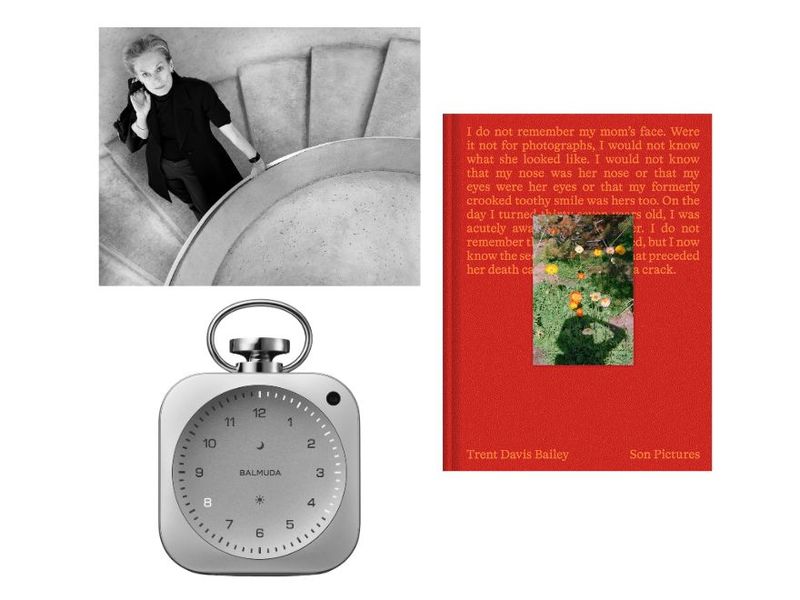
Next weekend, pioneering choreographer Lucinda Childs (the guest on Ep. 147 of Time Sensitive) will mark her 86th turn around the sun with a solo dance. This fresh interpretation of her 1965 piece “Geranium ’64” opens on her June 26 birthday, marking the first of three performances at Bard College’s Fisher Center during its annual SummerScape arts festival in Annandale-on-Hudson, New York. Building on a banner year for her company—including a sublime in-the-round restaging of several early dances at the Guggenheim as part of Van Cleef and Arpels’s Dance Reflections Festival, in collaboration with Works and Process—Lucinda Childs: Momentary Reprise spotlights the range and weight of her work with multiple postmodern giants, including the late Frank Gehry, architect of of the Fisher Center itself. From “Field Dance 2” (1984), drawn from Einstein on the Beach in tribute to her creative partnership with Robert Wilson (Ep. 96), who died last summer at age 83, to “Distant Figure,” a 2024 work set to music by Philip Glass, the program honors the meaningful steps that led Childs to this special moment while still leaving room for surprise. —Olivia Aylmer
Son Pictures by Trent Davis Bailey
In 2016, when artist and photographer Trent Davis Bailey (our very own Spencer Bailey’s identical twin brother) drove to Sioux City, Iowa, to see what he could discover about the July 19, 1989, crash-landing of United Airlines Flight 232, in which his mother tragically died when he was not yet 4—and which Spencer and their older brother, Brandon, both survived—a monstrous Midwestern storm blew through, turning the sky scarlet. Upon checking in to his hotel, he was told that he was in Room 232. It felt as if his mother was encouraging him onward, saying, as he put it on Ep. 97 of Time Sensitive (recorded in 2023), “Yeah, yeah, yeah, keep going, keep going.” Thus was born his series “Son Pictures,” which he kept expanding and evolving through last year, becoming a father in the midst of it. Out this summer, a book of the same name from French publisher Chose Commune brings the series to life, combining Trent’s pictures with archival family photos and augural silkscreen prints and drawings made by his mother in the 1960s and ’70s. Woven throughout is harrowing photojournalism from the crash, sourced from the Sioux City Journal archive, as well as stills from two Hollywood films set in Iowa, which Trent recaptured on a 1990s tube television. The result is what he calls “a photographic memorial and an atlas of memory”—at once an elegy, a reckoning with being a motherless father, and a meditation on the mysteries we must go on living with even as bits of the past become unearthed. —Emily Jiang
The Clock by Balmuda
Before time was measured, it was felt—through cooling temperatures, fading light, and the sparrow’s song giving way to the owl’s coos. With its latest product, The Clock, launching at the end of this month, Japanese design and technology company Balmuda taps in to our innate time-telling abilities. Inspired by traditional pocket watches, the palm-size timepiece is meticulously carved from a block of aluminum, giving it a sleek, lustrous finish. Instead of ticking hands, The Clock conveys time with its “Light Hour” technology, which subtly illuminates the hour and minute marks as they go by. The natural soundscapes that emanate from the device, meanwhile—each composed layer by layer in collaboration with musicians—gently calibrate your circadian rhythm. “Long Rain,” for example, lulls you to sleep with the patter of rain, chirps of crickets, and distant rumbles of thunder, while the “Relax Time” mode pairs ambient sound with scattered light movements that mimic the twinkling of far-off city lights. The challenge that kept arising during the product’s development, according to founder Gen Terao? Not the complex light-movement technology or the careful curation of audio tracks. It was something much more telling: “The team kept falling asleep,” he says. “Too relaxed.” —E.J.
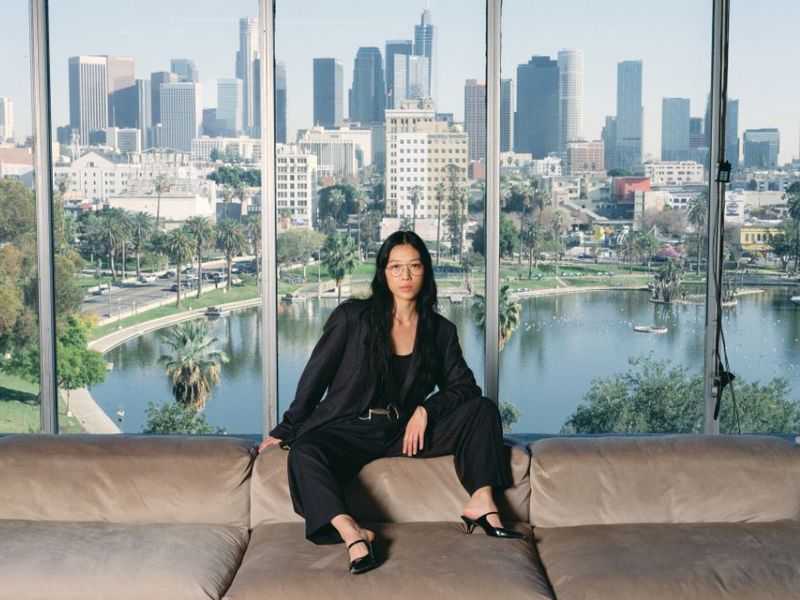
Artist, researcher, and technologist Mindy Seu prioritizes citing her sources. When she discovers a reference that makes her ears perk up, she squirrels it away in her personal archive, structured around top-of-mind questions, to revisit when the time’s right. “If I’m reading an essay, attending a lecture, or even sitting at a dinner party,” the L.A.- and New York City–based Seu says, “I’ll jot down the quote along with its context—date, time, speaker, and other seemingly random connective threads.” Her shapeshifting work examines our embodied, temporal relationship to digital culture and technology, whether through her participatory lecture performance “A Sexual History of the Internet,” which travels to Milan, Paris, and Melbourne this summer, as well as its namesake 700-plus-page, iPhone-size book, or her meticulously maintained, refreshingly bare-bones CV spreadsheet. Here, Seu shares how she navigates information overload with agency, care, and intention.
How do you start your mornings?
I’ve tried an embarrassing number of times to start a new routine where I bounce out of bed at 6 a.m., drink lemon water, read, and exercise. Inevitably, I return to my true habit: waking up at 7:30 a.m. and immediately opening my phone to answer as many emails as possible. If I know it’s going to be a long day, I’ll pull a double shot of espresso the night before and leave it on my bedside table to knock back at room temperature the next morning. It’s abhorrent, but it works.
Do you subscribe to any newsletters?
The Instagram algorithm is broken, so I rely on email newsletters to keep up with everything—museums, galleries, theater, shopping, and cultural institutions in the cities I frequent most: Los Angeles, New York City, and Berlin. My favorites these days are New Theater Hollywood and Now Instant in Los Angeles, KW Institute for Contemporary Art in Berlin, and Pageant and Performance Space New York. If I know I’ll be traveling, I subscribe to a city’s best venues a couple of months in advance so I can try to catch a performance. I also subscribe to friends’ shops, like boutique Maimoun and jeweler Laura Lombardi.
What are your go-to resources or tools?
I tend to be an early adopter and will try most new tools. These days, it’s Anthropic’s Claude. But I still rely on the basics: the Notes app, TextEdit on my laptop, and my favorite browser-based platform, Are.na. Everything feels over-optimized now—if you have a text editor and a file system with clear nesting and naming conventions, you’re already there.
What guides your decision-making around preservation and documentation? How do you determine what to save and how to organize it?
My fear of the blank page has made me a very proactive notetaker. If I’m reading an essay, attending a lecture, or even sitting at a dinner party, and someone mentions a good reference, I’ll jot down the quote along with its context—date, time, speaker, and other seemingly random connective threads. I add these to various documents and folders organized around themes I’m mulling over, so that when I eventually need to write an essay on, say, embodied technologies, I already have a substantial starting point to sift through.
It’s this small daily practice of noting a quote here or there that slowly accumulates into a large, polyvocal collection. It’s an easy habit for others to adopt, too—we already take screenshots and bookmark pages instinctively. In a time of information overload, the real gift to your future self is creating a method of recall. How will you find it later? What clues are you leaving for yourself to build upon? Add metadata, give it a real title, and put it in a digital folder. Please: no more Pinterest boards full of unattributed images titled with a string of random numerals. If something resonates with you, it’s worth saving—with context and with care.
Who are some of the thinkers, organizers, and artists who have been—and continue to be—formative for you?
Many feminist scholars describe the greatest feminist technology as the act of citation. Citations carry an academic connotation, but they don’t need to be formal—the important thing is attribution. I’m drawn to polyvocal works that bring together many different voices yet somehow flow as a single collective one, as exemplified in the oral history format of The Unwomanly Face of War by Svetlana Alexievich. I also love the list as a narrative strategy, as seen in The Years by Annie Ernaux or The New Woman’s Survival Catalog, billed as “the feminist Whole Earth Catalog” when it was first published, in 1973. Emergent Strategy by adrienne maree brown is an essential volume for organizers and artists, and contains some of the best footnotes and anecdotal references.
Of course, I love a primary source, especially an autobiographical anecdote. In the March 1, 1979, journal entry in The Cancer Journals, Audre Lorde writes, “And yes I am completely self-referenced right now because it is the only translation I can trust…”
What’s a recent read that left a lasting impression?
I’m working on an experimental play with my writing partner, Max Saltarelli, so we’ve been reading a lot of plays. The Shipment by Young Jean Lee and Body Awareness by Annie Baker both use humor in disturbing and impactful ways. I’m also very drawn to the dark realism of María Irene Fornés’s Fefu and Her Friends, as well as plays by Sarah Kane.
How about favorite publications?
My partner and I love getting to the airport early so we can stop by Relay or another magazine shop. He reads a book a week, while I can’t even remember the last time I read a novel, but I do love reading reviews of books I’ll never read in the London Review of Books. I’ll usually pick up Harper’s, Architectural Digest, or MIT Technology Review. I know Wired is old and off, but I’m attached. These days, I subscribe to the weekend edition of the Financial Times and its magazine, HTSI, along with The New Yorker. I guess, at my core, I’m a 50-year-old man.
What’s something that’s currently making you optimistic about technology? Anything pushing you toward alternative ways of engaging?
I’m most drawn to art and scholarship that repurposes digital systems against their intended use. At the same time, I’m concerned with how quickly digital spaces are becoming frictionless. A.I. especially reveals how extraction is often disguised as convenience. That’s pushed me toward slower, more intentional forms of engagement: self-publishing, peer-to-peer pedagogy, and as much live performance as possible. I try to approach emerging technologies with curiosity rather than fear, but I don’t believe neutrality exists; I stay attentive to labor, power, access, and who gets erased in the process of innovation.
This interview was conducted by Olivia Aylmer. It has been condensed and edited.
Our handpicked guide to culture across the internet.
To honor the memory of British painter David Hockney, who died last week at age 88, The Paris Review—where he was a treasured contributor since the late 1960s—unlocked his striking archival portfolio of Grimm’s Fairy Tales illustrations. [The Paris Review]
Through her new podcast, Phenomena, Google chief design officer for consumer devices Ivy Ross (the guest on Ep. 11 of Time Sensitive) explores the power of energy healing—including practices like Reiki and external qigong—to alleviate conditions like chronic pain, anxiety, and trauma. [Phenomena]
In the latest issue of his newsletter, Oliver Burkeman (Ep. 137) makes a case for the inevitability of “temporal chauvinism”: the notion that the time we’re in now is the most alarming or consequential one ever, just because it’s the one we happen to be living through. [The Imperfectionist]
Fashion designer Gabriela Hearst (Ep. 32) breaks down her design of the formal World Cup uniforms for her home country Uruguay’s national soccer team, which she hopes will protect the players’ garra charrúa, or “inner strength.” [GQ]
In an interview with Lulu Garcia-Navarro of The New York Times Magazine, Happiness Lab host Dr. Laurie Santos weighs in on whether the U.S. faces a structural “time crisis” and how to make the most of our spare, in-between minutes. [Instagram]