In this week’s newsletter, we escape to the eco-forward Capella Ubud hotel in Bali, head upstate for Maya Lin’s new river-inspired installation at the Corning Museum of Glass, and more.
Good morning!
I’m writing this note from Chicago, where I traveled this week to interview the artist Theaster Gates for a “site-specific” Time Sensitive episode. As with last season’s John Pawson episode, recorded from his country home in the Cotswolds, this is definitely one of those most-requested-from-listeners conversations, and I’m so glad I waited until now, nearly 20 years into his Rebuild Foundation work here in Grand Crossing on the city’s South Side, to do it. I’d last been to the neighborhood a decade ago, in 2015, when Theaster’s Stony Island Arts Bank opened, and it has been awe-inspiring to see all the incredible culture and community work, including the recently opened Land School, that he and his Rebuild team have realized here since. l look forward to sharing more once we release the interview, in mid-November.
Meanwhile, for this week’s episode, I’m thrilled to have another artist on the show: the Paris-born, New York–based Camille Henrot, who shares her plans for her first-ever performance-art piece, an operatic tragicomedy centered on social class in New York and inspired by the Italian Renaissance commedia dell’arte tradition, to debut next year in collaboration with RoseLee Goldberg’s Performa nonprofit. In our wide-ranging conversation, Camille—known for her anthropological, research-intensive approach to art-making—talks about, among many things, the subjectivity of speed and slowness; the ways in which she stretches and distorts time in her art; and why, for her, a work is technically never finished.
Speaking of art, one thing I’ve come to realize only more recently—now six-plus years and 140 episodes into Time Sensitive, and having interviewed dozens of artists along the way, including Tina Barney, Nick Cave, Edmund de Waal, Rashid Johnson, Marilyn Minter, and Adam Pendleton, to name a few—is that the podcast, while certainly an independent media platform, is also itself an art project. Conducting each interview is sort of like sitting down at a potter’s wheel with a mound of clay. With each question or back-and-forth exchange, the wheel continues to spin, and a vessel slowly forms. Toward the end of an interview, I may decide that a particular conversation calls for a certain type of finishing or “glaze.” Finally, after we turn off the mics and download the file, the raw recording gets fired in our metaphorical kiln: edits by our senior editor, Olivia Aylmer, plus sound engineering by Johnny Simon and, for the timesensitive.fm site, transcript copy edits by Mimi Hannon. Most likely, the result will be slightly wabi sabi, in the Leonard Koren (Ep. 128) definition of the term: intimate, unpretentious, earthy (or, at least, earthly), and with a “sober, modest, heartfelt intelligence.”
Maybe, instead of a podcast, I should start referring to Time Sensitive as a potcast.
—Spencer

“The way I perceive time often is with moments of intensity and moments of intense calm. It’s basically raccoon mode, and the other is sleeping-cat mode.”
Listen to Ep. 140 with Camille Henrot at timesensitive.fm or wherever you get your podcasts
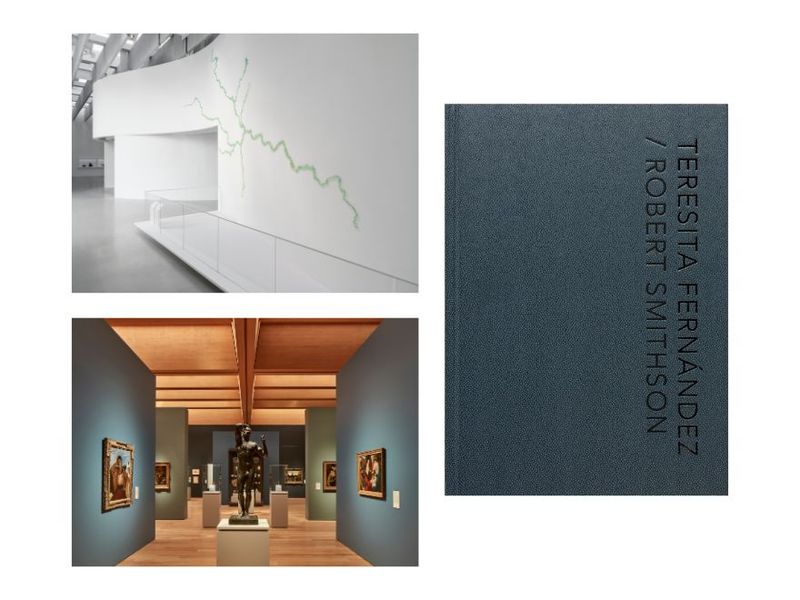
Maya Lin’s “Where the Rivers Meet” at the Corning Museum of Glass
Unveiled this month at the Corning Museum of Glass, the site-specific installation “Where the Rivers Meet” by artist and architect Maya Lin depicts the four main rivers—the Chemung, the Tioga, the Cohocton, and the Canisteo—that converge within the region around the upstate town of Corning, New York. These waterways are essential to the area, as well as to the origins of the glassmaker Corning Inc., the company that established the museum, which moved its glassworks from Brooklyn by barge in 1868. Part of the artist’s ongoing series “Marble River Drawing,” the installation consists of #475 Johns Manville glass marbles, a material that bridges the history of studio glass with Lin’s personal history: One day, when Lin was a child, her father, Henry Huan Lin, a ceramicist and dean of fine arts at Ohio University, brought home a box of these clear, industrially produced marbles. To Lin’s delight, she recalls, it was “like opening a box of water” as the shimmering marbles mimicked light dancing on the surface of water. Of her new work, Lin adds, “Waterways have a kind of magic—we rarely see them as unified systems. Instead, we tend to focus on the stretch of river we know. But when you step back and take in the whole, these living systems reveal themselves as singular, interconnected entities, each with its own personality.”
Teresita Fernández / Robert Smithson
Out next week, the book Teresita Fernández / Robert Smithson (Radius Books) immortalizes its namesake exhibition, presented at Site Santa Fe last year. Co-curated by artist Teresita Fernández (the guest on Ep. 5 of Time Sensitive) and initiated by her long-term engagement with the ideas and work of sculptor and land artist Robert Smithson, the exhibition explored entanglements in both artists’ thinking and making around landscape, geology, deep time, and the subterranean. Bringing together a selection of never-exhibited works by Smithson with new and recent works by Fernández, the show offered an intimate, intergenerational exchange between their two practices. At last, this new book brings the exhibition’s resonant themes beyond Santa Fe. Included in the volume are essays by co-curator Lisa Le Feuvre, MCA Chicago curator Carla Acevedo-Yates, and writer and art critic Lucy R. Lippard, as well as a conversation between Fernández and fellow artist Cecilia Vicuña.
Princeton University Art Museum
Following a roughly decade-long design and construction process, the just-opened Princeton University Art Museum lives up to the bold, long-view ambitions of its director, James Steward, and the swift, glowing praise that its building has received since its unveiling earlier this month (read Christopher Hawthorne’s take for the most on-point analysis). But the museum, which was designed by Adjaye Associates in collaboration with executive architect Cooper Robertson, has not opened without some controversy: When it was already 60 percent through construction, allegations of sexual assault and harassment were raised against its lead architect, David Adjaye, in the Financial Times (Adjaye denies the allegations). With three levels and at a total of 146,000 square feet, the impressive structure boasts 80,000 square feet of galleries, extensive educational spaces, state-of-the-art conservation studios, a full-service restaurant, and an outdoor amphitheater, and includes commissioned installations by artists Diana Al-Hadid, Nick Cave (the guest on Ep. 86 of Time Sensitive), Jane Irish, and Tuấn Andrew Nguyễn. The result, as Hawthorne describes it, is “one of the best American museum buildings of the last 15 years”—high, accurate praise from one of today’s greatest architecture critics. And while the building alone sings and shines, its opening exhibitions, “Princeton Collects”—on view through March 29, 2026, and featuring major paintings by Mark Rothko, Joan Mitchell, and Gerhard Richter—and “Toshiko Takaezu: Dialogues in Clay,” through July 5, 2026, are plenty reason enough to visit and, as Hawthorne encourages, “consider it all.”
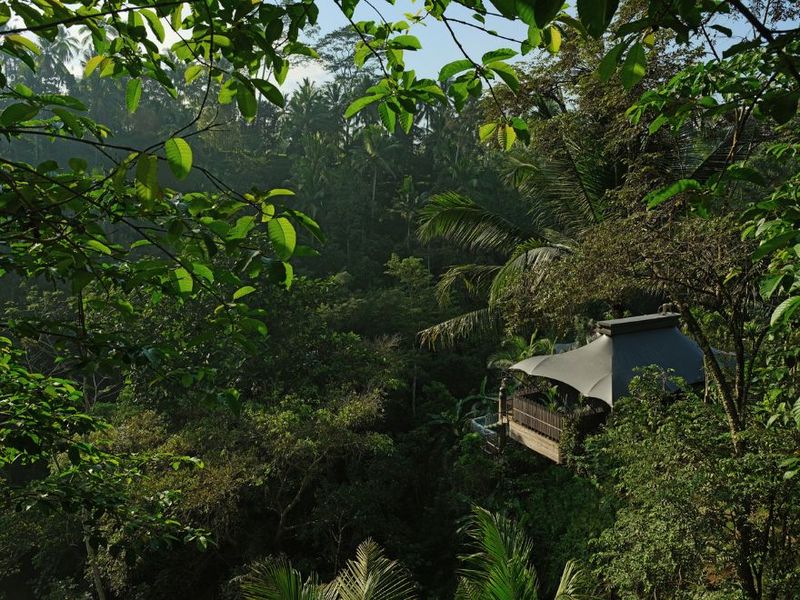
The realization of Capella Ubud, Bali—an eco-conscious 23-tent resort hidden within a lush tropical jungle 20 minutes north of Ubud, in Bali’s artistically rich interior—was not a foregone conclusion in 2014, when the American architect Bill Bensley met the Indonesian entrepreneur Suwito Gunawan, who owns these 8.7 acres, carpeted in rainforest and rice paddies. The original project called for a 130-room hotel block but, after lengthy discussions with Bensley—who grew up near Disneyland, in Anaheim, California—the Jakarta-based industrialist agreed to build a minimal physical footprint that would deliver maximum happiness.
Not a single palm, clove, durian, nor centuries-old banyan tree was felled during Capella Ubud’s three-year construction. The result—perhaps the most dramatic, uncommon hotel in one of Asia’s most established tourism destinations—opened in 2018, yet remains virtually invisible in Keliki Valley, apart from a sprinkling of dark pitched roofs affixed with life-size brass monkeys, the first clue to the lighthearted atmosphere that flourishes underneath. Making the complex disappear into the landscape required Bensley Studio’s 150-plus architects and interior designers to position each structure on-site using bamboo mock-ups, allowing them to identify optimal jungle views, which come with the added sensory benefit of each morning’s forest symphony.
Capella Ubud’s reality-based plotline centers on the 19th-century Danish explorer Mads Johansen Lange. The so-called White Rajah of Bali mediated treaties among the Balinese rulers he befriended and Denmark’s King Frederick VII, to whom he shipped coffee, rice, and spices, as well as objects of artistic and anthropological interest. The region’s fascinating spice trade history is conveyed through a whimsically imagined tale of Dutch settlers shipwrecked in 19th-century Bali. Each tent is individually crafted around specific members of this fictional community dreamed up by Bensley, from the Explorer’s Tent, with its hand-carved wood oars and feather-embellished tribal masks; to the Photographer’s Tent, decorated with vintage cameras and stunning black-and-white photos of old Bali; to the Puppet Master Tent, which celebrates Indonesia’s wayang kulit theater.
Tent interiors all feature kaleidoscopic arrays of traditional Indonesian batiks, ornately carved four-poster wood beds, cowhide-upholstered club chairs, and painted wood trunks that open to reveal minibars stocked with homemade clove and chili–infused gin and cinnamon-spiced rum. In the open-plan bathrooms, the leather-trimmed, throne-style toilet and hand-hammered copper bathtub are angled toward central Bali’s famously green scenery. Bamboo walking sticks help guests navigate the rugged, moss-covered stone paths connecting these private hideaways, most of which are accessed by swaying suspension bridges. Though many of the antiques were purchased overseas by Bensley or Gunawan, these canvas-covered structures platform Indonesian craftsmanship: The teak floors were handmade in Central Java, and the specially commissioned doors took Balinese woodcarvers a year to sculpt by hand.
Capella Ubud’s shared spaces awe, as well. These include the Cistern, a nearly 100-foot pool fashioned from a recycled ship’s hull; the no-tech Mortar & Pestle Bar; the all-canvas Officer’s Tent, with its billiards table, vintage books, and cocktail bar; the batik-clad Armoury gym; and the open-air Mads Lange dining pavilion, where Western comfort food and classic Indonesian dishes such as nasi goreng accompany bird’s-eye vistas over the palm treetops. Most guests dine at least once at Api Jiwa, the Japanese robatayaki-inspired restaurant that serves 8-to-10-course tasting menus with local-leaning dishes such as Lombok oysters with watercress and mushrooms and Sumatran river prawns in a kalasan dressing of lime leaves, lemongrass, and coconut milk.
Though enticing in this sultry tropical air, simply lounging around Capella Ubud would mean missing out on the activities—led by locals—that bring guests deeper into Balinese nature, history, and culture, including lessons in Aksara Bali, the traditional abugida writing system that traces its origins to the ancient Brahmi scripts of southern India and was originally knife-etched on dried palm leaves called lontar, and a visit to the I Wayan Gama Painting School in Keliki Village, started in 2005 by artist I Wayan Gama to keep Keliki’s distinctly detailed painting style alive.
To stay at Capella Ubud is to experience Bali at its absolute best—it’s a hotel that preserves the island’s celebrated traditions even as it gently coaxes its way forward.
This is a condensed and edited excerpt of a text by Cynthia Rosenfeld, published in the book Culture: The Leading Hotels of the World (Monacelli), with editorial direction by The Slowdown.
Our handpicked guide to culture across the internet.
Marking the first decade of her widely celebrated fashion brand, Gabriela Hearst (the guest on Ep. 32 of Time Sensitive) hosted a screening in New York City earlier this week of the short documentary Beyond the Season, directed by Clara Cullen and capturing the designer on an intimate journey through New York, Paris, and Uruguay. [Gabriela Hearst]
On Nov. 11, British writer and cultural critic Olivia Laing (the guest on Ep. 138 of Time Sensitive) will join novelist, essayist, and critic Rachel Kushner for a virtual conversation about her new novel, The Silver Book. [The Center for Fiction]
Weaving Between Land and Sea, a book born out of a collaboration between the Venice, Italy–based art space Casa Yali and craftsperson Deborah Needleman (the guest on Ep. 66 of Time Sensitive), explores weaving both as an ancestral craft and as a way of observing and relating to one’s environment. [Rizzoli]
In the new book Three or More Is a Riot: Notes on How We Got Here: 2012–2025, Columbia School of Journalism dean Jelani Cobb (the guest on Ep. 91 of Time Sensitive) offers a clarifying collection of dispatches centered on the turbulent past decade of American social movements. [One World]
Not long after releasing his debut collection of poetry, About Time, earlier this fall, actor and writer David Duchovny (the guest on Ep. 21 of Time Sensitive) will soon star in Malice, a British psychological thriller series premiering on Amazon Prime on Nov. 14. [The Guardian]